Do You Need Baking Powder for Cookies? A Practical Guide
Explore whether baking powder is necessary for cookies, how leavening works, substitutions, and texture tips, with practical guidance from Bake In Oven.


Do you need baking powder for cookies? Not always. Most classic cookies rely on baking soda, eggs, and fat for structure and spread. Baking powder is only needed when a recipe seeks more lift and a softer, cake-like crumb. If a recipe calls for baking powder, use it; if it calls for baking soda, skip baking powder. Some cookies require no leavening at all for a crisper texture.
Do Cookies Always Need Leavening?
Many home bakers ask if they need baking powder for cookies. The short answer is: it depends on texture goals and the specific recipe. Do you need baking powder for cookies when you want a lighter, cake-like crumb? In some cases, yes. But traditional drop cookies often achieve desirable texture with just butter, sugar, eggs, and a small amount of baking soda or even no leavening at all. This nuance is part of why cookie recipes vary so widely. In practice, understanding the role of leaveners helps you predict how a batch will spread, rise, and crisp up as it cools. According to Bake In Oven, leavening is a tool to fine-tune crumb structure, not a universal requirement for every cookie.
For many cookies, the go-to question is not whether to add leavening, but which leavener to use and how it interacts with fats and acids in the dough. The presence of depth from brown sugar, the moisture from eggs, and the fat from butter all influence how a leavener works. This is why you will see recipes that call for baking powder, baking soda, or none at all. The choice shapes texture, height, and spread, helping you decide if a cookie should be crisp, chewy, or cakey. In short, do you need baking powder for cookies? It hinges on the texture you’re aiming for and the scientific balance in the dough.
How Baking Powder and Baking Soda Work
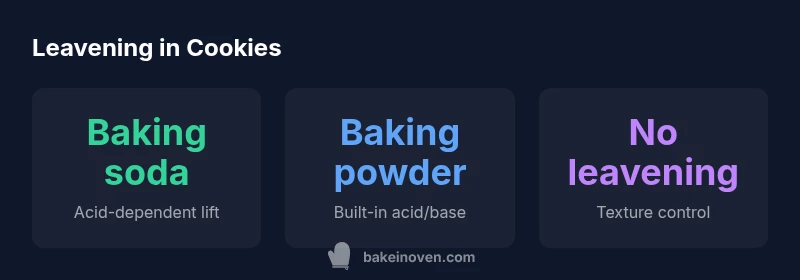
Baking powder and baking soda act as leavening agents, but they operate differently. Baking soda is a base that requires an acidic partner in the dough to produce carbon dioxide, which lifts and lightens the crumb. In cookies, this often means using ingredients like brown sugar, yogurt, buttermilk, or chocolate with acidity. Baking powder contains both an acid and a base, so it can create lift with or without additional acidic components. That built-in acid-base balance makes baking powder useful when you want more noticeable rise without relying on other acidic ingredients. Also, because baking powder often includes a drying agent, it can influence cookie tenderness and color by affecting moisture migration during baking. In practice, bakers choose based on the perceived acidity of the dough and the texture they want to achieve.
- Texture goals guide leavener choice: cake-like cookies usually use baking powder; chewier cookies often rely on baking soda or none at all.
- Fat type and temperature influence spread: cooler dough tends to spread less and can work with leaveners to create lift without excessive spreading.
- Acidity matters: even a small amount of acid can enhance reaction with baking soda for a better crumb.
When to Use Baking Powder in Cookies
If a recipe explicitly calls for baking powder, it’s generally because the baker wants a softer, lighter crumb and more height. Baking powder provides lift even when there isn’t much acidic content in the dough. Some cookies—like certain sugar cookies or soft-batch varieties—benefit from a small amount of baking powder to keep the centers tender without collapsing. If your dough already contains ingredients that add acidity, baking soda may be preferred instead. When texture goals call for a taller, airy crumb, baking powder is your ally; for denser or crisper cookies, you may skip it or use baking soda to encourage browning and spread. In practice, you’ll often find recipes that specify one or the other to achieve the intended mouthfeel and bite.
Practical cues: use baking powder when your dough includes little acidic balance or you desire more loft; avoid it if you want a flat, crisp edge and a wider spread. Always follow the recipe’s direction, as substitutions can alter flavor and texture in ways that aren’t immediately obvious.
Substitutions and Adjustments for Leaveners
Substituting leaveners requires careful consideration of the dough’s acid-base balance and moisture. If you only have baking powder but need baking soda, you can adapt by adding a small amount of an acidic ingredient (such as yogurt, buttermilk, or citrus juice) to react with the baking soda that would have been used. Conversely, if you only have baking soda but the recipe calls for baking powder, you’ll generally need to provide an acid to activate it, and you may need a little extra leavening to achieve the same lift. Because amounts matter and small changes can affect flavor, color, and texture, substitutions should be approached conservatively. When in doubt, mixOptions: and test in a small batch before scaling up. Bake times and temperatures may remain the same, but the crumb and spread can diverge if the leavening balance isn’t right.
Practical Techniques to Control Texture
Texture is a function of leavening, fat, sugar, and moisture management. Chilling dough before baking slows down spread and can accentuate lift from leaveners, producing thicker cookies with a softer center. Warmer dough often spreads more and can yield a crisper edge. The sugar type also influences texture: brown sugar adds moisture and chew, while white sugar bleaches and dries out the crumb. Eggs contribute moisture and structure; extra yolk can soften and enrich, while an extra white increases protein and crispness. Oven temperature and bake time further sculpt texture: shorter, hotter baking favors crisper cookies, while longer, gentler heat produces a chewier interior. By understanding these leavener interactions, you can tailor cookies to your preferred bite without relying solely on a single leavening agent.
- Keep dough chilled for lift and defined shape.
- Balance fat and moisture to support the desired crumb.
- Use the correct bake time to avoid overbaking and dryness.
Common Mistakes When Using Leaveners in Cookies
Even experienced bakers make missteps with leaveners. Overusing baking powder can give cookies a hollow crumb or an aluminum-like aftertaste if the recipe isn’t properly balanced. Underusing leaveners can yield flat, dense cookies with little structure. Mixing leaveners prematurely or adding them to overly warm butter can cause uneven gas production and uneven rise. Too much moisture in the dough can also hinder lift, as the gas has less elasticity to work with. For reliable results, measure carefully, maintain consistent dough temperature, and test with small batches when experimenting with substitutions. The key is to view leavening as a tool for shaping texture, not as a universal fix for all cookie challenges.
Leavening considerations for cookies
| Aspect | Leavening Consideration | Typical Texture Outcome |
|---|---|---|
| Baking powder | Contains acid; provides lift in dough with minimal acidity | Soft, cake-like crumb; modest rise |
| Baking soda | Requires acid in dough to activate | Chewier texture; more spread; deeper browning |
| No leavening | No baking powder or soda; relies on fat & sugar for structure | Dense, crisp, or compact texture depending on recipe |
Frequently Asked Questions
Do baking powder and baking soda work the same in cookies?
No. They have different leavening actions. Baking soda needs an acid to activate, while baking powder includes an acid and base and can create lift on its own. The choice affects flavor, color, and crumb.
They’re not the same. Baking soda needs acid to activate; baking powder contains acid and base and can rise more independently.
Can I substitute baking powder for baking soda in a cookie recipe?
Direct substitution is not recommended. You generally need more baking powder than baking soda and may need to adjust acidity. Substitutions can alter flavor and crumb, so test in a small batch first.
Substituting is tricky—predictable results come from following the recipe or testing in a small batch.
What texture will cookies have if I omit leavening entirely?
Cookies without leavening tend to be denser, crisper, or shorter in height. The exact texture depends on fats, sugars, and moisture, but lift is reduced and spread patterns may change.
Omitting leavening usually makes cookies denser or crisper, depending on other ingredients.
Is self-rising flour a good substitute for cookies?
Self-rising flour contains baking powder and salt, which can alter texture and flavor. It can work in some cookies, but you may need to adjust other ingredients to balance sweetness and tenderness.
It can work, but it changes texture and flavor—adjust other ingredients accordingly.
Are there cookie types that never use leavening?
Yes. Shortbread and many sugar cookies rely on fat, sugar, and flour for their structure, producing denser, crisper, or buttery cookies without leavening.
Some cookies stay dense and crisp because they don’t use leavening.
“Leavening in cookies is about balance—understanding how baking powder and baking soda interact with fats and acids helps you predict texture with confidence.”
Key Takeaways
- Understand texture goals before choosing leavener
- Follow recipe leavening exactly to avoid flavor changes
- Substitute cautiously and test in small batches
- Control dough temperature to manage spread and lift
- Leavening is a texture tool, not a flavor enhancer