How long do bake cookies last: A practical shelf-life guide
A data-driven guide on how long baked cookies stay fresh, with storage tips, timelines by cookie type, and practical tests to know when to bake or freeze for maximum enjoyment.


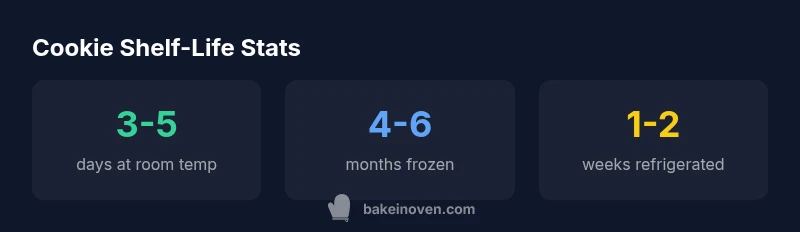
For most home-baked cookies, expect 3-5 days at room temperature when stored in an airtight container. If you need longer storage, freeze cookies for 4-6 months, and refrigerating can stretch freshness to about 1-2 weeks with some quality loss. Always label the date to track freshness.
Understanding cookie shelf life
Cookies are a bakery staple, and their freshness hinges on moisture, fat content, and sugar crystallization. When we ask how long bake cookies last, the starting point is room-temperature storage in an airtight container away from heat and sunlight. Sugar and fat act as natural preservatives, but exposure to air accelerates staling and texture changes. In this piece we dissect the typical timelines, and offer practical strategies to extend freshness without compromising flavor or safety. As you read, you’ll see how small choices—like parchment between layers or a single container—can noticeably extend the life of your batch.
Factors that influence longevity
Several variables determine how long cookies stay tasty: moisture content, ingredients (butter vs. shortening, eggs vs. no eggs), cookie type (crisp vs. soft), fillings or toppings, and storage environment. High-fat, low-moisture cookies (like shortbread) tend to stay crisper longer, while chewy cookies retain moisture and may go soft or stale over time. Humidity, temperature fluctuations, and improper cooling logistics can all speed up staling. Even the type of container matters: a rigid, airtight jar with a small amount of headspace helps maintain texture better than loosely covered tins.
How to maximize freshness: storage basics
To keep cookies fresh, start with thorough cooling before packing to prevent trapped steam from softening edges. Layer cookies with parchment or wax paper to prevent sticking and flavor transfer. Use airtight containers that seal well, and store in a cool, dry place away from direct sun. For long-term storage, freezing is often the best option: wrap cookies individually to prevent freezer burn, then place in a sturdy freezer bag. Label with date and cookies’ type for easy rotation.
Special cases: cookies with fillings or frostings
Filled or frosted cookies behave differently. Frostings can moisture migrate and cause sogginess, while fillings (like jam or ganache) may introduce moisture that shortens room-temperature life. If possible, freeze frosted cookies and frost them after thawing to preserve texture. For cookies with delicate components, consider storing components separately and assembling just before serving.
Timelines by storage method and cookie type
Typical drop cookies (e.g., chocolate chip): 3-5 days at room temperature; 1-2 weeks in the fridge; 4-6 months frozen. Shortbread or crisp cookies: often 5-7 days room temp, up to 2 weeks refrigerated, 6-9 months frozen. Sugar cookies (unfrosted): 1-2 weeks room temperature; longer if refrigerated and kept airtight. Biscotti and hard, dry cookies store exceptionally well: several weeks to months, especially when kept dry and sealed. These ranges reflect common home-baking practice and may vary with recipe specifics.
Practical tips for testing freshness
If you’re unsure whether cookies are still good, rely on smell, texture, and a small taste test. Fresh cookies should smell buttery or sugary with faint vanilla; they should feel firm but not hard, and taste balanced—not cardboardy or rancid. If a cookie has off odors, visible mold, or extreme dryness, discard. Labeling batches with packing dates helps you maintain a predictable rotation, and you’ll avoid throwing out perfectly edible treats.
Common mistakes that shorten shelf life
Mistakes such as storing warm cookies, not sealing containers, or stacking cookies without parchment can hasten staling and introduce moisture problems. Avoid refrigerating cookies with frostings that may tack up and lose crispness. When in doubt, freezing portions is a forgiving option: it slows moisture migration and retards flavor loss, allowing you to enjoy fresh-tasting cookies weeks later.
Cookie shelf-life by storage method
| Storage Condition | Shelf Life (approx) | Notes |
|---|---|---|
| Room temperature (airtight container) | 3-5 days | Best for daily consumption; keep away from heat |
| Refrigerator | 1-2 weeks | Moisture control helps longer life; watch for texture changes |
| Freezer | 4-6 months | Wrap tightly; freeze in portions for easy thawing |
Frequently Asked Questions
How long do cookies last at room temperature?
Most cookies stay fresh for 3-5 days at room temperature if stored in an airtight container away from heat. Crisp cookies may begin to soften after a few days, while soft cookies can stay palatable if kept sealed and not over-moisturized.
Typically 3-5 days at room temperature in an airtight container.
Can cookies last longer if refrigerated?
Refrigerating cookies can extend freshness to about 1-2 weeks, but texture often changes—crisp cookies may soften, and soft cookies can become dryer. For best results, refrigerate only to bridge short gaps, and bring to room temperature before serving.
Yes, about 1-2 weeks in the fridge, with potential texture changes.
Is freezing the best option for long-term storage?
Freezing is the most reliable method for extending life, typically 4-6 months with minimal quality loss if cookies are well wrapped and sealed. Thaw in the refrigerator or at room temperature, then refresh texture in a warm oven if desired.
Freezing is the best for months of storage.
How can I tell if cookies are spoiled?
Check for off odors, visible mold, or unusual texture such as extremely hard, crumbly, or gummy centers. If in doubt, discard. Food safety first—when in doubt, throw it out.
Smell for off notes, look for mold, and assess texture.
Does parchment paper affect shelf life?
Parchment paper helps prevent sticking and moisture transfer between layers, which can preserve texture and appearance longer. Use clean parchment and avoid layering directly with bare cookies.
Parchment helps preserve texture and prevents sticking.
“Shelf life isn’t just about safety; it’s about preserving texture, flavor, and aroma. With proper storage, most cookies stay enjoyable far longer than common intuition suggests.”
Key Takeaways
- Store cookies airtight to maximize freshness
- Freeze for months of extended storage
- Different cookie types have distinct timelines
- Label batches to track freshness quickly
- Test aroma and texture before consuming