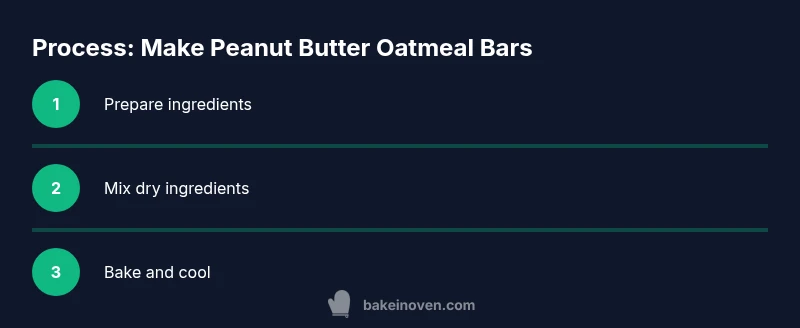
How to Make Peanut Butter Oatmeal Bars
Master chewy peanut butter oatmeal bars with a simple, flexible recipe. Learn ingredients, substitutions, make-ahead tips, storage, and troubleshooting from Bake In Oven.


You will bake chewy peanut butter oatmeal bars using pantry staples: rolled oats, peanut butter, a sweetener, and optional mix-ins. The key is to mix, press into a lined pan, bake until set, then cool completely before slicing. This step-by-step guide covers timing, substitutions, and storage. Whether you prefer chewy or crisper edges, this method adapts to your taste with notes on hydration and resting time.
Why Peanut Butter Oatmeal Bars Are a Smart Snack
Peanut butter oatmeal bars combine two pantry-friendly ingredients into a portable, protein-flavored treat that appeals to kids and adults alike. The chewy texture of oats, the creamy richness of peanut butter, and a touch of sweetness create a balance of flavor and mouthfeel that satisfies hunger without requiring special equipment. This is the kind of snack you can bake once and enjoy for several days, making it ideal for busy mornings, school lunchboxes, or a quick post-workout bite. According to Bake In Oven, using ordinary kitchen staples keeps costs predictable and ensures you can tailor the bars to your family’s dietary needs. The major advantages are fiber from oats for steady energy, healthy fats from peanut butter for fullness, and the option to control sweetness with maple syrup or a small amount of sugar. In addition, these bars are forgiving: whether you use rolled oats or quick oats, the binding happens through peanut butter and a touch of liquid sweetener.
This guide walks you through ingredients, substitutions, and a practical baking method to produce bars that slice cleanly and stay moist without crumbling.
Ingredient Essentials and Substitutions
The base for peanut butter oatmeal bars is straightforward, but you can tailor it to your pantry and dietary needs. Core ingredients typically include rolled oats, peanut butter, a liquid sweetener (honey or maple syrup), vanilla extract, and a pinch of salt. Optional add-ins like dark chocolate chips, chopped nuts, or dried fruit offer texture and flavor variety. If you’re gluten-conscious, opt for certified gluten-free oats. For a vegan version, ensure your sweetener is vegan and use maple syrup instead of honey. If you’re avoiding refined sugar, reduce the amount slightly or use ripe mashed banana as a natural binder. A well-balanced ratio keeps the bars cohesive while allowing the oats’ chew and the peanut butter’s creaminess to shine. The following list provides a practical starting point you can scale to your pan size and sweetness preference.
- Rolled oats (2 cups) — the chewy backbone
- Peanut butter (1 cup) — smooth for binding
- Sweetener (1/2 to 3/4 cup) — honey or maple syrup
- Vanilla extract (1 teaspoon) — aroma and depth
- Salt (1/4 teaspoon) — brightens flavors
- Optional add-ins: chocolate chips (1/2 cup), chopped nuts (1/3 cup), dried fruit (1/3 cup)
- Parchment paper to line an 8x8-inch pan, plus basic mixing bowls and spoons
Texture, Structure, and Flavor: Getting It Right
The texture of peanut butter oatmeal bars depends on the balance between dry oats and binding fats. Using too little peanut butter can yield a crumbly bar, while too much can make the bars feel greasy. A common, reliable approach is a 1:1-ish ratio of oats to binding agents (peanut butter plus sweetener). The oats provide chew and body, the peanut butter delivers creaminess and fat, and the liquid sweetener helps everything bind without drying out. Vanilla enhances the nutty aroma, and a pinch of salt rounds the sweetness. If you want more chew, increase the oats slightly and reduce the sweetener; if you prefer crisper edges, bake a little longer at a slightly lower temperature and let the bars cool fully in the pan before cutting. Speaking of sweetness, you can adjust with a drizzle of extra maple syrup after baking for a personal finish. Bake-test a small square if you’re unsure about doneness. Bake In Oven suggests embracing the natural texture of oats for a satisfying, everyday treat.
Mix-Ins and Flavor Tweaks
Mix-ins are where you can personalize peanut butter oatmeal bars. Chocolate chips add familiar sweetness, while chopped nuts provide extra crunch. Dried cranberries or chopped dried apricots bring a tangy contrast that pairs well with peanut butter. For a heavier, more dessert-like bar, swirl in a spoonful of peanut butter before the final bake or drizzle melted chocolate once cooled. If you want a warmth of spice, add a pinch of cinnamon or cardamom to the dry mixture. For a nut-free version, substitute sunflower seed butter and use a nut-free chocolate chip option. The key is to add mix-ins in moderation so they don’t overwhelm the binding structure. Always fold-ins in gently to prevent the batter from splitting or becoming crumbly. Baking time remains mostly the same when you adjust ingredients, but watch edges closely to avoid over-baking.
Make-Ahead Options and Storage
These bars are excellent for make-ahead meal prep. Bake them, let them cool completely, and store them in an airtight container for up to five days in the fridge for maximum freshness, or freeze individual portions for longer storage. When freezing, wrap bars tightly in parchment paper or foil and place in a freezer-safe bag. Thaw at room temperature or in the fridge for a quicker option. If you prefer a softer texture after refrigeration, rewarm individual bars in the microwave in 15-second bursts until warm and pliable. For best results, cut bars after they’re fully cooled and stored to maintain clean edges and uniform servings. If you’re sharing with kids, pre-portion the bars in small snack bags to simplify grab-and-go mornings.
Troubleshooting Common Issues
If your bars crumble, you may have reduced binding ingredients or over-baked them. In future batches, slightly increase peanut butter or add another teaspoon of vanilla to improve cohesion. If the bars feel too soft or underbaked, extend the bake time by 2–4 minutes, watching carefully to avoid browning too much. On the flip side, if they taste dry, add a teaspoon of oil or an extra tablespoon of honey in the next batch to restore moisture, or allow them to rest an extra 15 minutes in the pan before slicing. For a denser texture, press the batter more firmly into the pan, ensuring even contact with the parchment for uniform texture. A gentle press with the back of a spatula helps the bars set evenly as they bake.
Gluten-Free and Allergy-Friendly Variations
If you need a gluten-free version, use certified gluten-free oats and check all other ingredients for gluten-containing additives. For nut allergies, swap peanut butter for sunflower seed butter or a similar seed butter that your diet allows, and substitute dairy-based chocolate chips with dairy-free or seed-based options if needed. If you want a dairy-free option entirely, use coconut oil to complement the binding instead of butter where a recipe originally calls for it, and use maple syrup to maintain sweetness without dairy. Keep in mind that nut-free bars may lack some of the depth that peanut butter provides, so you might want to experiment with seeds (sunflower, chia) to enhance texture and nutritional value. These substitutions keep the recipe accessible while preserving a satisfying texture and flavor.
Quick Reference: Timelines and Testing Doneness
Plan to preheat the oven to 350°F (175°C) and bake the bars for about 18–22 minutes, until the edges are light golden and the center is set but not dry. Remove from the oven and let the bars cool completely in the pan to finish firming up; this step is crucial for clean slicing. If you cut the bars while still warm, they may crumble. After cooling, refrigerate for 30–60 minutes to make slicing even cleaner. The total active prep time is roughly 15–25 minutes, with baking and cooling adding another 30–45 minutes. This approach ensures a stable bite and prevents sticky, under-set bars that fail to hold together.
Sustainability, Cost, and Feasibility Notes
Peanut butter oatmeal bars are a cost-effective snack that leverages pantry staples. Oats are inexpensive and versatile, and peanut butter provides a durable binding fat that helps the bars stay cohesive. By using a modest amount of sweetener and optional add-ins, you can control cost and adjust for dietary needs. Batch-prep is ideal for busy weeks; the bars travel well, require no refrigeration during the day in most climates, and make a reliable school or office snack. If you want to minimize packaging waste, use refillable jars for peanut butter and store oats in a reusable container. Bake In Oven encourages experimenting with your pantry to discover flavor combinations that fit your lifestyle while maintaining a solid, bakeable texture.
Tools & Materials
- Rolled oats(2 cups)
- Peanut butter (smooth or crunchy)(1 cup)
- Honey or maple syrup(1/2 to 3/4 cup)
- Vanilla extract(1 teaspoon)
- Salt(1/4 teaspoon)
- Chocolate chips (optional)(1/2 cup)
- Chopped nuts (optional)(1/3 cup)
- Parchment paper(To line an 8x8-inch pan)
- 8x8-inch baking pan(Metal or glass)
- Mixing bowls(Two or more)
- Whisk or spoon(For mixing)
- Spatula(For pressing and scraping)
Steps
Estimated time: 60-75 minutes
- 1
Preheat oven and prepare pan
Preheat the oven to 350°F (175°C). Line an 8x8-inch pan with parchment paper or spray lightly with nonstick. This creates a stable surface and ensures easy removal of the bars after baking.
Tip: Using parchment with overhangs makes slicing and lifting easier. - 2
Whisk dry ingredients
In a large bowl, whisk the rolled oats, salt, and any optional spices. A light whisk helps distribute salt and spices evenly for consistent texture.
Tip: Break up any clumps in the oats to avoid uneven pockets. - 3
Warm peanut butter and sweetener
Gently warm peanut butter with honey (or maple syrup) until smooth and pourable. This step ensures the binding agents mix evenly with dry ingredients.
Tip: If your peanut butter is very thick, microwave in 15-second bursts, stirring between intervals. - 4
Combine wet and dry
Pour the warm peanut butter mixture over the oats and stir until just combined. The mixture should hold together when pressed but not be mushy.
Tip: Avoid over-mixing; overworked dough can become tough. - 5
Fold in add-ins
If using, fold in chocolate chips, chopped nuts, or dried fruit. Add-ins should be distributed but not overwhelmed by the oats.
Tip: Keep add-ins compact to maintain structure during baking. - 6
Press into pan
Transfer the mixture to the prepared pan and press firmly with the back of a spatula to create an even, compact layer.
Tip: A light coat of nonstick spray on the spatula helps with smoothing. - 7
Bake and test for doneness
Bake for 18–22 minutes until edges are golden and the center is set. The bars should feel firm but not dry.
Tip: If you see the center sinking, give them a 2-minute extra bake and test again. - 8
Cool and slice
Let the bars cool completely in the pan, then lift out using the parchment and cut into bars. Chilling briefly helps cleaner edges.
Tip: Refrigerate for 30–60 minutes for extra neat slices.
Frequently Asked Questions
Can I make these bars gluten-free?
Yes. Use certified gluten-free oats and check all other ingredients to ensure they’re gluten-free. The binding and texture remain similar, though you may notice a slightly different chew depending on the oats.
Yes. Use certified gluten-free oats and check all ingredients for gluten. The texture stays similar, with a slightly different chew depending on the oats.
Can I freeze the bars?
Absolutely. Wrap bars tightly and freeze in a freezer-safe bag. Thaw at room temperature or in the fridge. Freezing helps preserve freshness for up to 1–2 months.
Yes. Wrap tightly and freeze; thaw at room temperature or in the fridge. They stay good for one to two months.
How long do they stay fresh in the fridge or on the counter?
In the fridge, bars stay fresh for about 5–7 days. At room temperature, they’re best within 2–3 days if kept in an airtight container. Refrigeration slows moisture loss and helps maintain texture.
In the fridge, about 5 to 7 days; at room temperature, 2 to 3 days in an airtight container.
What substitutions work if I’m avoiding nuts?
Use sunflower seed butter (or another seed butter) instead of peanut butter. Check add-ins for nut content, and consider dairy-free chocolate if needed. Binding may feel a touch different, but the bars will still set well if weighed correctly.
Try sunflower seed butter, check add-ins, and consider dairy-free chocolate if needed. Binding remains solid with proper ratios.
Can I use quick oats or steel-cut oats?
Rolled oats are preferred for chew and binding; quick oats can work but yield a softer bar. Steel-cut oats don’t work well here without recipe adjustments, as they require longer cooking and change texture dramatically.
Rolled oats are best. Quick oats work but softer; steel-cut oats aren’t recommended without major changes.
Can I add protein powder to boost nutrition?
You can add 1–2 tablespoons of unflavored or vanilla protein powder, but expect a drier crumb. Increase the sweetener slightly or add a little extra peanut butter to compensate.
You can, but it may dry the bars. Add extra peanut butter or a touch more sweetener to balance.
Watch Video
Key Takeaways
- Prepare a complete mise en place before baking
- Balance oats, peanut butter, and sweetener for cohesion
- Chill before slicing for clean cuts
- Experiment with mix-ins for variety
- Make-ahead friendly for meal prep