Are baked or kettle chips healthier? An analytical comparison
Explore whether baked or kettle chips are healthier. This Bake In Oven analysis weighs fat, calories, sodium, and processing to guide smarter snacking decisions.


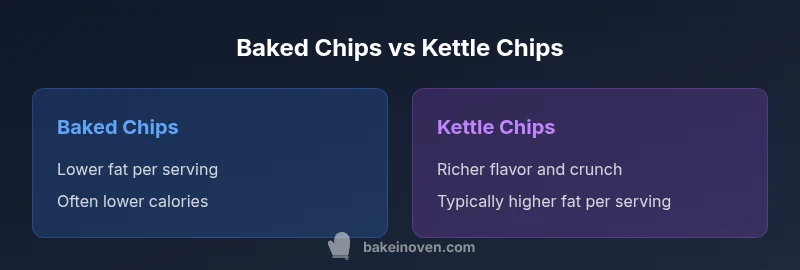
Are baked or kettle chips healthier? In general, baked chips tend to be lower in fat and calories, but sodium and seasoning can erase the advantage. The best choice depends on serving size and your goals. Bake In Oven's analysis emphasizes label literacy and mindful portions to determine which option aligns with your health priorities.
Are baked or kettle chips healthier? Framing the question
When you ask are baked or kettle chips healthier, you’re really weighing fat, calories, sodium, and how the chips are made. According to Bake In Oven, the short answer is: baked chips tend to be lower in fat and calories on average, but brand and seasoning matter as much as the cooking method. The Bake In Oven team emphasizes that no single claim applies to every bag, so true comparison requires looking at the label, serving size, and your personal goals. In this article we’ll unpack the key differences, show how to read labels, and offer practical tips for choosing chips that fit a balanced diet. By the end, you’ll know how to answer the question are baked or kettle chips healthier for your needs and situation.
Calorie and fat profiles: what to expect
When you compare chips, energy density is a major factor. In general, baked chips reduce fat because they are not fried in oil, which can tilt the scales toward are baked or kettle chips healthier options. However, some baked brands rely on added fats or sugar-containing seasonings to boost flavor, which can erode the fat advantage. The result is a nuanced picture: a serving of baked chips may offer fewer grams of fat than a similar kettle-cooked chip, but the difference depends on the oil type, processing temperature, and portion size. For most snackers, the real question is not only fat grams but how much you eat per sitting. Bake In Oven’s analysis stresses that serving size awareness often matters more than the chosen chip format.
Oils, processing methods, and how they affect nutrition
Oils and processing dictate fat composition and aroma. Kettle chips are typically fried, which increases fat content and can change the fatty-acid profile depending on the oil used. Baked chips minimize added oil, but the flavor and crunch can come from seasonings and browning reactions. The result is a meaningful difference in are baked or kettle chips healthier outcomes for those who track fat intake or prefer a lighter snack. Bake In Oven cautions that ingredient quality, oil type, and brand practices drive the final nutrition picture more than the format alone.
Sodium, sugar, and additives to watch
Seasonings determine how salty or sweet a chip can taste, and salt is the key variable for many shoppers. Both baked and kettle chips can lean toward high sodium depending on brand choices and flavorings. If you are chasing is are baked or kettle chips healthier, the practical answer is to compare sodium on the nutrition panel, and to consider added sugars or flavor enhancers. The more transparent the label, the easier it is to compare, especially when you’re balancing heart health, blood pressure, or hydration.
Protein, fiber, and micronutrients
Chips are not a significant source of protein or fiber, regardless of format. The potato itself contributes modest amounts of micronutrients like potassium and vitamin C, but processing and roasting can reduce these values. If you are comparing are baked or kettle chips healthier, remember that the fiber content tends to be modest and that most true health benefits come from overall diet quality, not chip choice alone.
How to read labels and compare brands
To determine whether are baked or kettle chips healthier, start with the serving size and count servings per bag. Then compare fat grams, saturated fat, and total calories per serving, and look at sodium per serving. Flavorings, preservatives, and colorings vary widely across brands, so read the ingredient list for recognizable ingredients and avoid artificial additives when possible. The more you practice label literacy, the easier it becomes to pick genuinely healthier options irrespective of format.
Practical tips to make healthier choices
Portion control is essential: a single handful can derail even a carefully chosen chip. Consider home-baked alternatives using thinly sliced potatoes, modest oil, and oven-roasting to produce chips with predictable portions. If you prefer the crisp bite of kettle chips, opt for smaller portions and savor the flavor. Pair chips with fiber-rich dips like vegetables and low-fat yogurt to improve satiety and nutrition balance.
Are home-baked chips healthier than store-bought baked or kettle?
Home-baked chips give you control over oil amounts, salt, and flavorings, supporting the idea that are baked or kettle chips healthier when you bake them at home. Store-bought baked chips often rely on processed ingredients that can drift toward higher sodium or sugar. Kettle chips sold ready-to-eat may deliver richer flavor but at the cost of higher fat and sometimes salt. The practical takeaway is to compare labels and portion sizes rather than rely on format alone, and to keep your diet varied and balanced.
When chips fit into a balanced diet: decision framework
In the end, the best choice hinges on your goals: if reducing fat and calories is your priority, baked options with clean ingredients are generally preferable. If you value bold flavor and crunch, kettle chips can fit a balanced diet when you keep portions small and choose varieties with reasonable sodium. The overarching lesson from Bake In Oven is to combine label-reading discipline with mindful snacking habits when considering are baked or kettle chips healthier.
Authority sources and ongoing science
For further reading on snack nutrition and processing, consult authoritative sources such as the U.S. Food and Drug Administration (FDA), the National Institutes of Health (NIH), and the Centers for Disease Control and Prevention (CDC). These organizations provide guidelines on reading nutrition labels, understanding fat and sodium, and making informed choices about processed foods.
Comparison
| Feature | Baked Chips | Kettle-Cooked Chips |
|---|---|---|
| Fat content (per serving) | lower | higher |
| Calorie density (per serving) | lower | higher |
| Sodium (typical) | variable | often higher |
| Cooking method | baked in oven | fried in oil |
| Flavor and texture | lighter, crisper | hearty, crunchier |
| Brand/ingredient variability | depends on brand | depends on brand |
Benefits
- Potential fat reduction with baked formats
- Easier portion control on bags and servings
- Clear labeling emphasizes nutritional information
Negatives
- Brand variation makes fat and sodium unpredictable
- Baked does not guarantee low sodium or additives-free
- Kettle variants often higher in fat and cost
Baked chips generally offer a healthier fat/calorie profile, but the best choice depends on serving size and brand; kettle chips deliver flavor and texture with caveats
Choose baked chips for lower fat and calories; choose kettle chips if you want bold flavor and crunch while watching portions.
Frequently Asked Questions
Are baked chips healthier than kettle chips overall?
In many cases, baked chips have lower fat and calories than kettle chips, but sodium and flavorings vary by brand. The healthiest choice depends on labeling and portion size, not chip format alone.
Baked chips often have less fat and calories, but check the label and portion size.
Do baked chips always have less fat?
Not always. Some baked options use extra fats or flavorings that can raise fat content. Always compare fat grams per serving on the label.
Not always—check the fat per serving.
Is sodium higher in kettle chips?
Kettle chips can have high sodium depending on flavor, while some baked flavors are also very salty. Compare sodium per serving to decide.
Sodium varies by flavor; compare labels.
Can I make chips healthier at home?
Yes. Slicing potatoes thin, using modest oil, and oven-baking yields crisp chips with controlled fat and salt. Homemade chips also let you avoid artificial additives.
Yes—home-baked chips can be healthier with careful prep.
What should I look for on a nutrition label?
Look at serving size, calories, total fat, saturated fat, and sodium. Compare per-serving values to judge overall healthiness.
Focus on serving size and per-serving values.
Are chips part of a balanced diet?
Chips can fit occasionally when paired with fiber-rich foods and within daily sodium and fat targets. Moderation and variety are key.
Chips fit in moderation within a balanced diet.
Key Takeaways
- Read nutrition labels before choosing chips
- Portion control is more important than format
- Baked options can be healthier for fat and calories
- Kettle chips offer robust flavor but can be higher in fat
- Balance chips with fiber-rich foods to improve satiety