When to Change Brake Calipers: A Practical Guide for Home Mechanics
Learn how to identify signs that brake calipers need replacement, compare replacement vs. rebuild, and follow a safe, step-by-step process with expert guidance from Bake In Oven.


By inspecting signs of sticking, leakage, and uneven braking, you can determine when to change brake calipers. This guide explains how to recognize failing calipers, compare replacement vs rebuilding, and perform safe, step-by-step maintenance. With practical checks and neutral timing advice from Bake In Oven, you’ll know when to act and how to proceed confidently.
Why Brake Calipers Matter
Brake calipers are the heart of your disc braking system. They clamp the brake pads onto the rotor when you press the pedal, generating the friction that slows the wheel. Over time, calipers can stick, leak, or seize, causing uneven pad wear, reduced braking efficiency, and potentially rotor damage. Knowing when to change brake calipers is essential for safe driving. According to Bake In Oven, calipers influence brake application feel and pedal travel, so ignoring symptoms can mask underlying issues and lead to expensive repairs later. When a caliper sticks, it can drag a pad, creating additional heat that warps rotors. Leaking seals can contaminate pads and reduce braking effectiveness. A seized piston stops full pad retraction, leaving a constant drag that wastes energy and wears components unevenly. For home mechanics, understanding these failure modes helps you decide between replacement and rebuild, and sets the stage for a safe repair.
Signs Your Brake Calipers May Need Attention
Braking systems show warning signs when calipers begin to fail. Look for a soft or spongy brake pedal that sinks toward the floor, which can indicate fluid loss or air in the lines caused by a leaking caliper. Audible clues include squeaking, clunking, or grinding when braking, which can point to worn pins or a stuck piston. Uneven pad wear—where one pad looks thicker than the other after a routine inspection—often signals a caliper that isn’t retracting properly. You may also notice a slight pull to one side during braking, a telltale sign that one caliper is applying more force or dragging. Finally, visible leakage around the caliper or on the rotor is a clear failure signal. If you encounter any of these, plan a thorough inspection or a caliper replacement.
Caliper Replacement vs Rebuild: Which is Right?
Caliper replacement is usually the simplest and most reliable fix when the piston is seized, seals are cracked, or the caliper body shows corrosion that affects performance. A rebuild kit can be suitable if the caliper is otherwise sound, the piston moves freely, and only the seals or guide pins are worn. Rebuilds can save money, but they require careful cleaning, proper seal installation, and sometimes new slides or boots. The choice depends on the caliper’s condition, rotor wear, and whether other components (like brake hoses) show age. In many cases, replacing with a remanufactured or new caliper prevents hidden failures and ensures consistent braking feel.
When to Change Calipers: Rules of Thumb
There are specific indicators that point to a caliper needing replacement. If you observe persistent brake fluid leaks around the caliper, a seized piston that won’t retract, or caliper corrosion that compromises sealing surfaces, replacement is often the safest option. A caliper that drags or causes excessive heat can warp rotors and degrade pad life, pushing you toward replacement rather than a rebuild. If you recently replaced pads and continue to experience a soft pedal after bleeding, a failing caliper could be the culprit. Use these checks alongside rotor condition to decide the best course of action. Bake In Oven notes that timely replacement helps maintain braking consistency and avoids cascading repairs.
How a Caliper Failure Impacts Braking Performance
A failing caliper can drastically alter braking performance. Dragging calipers reduce efficiency, increase heat, and shorten pad life, while leaking calipers contaminate pads and reduce friction. A seized piston can cause constant pad contact, creating a spongy or hard brake feel depending on the system. Brake imbalance—pulling to one side—can occur when only one caliper malfunctions, stressing tires and suspension. Any of these issues raises the risk of longer stopping distances and potential loss of control in emergency braking. Recognizing these symptoms early helps you decide on replacement before dangerous driving conditions develop.
Safety First: Precautions Before Working on Brakes
Brake work requires careful safety steps. Park on a level surface and engage the parking brake. Place wheel chocks around wheels that stay on the ground and never rely on a jack alone to support a vehicle. Wear eye protection and gloves to guard against brake fluid, which is corrosive. Work in a well-ventilated area and avoid inhaling brake dust. Clearly label the reservoir to avoid spills, and ensure you follow vehicle-specific torque specs from the manufacturer. If you’re not confident in the procedure, seek professional assistance. A careful approach reduces the risk of personal injury and ensures components are installed correctly.
Tools and Materials Overview
Before starting, assemble essential and optional items. Essential tools include a lug wrench, floor jack with jack stands, torque wrench, and a bleed kit. You’ll need a new caliper (or a rebuilt unit) and fresh brake fluid compatible with your system. A C-clamp or caliper piston tool helps retract pistons evenly. Brake cleaner, a catch basin, and rags make cleanup easier, while copper anti-seize or brake lube ensures smooth caliper movement and pin lubrication. Optional items include new rubber hoses and a power bleeder for easier fluid removal. Plan for a total time of roughly 1.5–3 hours depending on experience and vehicle type.
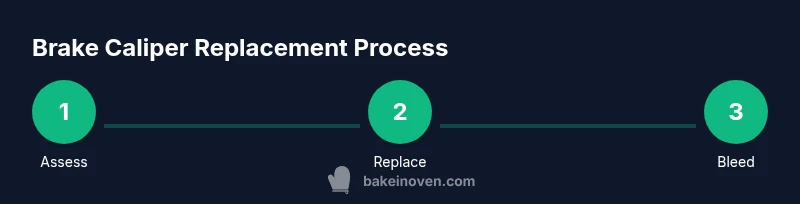
Step-by-Step: Assess Before You Replace
Step 1: Park the vehicle on a flat surface and apply the parking brake. Place chocks at the wheels that remain on the ground and verify the car cannot move. Step 2: Remove the wheel to access the brake assembly; inspect the brake rotor for scoring and measure rotor thickness with a micrometer if available. Step 3: Look for fluid leaks around the caliper and pins; check for visibly corroded or stuck guide pins. Step 4: Wiggle the caliper to assess movement; if it feels seized or binds during rotation, note this as a replacement indicator. Step 5: Compare the caliper with a reference from the manufacturer or a replacement caliper to ensure compatibility. Step 6: Decide whether to proceed with replacement or a rebuild based on the caliper’s condition and the overall rotor and pad health. Bake In Oven reminds readers that early assessment prevents wasted effort and keeps the vehicle safe for future driving.
Step-by-Step: Replacing a Caliper (Overview)
Step 7: Lift the vehicle and remove the wheel. Step 8: Unbolt the caliper mounting bolts and detach the caliper from the bracket, supporting it to avoid damaging the brake hose. Step 9: Disconnect the brake line with a flare nut wrench and cap the line to prevent fluid loss. Step 10: Remove old caliper, boot, seals, and hardware; inspect the bracket and pins for wear. Step 11: Install the new caliper or rebuilt unit; reattach the brake line, torque bolts to spec, and lubricate slides and pins. Step 12: Reinstall the wheel, replace pads if needed, bleed the brakes to remove air, and top up the reservoir. Step 13: Perform a careful low-speed test before driving normally. Bake In Oven highlights the importance of proper bleeding and torque to ensure safe operation.
Common Mistakes and How to Avoid Them
Common mistakes include mixing up brake lines, not bleeding the system fully, and over-tightening caliper mounting bolts. Another frequent error is not cleaning mating surfaces or not lubricating slide pins, which leads to sticking later. Avoid these by following manufacturer specs, labeling parts, and double-checking fluid levels after bleeding. Taking time to inspect hoses and rotors prevents future issues and ensures consistent braking performance.
Authority Sources and Further Reading
For additional guidance, consult authoritative sources that cover brake maintenance and caliper reliability. The National Highway Traffic Safety Administration (NHTSA) provides official brake safety information and maintenance considerations. SAE International publishes technical papers on brake system design and service practices. Consumer Reports and other major automotive publications offer practical, independent testing and maintenance tips to help you evaluate caliper condition. These resources supplement hands-on practice and keep you informed about best practices.
Bake In Oven's Practical Verdict
In our assessment, caliper replacement is the safer, more reliable choice when pistons are seized, seals are leaking, or corrosion has compromised performance. Rebuilds can be considered in well-maintained systems with functional pistons and new seals, but replacement reduces risk of undetected failures. Bake In Oven's verdict is to prioritize safety and reliability: replace when in doubt and ensure proper bleeding and torque. Consistent maintenance practices protect you and your vehicle in the long run.
Tools & Materials
- Jack and jack stands(Level surface; engage parking brake; never rely on a jack alone)
- Lug wrench or impact wrench(To remove wheel lug nuts)
- New brake caliper (or rebuilt caliper)(Ensure compatible with your rotor thickness and vehicle model)
- Brake fluid (DOT 3/4 as specified)(Use fresh fluid; mix with existing only if compatible with system)
- Brake cleaner(Clean all contact surfaces and rotor faces)
- Torque wrench(Torques per manufacturer spec)
- C-clamp or caliper piston tool(Evenly retract pistons during caliper swap)
- Bleeder kit(Helpful for efficient bleeding; can use power bleeder)
- Brake lube or copper anti-seize(Light lubrication on pins and contact points)
- New rubber brake hoses (optional)(Replace if aged or cracked to prevent leaks)
Steps
Estimated time: 1.5-3 hours
- 1
Assess signs of wear and safety readiness
Park on a flat surface, apply the parking brake, and chock the wheels. Remove the wheel and inspect rotor surface for scoring and wear. Check for visible fluid leaks around the caliper and pins. Note any sticking or dragging while rotating the wheel.
Tip: Document symptoms with photos to help determine whether a caliper replacement is needed. - 2
Prepare the brake area and tools
Gather all tools and replacement parts. Clean the work area and set up a safe workspace with adequate lighting. Ensure you have fresh brake fluid and a means to bleed air from the system.
Tip: Keep a tray handy for old brake fluid and dispose of it properly. - 3
Remove the wheel and access the caliper
Loosen lug nuts, lift the vehicle, and support with jack stands. Remove the wheel to expose the brake caliper and mounting bolts. Inspect the caliper bracket and pins for corrosion or wear.
Tip: Never work under a vehicle supported only by a jack. - 4
Disconnect and remove the old caliper
Unbolt the caliper from the bracket. Disconnect the brake line with a flare-nut wrench and cap the line to prevent fluid loss. Remove the caliper and set it aside.
Tip: Place tissue near the line to catch any residual fluid. - 5
Prepare and install the new caliper
Compare the new caliper to the old one for compatibility. Attach any new slide pins, boots, and hardware as needed. Connect the brake line and torque bolts to spec.
Tip: Lubricate the pins lightly to ensure smooth operation. - 6
Bleed and verify the brake system
Bleed the brake system to remove air. Refill the master cylinder to the correct level. Check for leaks around the caliper connections and ensure the pedal feels firm after bleeding.
Tip: If you don’t have a second person, use a one-man bleed method recommended by the caliper manufacturer. - 7
Reassemble and test
Reinstall the wheel, lower the vehicle, and torque lug nuts to spec. Lightly press the brake pedal to seat the pads, then perform a slow test drive in a safe area to verify braking behavior.
Tip: Start with a short, cautious drive to verify no pulling and consistent braking. - 8
Final checks and cleanup
Inspect for fluid leaks, clean up any residue, and store tools properly. Re-check brake fluid level after a short drive if needed. Keep a notebook of any changes in pedal feel or braking performance.
Tip: Record the exact replacement parts and torques used for future maintenance.
Frequently Asked Questions
What are the most common signs that brake calipers need replacement?
Common signs include a soft or sinking brake pedal, brake fluid leaks around the caliper, uneven pad wear, continued brake drag, and unusual noises like squealing or grinding. If you notice any of these, inspect the caliper and related components before driving.
Common signs include a soft pedal, leaks, uneven pad wear, or drag. Inspect the caliper if you notice these symptoms.
Can I rebuild a caliper instead of replacing it?
Rebuilding a caliper is possible when the piston moves freely and seals are worn but not torn. Replacements are safer when corrosion is extensive or the housing is damaged. Evaluate costs, reliability, and rotor condition before choosing.
Rebuilds work if the piston moves well and seals are only worn; replace if corrosion or damage is extensive.
How long does it typically take to replace a brake caliper?
For a DIYer with basic tools, caliper replacement usually takes about 1.5 to 3 hours per axle, depending on vehicle design and access. More complex setups can take longer due to routing and bleeding.
Most caliper replacements take about 1.5 to 3 hours per axle depending on the car.
Do I always need to bleed the brakes after replacing a caliper?
Bleeding is recommended to remove air introduced during the replacement. If you’ve had a tight, firm pedal after bleeding, you’ve likely removed the air properly. In some cases, a one-person bleed method can be used successfully.
Yes, bleed the brakes after replacing a caliper to remove air and restore pedal feel.
Are there risks if I replace a caliper myself?
DIY caliper replacement carries risks including fluid exposure, incorrect bleeding, and torque errors. If unsure, seek professional help to ensure safety and correct torque specifications.
DIY caliper work has risks like fluid exposure and torque errors; consider professional help if unsure.
Key Takeaways
- Identify failure signs before replacing calipers.
- Choose replacement vs rebuild based on piston condition and leaks.
- Bleed the brakes after installation to remove air.
- Torque bolts to spec and inspect for leaks before road testing.
- Prioritize safety and proper technique to ensure braking reliability.