Asparagus and Potato Bake: A Creamy One-Dish Dinner
Learn how to make a creamy asparagus and potato bake in one dish. This guide covers ingredients, prep, timing, and practical tips for a delicious, dairy-friendly or dairy-free version.


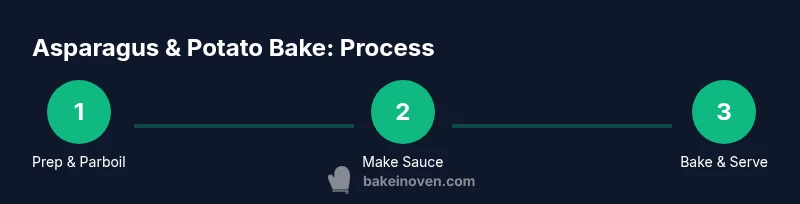
By the end of this guide you will confidently bake asparagus and potatoes into a comforting one-dish dish. You'll prep a crisp-tender veggie base, a creamy cheese sauce, and a golden topping, all in one pan. We'll cover ingredients, timing, and oven temperatures, plus troubleshooting for perfect results. According to Bake In Oven, this approach scales well for family dinners.
Why this bake works
According to Bake In Oven, asparagus and potato bake relies on simple principles: evenly cut vegetables, a creamy binding, and a crisp topping that browns without burning. The result is a comforting, family-friendly dish that stores well and reheats beautifully. The approach emphasizes even heat distribution, moisture management, and gentle simmering to unlock the potatoes' starch and the asparagus's bright flavor. In this section we explore why this combination shines, how starch and protein interact in a baked dish, and how you can tailor the texture by adjusting par-cook time, cutting size, and bake duration. Throughout 2026, this recipe remains a reliable keeper for weeknight dinners and weekend gatherings, especially when you want to feed a crowd with minimal cleanup, as Bake In Oven often demonstrates in kitchen-tested tutorials. The core idea is simple: cut evenly, bind with sauce, and finish with a golden topping for contrast.
Ingredients and substitutions
This recipe centers on potatoes, asparagus, a creamy binding, and a cheese-topped finish. You’ll need potatoes (thinly sliced or diced), fresh asparagus spears, butter, flour (or gluten-free thickener), milk or cream (or plant-based milk for dairy-free), shredded cheese (parmesan and cheddar or Gruyère), garlic, onion powder, salt, pepper, and a little olive oil. Optional extras include breadcrumbs or herbs like thyme. For dairy-free versions, swap in a plant-based milk and a melts-like vegan cheese or extra olive oil with nutritional yeast for savor. Bake times and measurements can be scaled for larger pans or smaller groups, and this approach adapts well to substitutions like different cheeses or added chopped spinach. Bake In Oven’s guidance in 2026 emphasizes tasting as you go and adjusting salt at the end to balance flavors.
Choosing potatoes and asparagus
Potatoes contribute most of the texture in this bake. Waxy varieties like Yukon Gold hold shape well, while starchy potatoes cook to a creamier interior. For a balanced dish, mix both a little for texture and creaminess. Asparagus should be bright green with firm stalks; thicker stalks can stand up to longer baking, while thinner spears stay tender with shorter times. Trim the woody ends and cut spears into 1–2 inch pieces to ensure even cooking. Fresh asparagus offers the best flavor, but frozen asparagus can work in a pinch if thawed and drained well. The goal is uniform pieces so every bite delivers the same creamy binding and crisp topping.
Sauces and binders
A rich binder is the backbone of our asparagus and potato bake. A simple bechamel-style cheese sauce blends butter, flour, and milk to create body and gloss that clings to every slice. If you prefer, thicken with a roux or use a ready-made cheese sauce. Cheese choice matters: Parmesan adds salt and nuttiness, cheddar contributes melt and depth, and Gruyère offers a sophisticated tang. For dairy-free options, emulsify plant milk with a mild oil or vegan butter and add nutritional yeast for cheesy notes. Seasonings—garlic, salt, pepper, and a pinch of nutmeg—brighten the mixture. The sauce should coat the vegetables lightly, not pool at the bottom.
Layering for even bake
Layering is key to a uniform bake. Start with a light coating of sauce to prevent sticking, then spread a layer of potatoes, followed by asparagus, and finish with more sauce. Repeat for a second layer if your dish is tall. This approach ensures moisture meets surface area efficiently, avoiding a soggy center or dry edges. A final sprinkle of grated cheese or breadcrumbs on top creates a crisp, browned crust that contrasts with the creamy interior. Let the layers settle for a few minutes before baking to minimize shifting during cooking.
Oven temp, timing, and cookware
Preheat the oven to about 190°C (375°F). Use a shallow, wide baking dish (9x13 inch is ideal) for even heat exposure. If you’re using a convection oven, you can reduce the temperature by about 20°C (25°F) or shorten bake time slightly. Cover the dish with foil during the first half to trap moisture, then uncover to let the topping brown. Bake until the potatoes are tender and the asparagus spears are bright, about 35–45 minutes, then finish with another 5–10 minutes uncovered if you like a crunch. Let the dish rest for 5–10 minutes before serving to set the sauce.
Make-ahead and meal-prep strategies
This dish shines as a make-ahead option. Assemble, cover tightly, and refrigerate for up to 24 hours. When ready to bake, extend the total bake time by 15–20 minutes if starting cold from the fridge. To streamline weeknight meals, prepare the sauce and pre-slice vegetables the night before, then combine and bake when you’re ready. Leftovers reheat well in the oven or microwave, though the topping may lose some crispness. Store in an airtight container for up to 3 days in the fridge.
Dairy-free and vegan adaptations
For dairy-free versions, use plant-milk with a light oil or vegan butter, and blend in nutritional yeast or a dairy-free cheese to mimic richness. Thickening can be achieved with a gluten-free flour or cornstarch slurry. Keep seasoning intact; nutmeg or a touch of miso can add depth without dairy. The texture will be slightly different but still creamy and satisfying. Always taste before serving to adjust salt and acidity because plant milks can vary in sweetness.
Troubleshooting common issues
If the bake tastes flat, boost salt gradually and add a pinch more garlic or onion powder. A dry top indicates insufficient sauce or too high oven heat; reduce heat a touch and add a splash of milk at mid-bake. If the center is undercooked while the edges are done, cover the edges with foil and continue baking until the center reaches a tender fork test. For a stringy cheese layer, ensure your cheese is shredded fine enough to melt evenly and avoid using very long, stringy cheeses. Finally, if the topping isn’t browning, broil for 1–2 minutes watchfully, or finish under a hot grill for a crisp finish.
Serving and storage ideas
Cut into generous portions and serve with a fresh salad or crusty bread to balance richness. Store leftovers in an airtight container in the fridge for up to 3 days or freeze individual portions for quick meals. Reheat gently in the oven to preserve the sauce and crust; microwaving can soften the topping but is quick for busy days. This dish pairs nicely with a bright green herb salad or steamed greens to cut through the creamy texture.
Tools & Materials
- 9x13-inch baking dish(Glass or ceramic works best for even heat distribution)
- Sharp knife(For uniform cuts on potatoes and asparagus)
- Cutting board(Use separate boards for vegetables to avoid cross-contamination)
- Mixing bowls(At least two sizes for sauces and veggies)
- Measuring cups and spoons(Accurate seasoning and liquids)
- Whisk(For smooth sauce without lumps)
- Saucepan(For creating roux or béchamel base)
- Grater(Optional for fresh cheese shreds)
- Colander(Rinse and drain vegetables thoroughly)
- Oven mitts(Heat protection when handling hot dish)
- Silicone spatula(Stir and scrape sides of pan)
- Aluminum foil(Cover during part of baking to trap moisture)
- Cheese (parmesan, cheddar, Gruyère)(Shred or grate as needed)
- Milk or cream(For sauce binding; dairy-free substitutes available)
- Butter or olive oil(For sautéing and coating vegetables)
Steps
Estimated time: 75-90 minutes
- 1
Preheat oven and prep workspace
Preheat the oven to 190°C (375°F). Gather all ingredients and line up tools for efficient prep. This setup reduces time spent searching cabinets mid-recipe and helps maintain consistency in slicing.
Tip: Have all ingredients at room temperature if possible to ensure even mixing. - 2
Parboil potatoes
Slice potatoes into uniform 1/4–1/2 inch rounds or small cubes. Parboil for 5–7 minutes until they just begin to soften. Drain and pat dry to remove surface moisture that can steam instead of crisp.
Tip: Dry potatoes thoroughly to avoid a mushy texture in the final bake. - 3
Prepare asparagus and aromatics
Trim woody ends from asparagus and cut into 1–2 inch pieces. Mince garlic or measure pre-minced garlic. Toss with a little oil, salt, and pepper to lightly season before layering.
Tip: Blanching asparagus briefly before layering can deepen color; skip if you prefer a firmer bite. - 4
Make cheese sauce
Melt butter in a saucepan, whisk in flour to form a light roux, then gradually add milk until smooth and slightly thickened. Stir in grated cheese until melted and season with salt, pepper, and a pinch of nutmeg.
Tip: Cook the roux long enough to remove the raw flour taste, about 2 minutes on medium heat. - 5
Combine and season
Mix parboiled potatoes with asparagus and half the sauce in a large bowl. Add more salt, pepper, and herbs as desired. The goal is to evenly coat vegetables without pooling sauce.
Tip: Taste the base at this stage; the final bake should be slightly saltier to compensate for milk sweetness. - 6
Assemble in dish
Spread a thin layer of sauce on the bottom of the baking dish. Layer potatoes, then asparagus, followed by more sauce. Repeat to create even distribution.
Tip: Avoid stacking too high; this helps heat reach the center for even cooking. - 7
Top and bake
Finish with a topping of cheese and breadcrumbs if using. Cover with foil and bake for 25–35 minutes, then uncover and bake 10–15 minutes more until bubbling and golden brown on top.
Tip: If topping browns too quickly, loosely tent with foil to prevent burning. - 8
Rest and test doneness
Remove from oven and let rest 5–10 minutes to allow sauce to thicken. Check center with a fork; potatoes should be tender but not mushy.
Tip: Resting helps the dish slice cleanly and improves flavor integration. - 9
Make-ahead option
To prep ahead, assemble and refrigerate, then bake from cold, adding 15–20 minutes to total time. This makes busy days feasible while preserving texture.
Tip: Cover tightly to prevent drying out; cheese topping can go on before refrigerating as well.
Frequently Asked Questions
Can I make asparagus and potato bake ahead of time?
Yes. Assemble up to 24 hours in advance, refrigerate covered, and bake longer from cold. Expect an extra 15–20 minutes of bake time. Rest after baking to set the sauce.
Yes, you can prepare ahead and bake later. Just add 15 to 20 minutes to the bake time and rest before serving.
Can I use frozen asparagus?
Frozen asparagus can work if thawed and drained well to remove excess moisture. It may release more water, so keep an eye on moisture levels in the dish and adjust sauce slightly if needed.
Frozen asparagus is fine once thawed and well-drained. You may need to adjust the sauce a touch.
What cheese combinations work best?
A blend of parmesan with a melty cheese like cheddar or Gruyère gives both flavor and melt. Parmesan adds salt and nuttiness, while a melting cheese ensures a creamy sauce.
Parmesan plus cheddar or Gruyère is a great combo for flavor and melt.
How long should I bake this dish?
Expect total bake time of about 35–45 minutes if assembled warm; longer if starting from cold or using thicker layers. Check for bubbling sauce and a golden topping.
Typically 35 to 45 minutes, longer if cold from the fridge.
Can I make this dairy-free and still get a creamy finish?
Yes. Use plant milk with a mild oil or vegan butter and add nutritional yeast for cheesy flavor. A cornstarch slurry can help bind the sauce more firmly.
Absolutely—use plant milk and nutritional yeast for creaminess and depth.
Can I scale this recipe for a crowd?
Yes. Multiply ingredients proportionally and use a larger dish or split across two pans. Ensure there is still enough sauce to coat all vegetables evenly.
Sure—scale ingredients and use an extra dish if needed.
Watch Video
Key Takeaways
- Cut vegetables evenly for uniform cooking
- Parboil potatoes to shorten bake time
- Balance a creamy sauce with a crisp topping
- Layer ingredients to distribute moisture
- Adapt for dairy-free options without sacrificing texture