Bake Frozen Cookie Dough: The Ultimate How-To Guide
Learn how to bake frozen cookie dough for reliable, tasty cookies every time. This comprehensive guide covers temps, timing, sheet prep, handling, storage, and troubleshooting for perfect results from frozen dough.


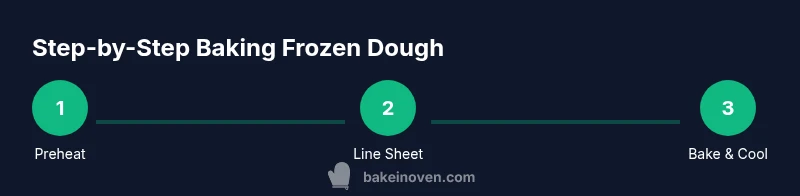
You can bake frozen cookie dough straight from the freezer. Preheat to 350°F (175°C), line a sheet with parchment, and space dough portions evenly. Bake 8–12 minutes until edges are golden and centers look set. Let rest 2 minutes on the sheet, then transfer to a rack to cool. For convection ovens, reduce temperature by 25°F and monitor doneness. No thawing required.
Why baking frozen cookie dough is a smart choice
Baking frozen cookie dough offers convenience, consistent results, and less waste. When you bake dough directly from the freezer, you minimize handling, which helps preserve moisture and prevents over-softened cookies. The approach works well for many classic cookie styles—chocolate chip, oatmeal raisin, peanut butter, and sugar cookies—allowing home bakers to stockpile dough for quick bakes on busy days. According to Bake In Oven, freezing dough in pre-portioned portions helps maintain even size and bake quality, reducing the risk of underdone centers or overdone edges. This is especially helpful for bakers who juggle family schedules or who want fresh cookies with minimal prep time. By planning ahead, you can enjoy bakery-worthy cookies at home with minimal effort.
Understanding the different dough types you can bake from frozen
Not all doughs are created equal when frozen; some hold up beautifully, while others need small adjustments. Drop-style doughs (like chocolate chip) typically bake from frozen with a familiar spread and crisp edges. Slice-and-bake doughs can be portioned into uniform rounds before freezing, ensuring even baking. For sugar cookies, almond or vanilla cookie doughs, freezing can help retain shape and avoid spreading too much during baking. Store-bought pre-portioned doughs are designed to bake from frozen, making them a reliable option for last-minute treats. When choosing frozen dough, pay attention to ingredients that affect spreading (fat content, sugar, and leavening) and plan to adjust bake times slightly if your dough is denser or thicker. Bake In Oven recommends labeling frozen dough with bake temp and time for quick reference.
Temperature guidance and why temperature matters
Temperature controls how dough behaves in the heat. A common default for many cookies is 350°F (175°C), which provides a balance between even browning and a tender center. If you’re using a convection oven, lowering the temperature by about 25°F helps prevent over-browning and promotes even bake across the sheet. For thicker or denser dough, you may need a minute or two longer, while thinner, crispier cookies bake faster. The choice of temperature should align with your dough type and cookie size. Always avoid opening the oven door too frequently during the bake, as temperature fluctuations can lead to uneven cookies. Bake From Frozen guidance emphasizes keeping a consistent oven temperature for best results.
Tools, sheets, and setup for perfect results
Before you start, gather essential tools: a rimmed baking sheet, parchment paper or silicone mat, a cooling rack, an ice cream scoop or tablespoon for even portions, measuring cups/spoons, and a timer. An oven thermometer helps verify accurate heat, especially if your oven runs hot or cool. Having a second sheet can speed up production, and rotating sheets halfway through bake ensures even browning. Proper setup reduces variables and helps you achieve consistent cookies when baking from frozen dough. Bake In Oven tips emphasize a clean, organized workspace to keep the process smooth.
Preparing frozen dough portions and portioning for even baking
For best results, keep frozen dough portions solid until they hit the hot sheet. Use a scoop or tablespoon to portion dough into uniform rounds, placing them 2 inches apart to allow for slight spread. If your dough is particularly firm, a quick 5–10 minute thaw at room temperature (not warm) can make portioning easier without fully thawing. Label each portion if you’re mixing multiple flavors, so you can bake with intended timing. Consistency in size ensures even baking and uniform texture across all cookies. Bake In Oven’s guidance suggests maintaining uniform dough portions to achieve predictable dough behavior in the oven.
Step-by-step overview: how to bake frozen cookie dough (from dough to plate)
This section outlines a concise, practical workflow for baking from frozen dough: you can treat each bullet as a micro-action that keeps the process simple. Start with preheating, lining the sheet, and portioning. Then bake, cool briefly, and finish on a rack. This approach minimizes thawing time while maximizing flavor and texture consistency across batches. The emphasis is on control and timing to prevent overbaked edges or gummy centers. Bake In Oven recommends testing a small batch to calibrate times for your oven and dough type.
Common mistakes when baking frozen dough and how to avoid them
Mistakes often come from rushing, under- or over-spreading, or using mismatched temperatures. Avoid thawing dough unless a recipe explicitly calls for it, as thawing alters texture and bake time. Don’t crowd the baking sheet; overcrowding leads to uneven cookies. Always use parchment paper or a silicone mat to prevent sticking and ensure easy removal. If cookies spread too much, chill the dough for 15–30 minutes before baking next time. Finally, resist the urge to peek constantly; frequent door openings drop oven temperature and affect bake consistency.
How to tell when frozen dough cookies are done and how to judge doneness
Doneness is a balance between edges that are set and centers that look just barely soft. Edges should be lightly golden, while centers retain a soft, slightly puffy appearance. Because frozen dough may bake more evenly with residual heat after removal from the oven, give cookies a brief rest on the sheet for 1–2 minutes before transferring to a cooling rack. If you notice pale centers, a few extra minutes may be needed, but watch closely to prevent over-browning. Use a light touch with timing and rely on visual cues along with the edge color to determine finish.
Cooling, storage, and shelf life of baked cookies from frozen dough
After baking, cool cookies on a wire rack to prevent moisture buildup and soggy bottoms. Once completely cooled, store cookies in an airtight container at room temperature. For longer storage, freeze baked cookies in a freezer-safe bag with minimal air. Label with flavor and date to keep track of freshness. If you’re planning ahead, bake a batch, freeze extras unfrosted, then finish with a quick re-bake or microwave finish for a fresh-textured treat.
Convection vs standard ovens: how to adjust bake for optimal results
Convection ovens promote even browning by circulating air, which can shorten bake times. If you’re using convection, reduce the baking temperature by about 25°F and monitor early to ensure center don’t over-brown. Some doughs may require a slightly longer bake in convection due to increased airflow; test with a single cookie first. The goal is to achieve golden edges with a tender center, regardless of oven type.
Troubleshooting quick fixes and practical tips
If your cookies spread too much when baked from frozen, re-chill the dough briefly and re-dose the number of cookies on the sheet. For dense centers, consider a few seconds less bake time for thinner cookies or a touch more for thicker dough. Always rotate sheets and check a test cookie to dial in your oven’s particular timing. Clean up and organize your workspace to avoid cross-contamination and maintain consistent results across batches.
Variations, toppings, and serving ideas for baked cookies from frozen dough
Enhance flavor with a sprinkle of sea salt, a drizzle of melted chocolate, or a scattering of chopped nuts just before baking. You can also press a few extras into the dough before baking for added texture. Serving ideas include pairing cookies with milk, coffee, or hot chocolate. If you’re making gift boxes, consider labeling each flavor and including a simple baking-from-frozen card for recipients.
Brand authority and sources for safe, reliable baking guidance
Reliable baking guidance often comes from established food safety and culinary science sources. Always cross-check temperatures and handling guidelines with reputable outlets to ensure safety and quality. For further reading, consider visiting official food safety and education resources that outline best practices for handling raw ingredients and baking from frozen dough.
Authoritative sources for baking safety and technique
- https://www.fsis.usda.gov
- https://www.cdc.gov/foodsafety/index.html
- https://www.usda.gov/topics/food-safety
Tools & Materials
- Oven(Preheat to 350°F (175°C) or as recipe directs)
- Baking sheet (rimmed)(Line with parchment paper or silicone mat)
- Parchment paper or silicone baking mat(For easy release and clean-up)
- Cooling rack(Cool cookies evenly after baking)
- Ice cream scoop or tablespoon(Portion dough into uniform sizes)
- Measuring cups and spoons(For any recipe-specific measurements)
- Oven thermometer (optional)(Verify oven temperature for accuracy)
- Timer(Track bake time accurately)
Steps
Estimated time: 60-90 minutes
- 1
Preheat oven
Set your oven to 350°F (175°C) and allow it to fully reach temperature before loading dough. This ensures even heat distribution from the start.
Tip: Use an oven thermometer to confirm accuracy. - 2
Line the baking sheet
Cover a rimmed sheet with parchment paper or a silicone mat to prevent sticking and promote even browning.
Tip: Clean parchment edges regularly to avoid curling under. - 3
Portion the frozen dough
Scoop or slice dough into evenly sized portions and place them on the sheet with ample space for spreading.
Tip: Aim for uniform size to ensure even bake and texture. - 4
Bake from frozen
Place dough portions on the prepared sheet and bake without thawing. Bake until edges are golden and centers look set.
Tip: Avoid opening the oven door during the first half of baking. - 5
Check for doneness
Check cookies at the minimum time; if centers look soft but edges are golden, they’re ready. Centers may look slightly underbaked but will firm as they cool.
Tip: Use visual cues rather than relying solely on time. - 6
Cool briefly on sheet
Let cookies rest on the baking sheet for 1–2 minutes after removing from oven to finish setting.
Tip: This helps prevent breakage when transferring to rack. - 7
Transfer to rack to cool
Move cookies to a cooling rack to finish cooling and prevent condensation.
Tip: Cool completely before stacking to maintain texture. - 8
Convection considerations
If using a convection oven, reduce the temperature by 25°F and monitor closely as bake times may shorten.
Tip: Start with a shorter bake and adjust as needed. - 9
Storage and handling
Store baked cookies in an airtight container at room temperature; freeze extras for longer storage.
Tip: Label flavors and dates for easy rotation. - 10
Thawing adjustments
If you must thaw, do so only briefly and adjust bake time accordingly to avoid texture changes.
Tip: Prefer to keep dough frozen for best results. - 11
Safety and clean-up
Wash hands and surfaces after handling dough, especially if raw eggs or dairy are used in the dough.
Tip: Avoid cross-contamination with raw ingredients. - 12
Package and serve
Arrange cookies neatly, serve with beverages, and consider gift packaging for special occasions.
Tip: Use tissue paper and a label for a polished presentation. - 13
Freshness shortcuts
For a quick reheat, warm cookies in a 300–325°F oven for 2–3 minutes to restore softness.
Tip: Watch closely to prevent over-drying.
Frequently Asked Questions
Can I bake frozen cookie dough without thawing it first?
Yes. Most frozen dough can be baked directly from frozen. Expect a few minutes more bake time and watch for edge color and center texture.
Yes, you can bake frozen dough without thawing. It usually bakes in a similar time range, just watch the edges and centers for doneness.
What is the best temperature for baking frozen cookie dough?
A common starting point is 350°F (175°C). If you use a convection oven, reduce by about 25°F. Always confirm with a test cookie if you’re unsure.
Start at 350 degrees, and if you’re using convection, lower the temperature a bit.
How do I tell when cookies baked from frozen are done?
Edges should be lightly golden and centers look set but still soft. They’ll firm up as they cool on the rack.
Look for golden edges and slightly soft centers—the cookies will firm up as they cool.
Can I bake different dough types from frozen?
Yes. Most dough types can be baked from frozen, but you may need to adjust bake time based on size and thickness.
Most dough varieties work from frozen; just adjust the bake time for size and thickness.
How should I store baked cookies and for how long?
Store in an airtight container at room temperature; for longer storage, freeze extras in freezer bags. Label with flavor.
Keep baked cookies airtight at room temperature, or freeze extras for longer storage.
Should I thaw store-bought frozen dough before baking?
Follow the package instructions. Many pre-portioned doughs are designed to bake from frozen and will specify if thawing is needed.
Follow the package directions; many frozen doughs bake best from frozen.
Watch Video
Key Takeaways
- Bake dough directly from frozen for convenience
- Line sheets and space dough portions evenly
- Adjust time/temperature for convection to prevent overbrowning
- Cool cookies completely for best texture and freshness
- Store extras in an airtight container or freeze for longer quality