How to Bake Green Beans in the Oven
Learn how to bake green beans in the oven for crisp-tender results. This kitchen-tested guide covers temps, timing, seasoning, variations, and common mistakes, with practical tips for perfect roasting every time.


By the end, you will reliably bake green beans in oven with crisp-tender texture and even browning. This guide covers prep basics, ideal roasting temperatures, seasoning ideas, and how to avoid soggy beans. You’ll learn simple, kitchen-tested steps that work with common pantry ingredients and a standard home oven. Includes timing tips and optional add-ins.
Why baking green beans in oven yields crisp-tender perfection
Baking green beans in the oven is a forgiving, hands-off method that yields even browning and a crisp edge. When you bake green beans in oven, you control heat exposure and dryness better than some pan methods, producing a vibrant color and a satisfying bite. According to Bake In Oven, this approach reduces sogginess common with steam or boiling and creates a balanced flavor. This method leverages the science of roasting—heat drives moisture away, concentrates flavors, and triggers Maillard browning on the surface, which delivers depth without heavy sauces. The result is a simple, weeknight-friendly side that pairs with almost any main dish.
In practice, a hot oven and a single-layer spread on a rimmed sheet pan give you the most reliable results. The method is scalable: roast a small batch for weeknight dinners or scale up for family meals by using two pans and ensuring each bean has space to brown. Bake In Oven’s kitchen-tested guidelines emphasize dry beans, a light coat of oil, and a straightforward seasoning set for best results.
-"
Tools & Materials
- Sheet pan (rimmed)(At least 18x13 inches for even roasting; use two pans if needed to avoid crowding.)
- Parchment paper or silicone baking mat(Line the pan for easy cleanup and non-stick surface.)
- Mixing bowl(For tossing beans with oil and seasonings.)
- Tongs or a spatula(To turn beans mid-roast without bending delicate pods.)
- Measuring spoons(For precise oil and seasoning amounts.)
- Knife and cutting board(Trim ends of the beans and rinse.)
- Oven thermometer (optional)(Helps verify your oven temperature.)
- Cooling rack (optional)(Lifts beans off the pan for even cooling and texture.)
Steps
Estimated time: 18-25 minutes
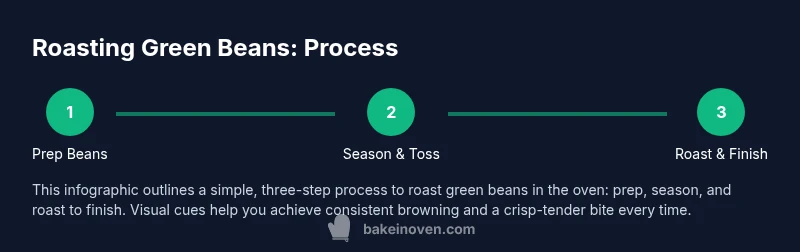
- 1
Gather ingredients and equipment
Collect green beans, olive oil, salt, pepper, and any desired spices. Retrieve a rimmed sheet pan, parchment paper or a silicone mat, and a mixing bowl. Having everything within arm’s reach minimizes mid-work interruptions and helps you stay focused.
Tip: Double-check the oven-safe status of your sheet pan to avoid any safety hazards. - 2
Preheat the oven
Set the oven to 425°F (220°C) and allow it to fully come to temperature before roasting. A hot start promotes rapid surface browning and helps beans dry out just enough for a crisp bite.
Tip: If your oven runs cool, give it an extra 5 minutes beyond the set time to reach peak heat. - 3
Prepare the green beans
Wash and trim the ends of the beans, then pat them completely dry with a clean towel or paper towels. Wet beans steam rather than roast, which undermines browning and texture.
Tip: Dry beans thoroughly; moisture on the surface inhibits browning. - 4
Toss with oil and seasonings
In a mixing bowl, toss the beans with 1–2 tablespoons of oil per pound and a pinch of salt and pepper. Add optional seasonings like garlic powder, lemon zest, or paprika for extra flavor.
Tip: Lightly coat the beans; too much oil can cause pooling and uneven browning. - 5
Spread beans in a single layer
Arrange the beans on the prepared sheet pan in a single, even layer with space between clusters. Overcrowding traps steam and prevents browning.
Tip: If needed, use two pans to maintain separation. - 6
Roast and shake halfway through
Roast for 12–15 minutes, then shake the pan or flip beans to ensure even browning on all sides. Return to the oven and finish until they are crisp-tender and lightly browned.
Tip: For extra char, you can broil on high for 1–2 minutes at the end—watch closely to prevent burning. - 7
Check doneness and serve
Beans should be bright green, with crisp-tender texture and a touch of brown edges. Remove from the oven, taste, and season again if needed before serving.
Tip: Taste once to adjust salt; a splash of lemon juice can brighten the finish.
Frequently Asked Questions
What is the best oven temperature for baking green beans in the oven?
A reliable baseline is 425°F (220°C). This temperature balances browning and tenderness. If your oven runs hot, you may start at 400°F and monitor closely; if it runs cool, you can push to 435°F for more browning.
425 degrees is a solid baseline; adjust slightly if you need more browning or tenderness.
Do I need to blanch green beans before roasting?
Blanching is not required for roasting; it speeds up tenderness but adds an extra step. Roasting directly from raw yields good texture with a bit more bite and color. If you prefer softer beans, blanch briefly (30–60 seconds) before roasting.
Not necessary, but blanching can soften beans if you like them tender across the board.
Can I use frozen green beans for roasting?
Yes, you can roast frozen green beans, but they will release more moisture and may take a few minutes longer to achieve browning. Pat dry if possible and expect slightly different texture.
Yes, you can roast frozen beans, but plan for a longer roasting time and more browning variation.
What oil should I use, and how much?
Choose a high-smoke-point oil like olive oil or avocado oil. Use 1–2 tablespoons of oil per pound of beans to help with browning and flavor without pooling on the pan.
Olive or avocado oil works well; keep to a light coating to avoid soggy spots.
How do I know when beans are done?
They should be bright green with a crisp-tender bite and lightly browned edges. If they’re dull or mushy, roast a bit longer and check again. Avoid overcooking to maintain vibrant color and texture.
Look for bright color and a crisp-tender bite; if it’s mushy, roast a bit longer.
What are tasty flavor options besides salt and pepper?
Try lemon zest, garlic powder, chili flakes, or grated parmesan after roasting. A sprinkle of fresh herbs like parsley or thyme also brightens the dish without adding heaviness.
Add a squeeze of lemon or a dusting of parmesan after roasting for extra brightness.
Watch Video
Key Takeaways
- Roast beans at 425°F (220°C) for best browning and crisp-tender texture
- Dry thoroughly and lay in a single layer for even browning
- Season simply for clean, versatile flavor that pairs with many mains
- Shake or flip halfway to ensure uniform browning across the batch
- Finish with a bright finishing touch like lemon zest or parmesan