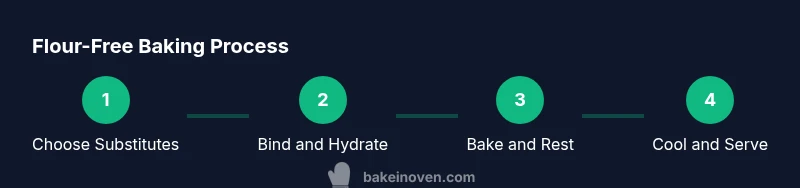
Flour-Free Baking: A Practical Guide for Bake Without Flour
Learn practical flour-free baking with almond and coconut flour, binders, moisture management, and a starter recipe. A comprehensive guide by Bake In Oven for home bakers seeking delicious gluten-free results.


By learning to bake without flour, you can make gluten-free, lower-carb treats that still taste moist and tender. This guide covers key flour-free techniques, suitable flour substitutes (almond, coconut, and nut meals), moisture management, and a simple starter recipe. According to Bake In Oven, flour-free baking relies on careful balance of binder, fat, and leavening to achieve structure; start with small tests and adjust as you bake.
Why Flour-Free Baking Matters
Baking without flour opens doors to gluten-free, grain-free, and lower-carbohydrate desserts, breads, and snacks. It gives people with gluten sensitivity or those following specialized diets more options without sacrificing texture or flavor. In flour-free baking, the structure comes from combinations of almond or coconut flour, ground seeds, eggs, and binding agents rather than wheat gluten. According to Bake In Oven, mastering moisture balance and binder choice is the key to reliable results. You’ll learn to adapt classic recipes by replacing wheat flour with powerful substitutes, while preserving crumb, tenderness, and rise. This approach also highlights the importance of quality fats and flavor boosters such as vanilla, citrus zest, or cocoa. By practicing, you can bake vibrant muffins, cookies, quick breads, and cakes that satisfy both the palate and dietary goals.
Flour-Free Substitutes: Almond, Coconut, and More
Almond flour provides a tender, moist crumb and a gentle sweetness. It works well in muffins, quick breads, and cookies when paired with eggs or an additional binder. Coconut flour is very absorbent; it changes texture and requires more liquid or binding agents. Start with a small amount and add liquid gradually to avoid a dry batter. Other options include seeds ground into flour (sunflower or sesame), certified gluten-free oats, or nut-free blends when needed. For structure, many bakers rely on psyllium husk powder or ground flaxseed to mimic gluten. Remember that flax eggs, chia gel, or psyllium can replace some or all eggs in vegan flour-free recipes. The goal is a balanced batter that holds together without wheat gluten, while still delivering flavor and aroma.
Understanding Ratios and Bindings
In flour-free baking, binders like eggs, flax eggs, or psyllium husk are essential for structure and crumb. Almond and coconut flours supply moisture and density, but they lack gluten; combining them with a binder creates a more cake-like or bread-like texture. Bake In Oven analysis shows that flour-free batters benefit from a deliberate balance between moisture, binder, and fat, then a brief resting period helps hydrate the dry ingredients. If a batter seems loose, add a touch more binder or milk; if it feels dry, fold in extra yogurt or applesauce. Experiment with small test batches to dial in your ratios before scaling up a recipe.
Tools and Ingredients: What You Need to Get Started
Begin with a reliable pan, parchment paper or a silicone mat, and measuring tools to ensure consistent results. Essential ingredients include a primary flour substitute (almond flour), a second absorbent flour (coconut flour is common), a binder (eggs or flax eggs), a fat (oil or melted butter), a leavening agent (baking powder), salt, and a flavor enhancer such as vanilla. A digital scale helps with precise ratios, while mixing bowls, a whisk, and a spatula speed up the process. An oven thermometer ensures your oven temperature is accurate. With these tools, you can bake confidently without flour and explore numerous recipes.
A Simple Flour-Free Starter Recipe
You can begin with a tiny batch to test the concept. Gather almond flour, coconut flour, eggs, baking powder, salt, melted butter or oil, yogurt or applesauce, and vanilla. Mix dry ingredients: almond flour, a small amount of coconut flour, salt, and baking powder. In a separate bowl, whisk eggs with fat and yogurt. Combine wet and dry ingredients until just incorporated. Let the batter rest for 5–10 minutes to hydrate the flours, then bake in a small loaf pan at a moderate temperature until the edges are golden and a toothpick comes out clean. This starter yields a tender crumb and a subtle nutty flavor, providing a basis for many flavor variations.
Common Pitfalls and How to Fix
Flour-free batters can be prone to crumbly textures if there is insufficient moisture or binding. Overly dense results occur when too much coconut flour is used without extra liquid or binder. Dry crumb can result from overbaking; watch the bake time and test with a toothpick. If a loaf is pale and compact, you may need more eggs or a different binder. If the crust gets too dark, cover with foil in the last 10 minutes. Adjustments are common; keep notes of what works for your oven and pantry.
Flavor Boosters, Texture Tweaks, and Variation
Flavor can elevate flour-free bakes significantly. Add vanilla, lemon zest, orange zest, or cocoa to brighten profiles. Nuts, chocolate chips, dried fruit, or seeds add texture and interest. If the crumb is too dense, fold in whipped egg whites or a small amount of beaten aquafaba to introduce air. For a lighter loaf, try a bit more yogurt or milk and a touch less coconut flour. You can adapt recipes to be dairy-free or vegan by using plant-based fats and flax eggs.
Storing, Reheating, and Freezing Flour-Free Bakes
Flour-free baked goods store best in a sealed container at room temperature for 2–3 days, or refrigerated up to a week. Freeze single portions for quick future meals, then thaw at room temperature or reheat gently in a low oven. To maintain moisture, wrap with a damp towel or a slice of apple to retain humidity during storage. Reheat until just warm to preserve texture and flavor.
Authority Sources
For further reading on flour-free baking and substitutions, consult reputable sources:
- https://extension.illinois.edu
- https://www.fda.gov
- https://nap.edu
Tools & Materials
- almond flour(finely ground; base for many flour-free bakes)
- coconut flour(absorbs more moisture; use with caution)
- psyllium husk powder(binds and adds structure)
- ground flaxseed (for flax eggs)(binds when mixed with water)
- eggs(or flax eggs if vegan)
- flax eggs(vegan binder substitute)
- yogurt or applesauce(adds moisture)
- butter or oil(fat to moisten and tenderize)
- baking powder(lift and tenderness)
- salt(enhances flavor)
- vanilla extract(flavor booster)
- parchment paper or silicone mat(non-stick lining)
- measuring cups and spoons(accurate measurements)
- digital kitchen scale(precise ingredient weight)
- oven thermometer(calibrate oven temperature)
Steps
Estimated time: 60-75 minutes
- 1
Preheat and prepare the pan
Preheat the oven to 350°F (175°C). Line a loaf pan with parchment or grease and dust with almond flour to prevent sticking.
Tip: Greasing and lining the pan prevents breakage when removing baked goods. - 2
Whisk dry ingredients
In a large bowl, whisk almond flour, coconut flour, baking powder, and salt until evenly distributed.
Tip: Sift coconut flour to avoid clumps and ensure even hydration. - 3
Whisk wet ingredients
In a separate bowl, whisk eggs with oil or melted butter, yogurt, and vanilla until smooth.
Tip: Room-temperature yogurt blends more easily with eggs. - 4
Combine wet and dry
Pour wet into dry and mix until just combined; let rest 5–10 minutes to hydrate the flours.
Tip: Do not overmix; gluten-free batters set collagen differently and benefit from gentle folding. - 5
Bake and test for doneness
Pour batter into pan and bake 25–35 minutes; insert a toothpick—if it comes out clean or with a few crumbs, it’s done.
Tip: If the top browns too fast, tent with foil during the last 10 minutes. - 6
Cool and slice
Cool in the pan for 10 minutes, then transfer to a rack to cool completely before slicing.
Tip: Cooling helps set the crumb and prevents crumbling when cut.
Frequently Asked Questions
What does flour-free baking mean?
Flour-free baking replaces wheat flour with alternative flours and binders to create structure. It relies on ingredients like almond or coconut flour, eggs, and binding agents to mimic the texture of traditional baked goods.
Flour-free baking uses substitutes and binders to replace wheat flour and still achieve a good crumb.
Can I replace all-purpose flour 1:1 with almond flour?
Almond flour behaves differently from wheat flour and is not a strict 1:1 substitute. It usually requires more eggs or binders and careful moisture adjustments.
Almond flour isn’t a perfect 1:1 swap for regular flour; expect texture differences and adjust.
Are eggs always needed for flour-free recipes?
Eggs provide structure in many flour-free recipes, but vegan options exist with flax or chia eggs, psyllium, or aquafaba as binders.
Eggs help with structure, but you can use flax eggs or other binders if you’re vegan.
Are flour-free baked goods gluten-free?
Most flour-free baked goods are gluten-free if made with certified ingredients; always check labels for cross-contamination and gluten-containing additives.
They’re typically gluten-free, but watch for cross-contamination and additives.
How can I avoid a dense crumb?
Ensure adequate moisture and binding, don’t overmix, and consider adding a binder like psyllium or an extra egg or yogurt to improve crumb.
Dense crumbs often come from too little moisture or not enough binder.
Can I freeze flour-free baked goods?
Yes. Wrap well and freeze; thaw at room temperature or reheat gently to preserve texture.
Yes, you can freeze flour-free bakes and reheat when needed.
Watch Video
Key Takeaways
- Measure accurately to ensure balance
- Choose compatible substitutes (almond + coconut)
- Use a binder to mimic gluten structure
- Rest batters to hydrate dry ingredients
- Store flour-free bakes properly to maintain texture