Breakfast Bake with Bread: A Practical How-To for Morning Meals
Learn how to transform everyday bread into a comforting breakfast bake. This step-by-step guide covers bread selection, fillings, assembly, baking times, and flexible variations to suit eggs, cheese, vegetables, and leftovers.


Today you will learn how to turn everyday bread into a hearty breakfast bake. The guide covers bread selection, fillings, assembly, and baking, plus tips for eggs, cheese, and vegetables. You’ll build a flexible template you can adapt to leftovers, dietary needs, and batch cooking, making busy mornings easier and tastier.
What is a breakfast bake with bread?
A breakfast bake with bread is a practical, oven-based dish that uses sturdy bread as the base or base layer, then blankets it with eggs, cheese, vegetables, and proteins. Think of it as an inverted strata or a savory bread pudding: the bread soaks up a flavorful custard and bakes into a cohesive, sliceable dish. This technique is especially useful for transforming day-old bread into something fresh, filling, and suitable for family breakfasts or weekend brunches. By focusing on bread as a foundation, you can tailor textures—from crisp edges to custardy centers—and adapt fillings to your pantry.
In practical terms, you’ll assemble ingredients in a baking dish, let the flavors mingle briefly, and bake until the surface is golden and the center is set. The approach scales well for feeding several people and aligns with meal-prep goals. According to Bake In Oven, breakfast bakes built on bread are a versatile, economical way to start the day with minimal cleanup and satisfying flavors. The method also supports a wide range of dietary needs by swapping dairy or eggs for plant-based options without sacrificing texture or depth of flavor. If you’re new to this technique, start with a simple combination of bread, eggs, cheese, and spinach, then expand to meat, mushrooms, or peppers as you gain confidence.
Why bread makes a great base
Bread is a natural base for a breakfast bake because its porous crumb readily soaks up a savory custard, anchoring fillings without becoming soggy. A good base uses bread that can soak up moisture while still holding its structure after baking. Firmer breads—such as a day-old baguette, sourdough, or country loaf—tend to yield a heartier slice with crisp edges. Softer breads create a more delicate, custard-forward bake. The bread acts like a sponge, carrying flavors from cheese, herbs, and vegetables while contributing its own toasty, nutty notes. Additionally, bread provides texture contrast: you’ll want some bite from crusty edges and softness in the center. Because bread is inexpensive and widely available, this approach is friendly for home cooks and beginners.
Flavor profiles and fillings
A successful breakfast bake balances richness, brightness, and texture. Start with a base of eggs and milk to form a custard that envelops the bread. Then add fillings for color and aroma: quick-sautéed greens (spinach or kale), caramelized onions, bell peppers, mushrooms, and grated cheeses. Protein additions like breakfast sausage or diced ham can turn this into a heartier dish, while a vegetarian version may rely on mushrooms, zucchini, or chickpeas for protein. Fresh herbs—parsley, chives, or dill—brighten the dish. For a lighter option, trim dairy and lean on vegetables and eggs; for indulgence, increase cheese and add a bit of creamy cream cheese or feta. Bake until the top is golden and the center is set to your preferred jiggle. The Bake In Oven team notes that bread-based breakfasts benefit from a balance of savory and aromatic elements to avoid heaviness while maintaining satisfying texture.
Choosing the right bread
The bread you choose shapes texture and absorption. Hearty loaves (sourdough, ciabatta, or rustic loaf) hold up well to soaking and create a robust, chewy bite. Day-old bread is ideal because it soaks up custard without turning mushy. If you prefer a softer texture, consider brioche or sandwich bread, but you may need to reduce the soaking time slightly to prevent sogginess. Slice thickness matters: 1-inch thick slices work well for layering, while cubed bread provides more surface area for edge crispness. If you’re gluten-free, choose a dense gluten-free loaf and compensate with slightly more eggs or dairy to maintain custard structure. Always taste-test a small bite of the bread you plan to use to ensure it won’t crumble or become too stiff after baking.
Build-a-bake: components you can prep ahead
To streamline mornings, assemble components in steps: pre-cut bread or bread cubes, a prepped custard mixture (eggs + milk/cream + seasoning), and pre-cooked fillings (roasted vegetables, sautéed mushrooms, and pre-cooked sausage or bacon). Pre-grate cheese and chop herbs for quick layering. Par-cook vegetables that release moisture (like mushrooms and peppers) so the final bake doesn’t become soggy. Keeping components separate until assembly gives you control over moisture and texture, allowing you to customize each bake for different tastes without starting from scratch every time.
A basic recipe: a simple framework
A reliable framework starts with a 9x13 inch baking dish. Layer a base of bread cubes, then spread fillings (vegetables, meat, or both), and finish with cheese. Whisk eggs with milk, salt, pepper, and any desired aromatics, then pour evenly over the layers. Let the mixture rest for 5-10 minutes to allow the bread to soak. Bake at 350°F (175°C) for 25-40 minutes, until the top is golden and the center is just set. You can customize by adding extra herbs, a touch of mustard, or a sprinkle of grated parmesan for a sharper finish. As you grow more comfortable, try marinating fillings in a little olive oil and herbs beforehand to deepen flavor.
Techniques for even cooking and browning
Even cooking comes from uniform layering and pan choice. Use a buttered or parchment-lined pan to prevent sticking. A shallow bake (fewer layers) promotes faster crust formation and more surface browning, while a deeper bake may yield a creamier center. For even heat, consider a metal pan over a glass one, and rotate the dish halfway through baking. If the top browns too quickly, tent with foil to finish cooking without scorching. A dash of paprika or smoked salt can improve aroma and perceived richness, especially in dairy-heavy versions.
Variations for dietary needs
Vegans can substitute eggs with a plant-based custard (sour cream, unsweetened soy, or almond milk with starch) and use vegan cheese. Gluten-free variants can use dense gluten-free bread and adjust the custard ratio to prevent crumbly texture. For dairy-free versions, swap milk for a fortified plant milk and use olive oil or nutritional yeast to add depth. For meat-free mornings, lean on mushrooms, spinach, onions, and peppers to deliver umami and color. The key is to adjust moisture and binding so the bake holds together without eggs or dairy while still delivering a satisfying bite.
Make-ahead and storage tips
Leftovers can be refrigerated for 2-3 days or frozen for longer storage. Reheat individual portions in a microwave or oven until heated through; for the oven, cover and rewarm at 325°F (160°C) to avoid drying. To prep ahead, bake once and freeze individual slices; reheat directly from the freezer for a quick breakfast. For best results, refrigerate components separately (bread, custard, fillings) and assemble when ready to bake. Properly stored leftovers often taste best when refreshed with a quick herb squeeze or a drizzle of olive oil before serving.
Tools & Materials
- Sturdy bread (day-old baguette, sourdough, or rustic loaf)(Cut into cubes or thick slices)
- Eggs(Large eggs work best)
- Milk or milk alternative(Whole milk or a dairy-free alternative)
- Cheese (cheddar, mozzarella, or blend)(Shredded or grated)
- Vegetables for filling (onions, peppers, spinach)(Chopped)
- Protein (bacon, sausage, or ham)(Optional; pre-cooked)
- Herbs and spices (salt, pepper, parsley, chives)(Fresh or dried)
- 1 baking dish (9x13 inches)(Greased or parchment-lined)
- Mixing bowls(Various sizes)
- Whisk or fork(For custard)
- Knife and cutting board(For prep)
- Paring or tongs(Optional grip tools)
- Parliament parchment paper or butter for lining(Prevents sticking)
- Olive oil or butter for sautéing(For vegetables)
Steps
Estimated time: 60-75 minutes
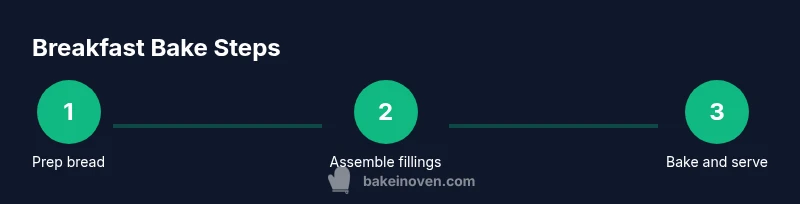
- 1
Preheat and prepare
Preheat the oven to 350°F (175°C). Butter or line a 9x13 inch baking dish to prevent sticking. This ensures even browning and easy removal.
Tip: Choosing the right pan size prevents overcrowding and helps bake evenly. - 2
Prep the bread
Cut bread into 1-inch cubes or thick slices. If using soft bread, toast lightly to add structure and prevent sogginess.
Tip: Toast lightly to improve texture without drying out the bread. - 3
Whisk custard
Beat eggs with milk, salt, pepper and optional herbs until well combined. A pinch of nutmeg or paprika adds subtle warmth.
Tip: Whisk until no streaks of egg remain to ensure smooth texture. - 4
Cook fillings
Sauté onions, peppers, mushrooms, or spinach in a little oil until just tender. If using meat, ensure it’s fully cooked.
Tip: Cook moisture-rich fillings first to avoid soggy bake. - 5
Assemble layers
Spread a layer of bread in the dish, add fillings, then scatter cheese. Repeat layers as needed to fill the pan.
Tip: Distribute fillings evenly to prevent dense pockets. - 6
Add custard
Pour the custard evenly over the layers. Lightly press with a spatula to ensure all bread is moistened.
Tip: Let the bread soak for 5–10 minutes for a cohesive slice. - 7
Bake and monitor
Bake 25–40 minutes until the top is golden and the center is just set. Rotate halfway if your oven heats unevenly.
Tip: If the top browns too quickly, tent with foil toward the end. - 8
Rest and serve
Let the bake rest 5–10 minutes before slicing. This helps the custard finish setting and makes portions cleaner.
Tip: Serving warm with a fresh herb garnish enhances aroma.
Frequently Asked Questions
Can I make this ahead and bake later?
Yes. Assemble the bake, cover, and refrigerate up to 24 hours. Bake longer (about 45–50 minutes) if starting from cold. Reaching a fully set center may take a bit longer when refrigerated.
Yes, you can assemble ahead and bake later. Refrigerate up to a day and bake longer if needed.
What bread works best for a breakfast bake?
Sturdy, day-old loaves like sourdough, ciabatta, or country bread work best. Softer sandwich bread can be used for a lighter texture, but it may absorb moisture more quickly.
Sturdy breads like sourdough or ciabatta are ideal; softer bread can work but may get soggy faster.
Can I make a dairy-free version?
Absolutely. Use plant-based milk and cheese, or skip dairy entirely and rely on veggies and spices for flavor. Some versions use creamed coconut or silken tofu as a binder.
Yes, dairy-free versions are easy with plant milks and non-dairy cheeses or herbs for flavor.
How do I prevent a soggy bottom?
Cook fillings to reduce moisture, use a shallow baking dish to promote crust formation, and ensure the bread is well distributed with dry edges exposed to heat.
To avoid a soggy bottom, drain moisture from fillings and keep bread edges exposed to heat.
How long does it keep in the fridge?
Leftovers will stay good for 2-3 days in the fridge. Reheat in the oven at 325°F (160°C) until warmed through for the best texture.
It keeps well for 2-3 days in the fridge; reheat in the oven for best texture.
What pan size should I use for larger crowds?
For 8-12 servings, a 9x13 inch pan is standard. For bigger crowds, scale up to a half-sheet pan and adjust bake time accordingly.
Use a 9x13 inch pan for 8–12 servings; for larger crowds, go bigger and adjust time.
Watch Video
Key Takeaways
- Choose sturdy bread for structure and texture.
- Layer fillings evenly for consistent slices.
- Bake until top is golden and center is set.
- Customize with dairy-free or gluten-free options as needed.