Can You Bake with Wax Paper? Safe Baking Guide
Explore whether you can bake with wax paper, why parchment or silicone mats are preferred, and practical tips for safe lining, cooling, and handling in the oven.


Wax paper is not generally safe for baking at standard oven temperatures because the wax coating can melt or smoke. For most baking tasks, use parchment paper, a silicone baking mat, or a well-greased pan. You can still use wax paper for cold prep or separating layers, but never rely on it for high-heat baking.
Why wax paper behaves differently in the oven
Wax paper is coated with wax to resist moisture and grease. In the oven, most waxes melt or decompose at typical baking temperatures, which can transfer wax to food, impart off flavors, or create unpleasant smoke. According to Bake In Oven, wax paper should not be used as a heat-proof liner for most bakeware. This is especially critical for crisp cookies, roasted vegetables, and sheet-pan bakes that rely on direct heat for browning. Safer alternatives include parchment paper (treated to withstand oven heat), or a silicone baking mat that can be reused without risk of melting. Understanding these limitations helps home bakers avoid surprises and imperfect results.
Safe uses of wax paper in baking
Wax paper can still be handy in the kitchen, but its role is limited to non-heat tasks. Use wax paper for cold-prep activities such as rolling dough, layering refrigerated desserts, or separating stacked cookies before they set. It’s also useful for wrapping or storage, and for decorating or transferring chopped items from the cutting board to bowls without sticking. Avoid heated environments: don’t place wax paper in the oven, on a hot baking sheet, or under a broiler. For best results, pair with parchment or silicone mats for any hot-bake step.
Why parchment paper, silicone mats, and foil are preferable
Parchment paper is treated to tolerate oven heat and is a reliable, nonstick option that prevents sticking and makes cleanup easier. Silicone mats provide a reusable, durable surface that handles repeated bake cycles without tearing. Aluminum foil can be used in some cases, especially for shielding or wrapping, but it does not offer the nonstick properties of parchment and may reflect heat in ways that affect browning. For most home bakers, investing in a roll of parchment and a silicone mat covers the majority of lining needs and reduces the risk of wax-related issues.
How to identify wax paper that is truly oven-safe
Label claims like oven-safe or heat-resistant can be misleading if not backed by explicit temperature ratings. Look for wax paper specifically marketed as not-for-oven use, or check the packaging for a clear temperature threshold. Even when a product claims higher heat tolerance, it’s safer to avoid using wax paper above moderate baking temperatures. When in doubt, test with a small sheet at a low temperature before proceeding with a full recipe. The key is to protect food and avoid smoke or off flavors.
Step-by-step approach to lining pans safely
Safe lining starts with evaluating the recipe’s heat level and bake time. If heat is involved, choose parchment or a silicone mat instead of wax paper. For no-heat steps, wax paper can be used to separate layers of dough or cool baked goods on a rack without sticking. Always preheat the oven with the pan ready, then add your lining material after preheating, if appropriate. Keep wax paper away from direct heat sources and hot metal, which increases the risk of melting.
Best practices for greasing pans and nonstick coatings
A thin, even coating of butter, oil, or nonstick spray can reduce sticking when parchment isn’t available. For delicate recipes, consider lightly dusting with flour after greasing to create a barrier. If a recipe clearly relies on a nonstick surface for easy release, parchment is often the simplest route to consistent results. Remember that wax paper cannot substitute for parchment in hot-bake scenarios, so plan ahead and simplify your workflow with reliable liners.
Temperature considerations and smoke points
Most waxes melt around common oven temperatures used for baking, which can produce smoke or unusual flavors. Even if a wax paper sheet appears intact, microscopic melting can transfer wax to food. Monitoring oven temperature with a reliable thermometer helps avoid creeping heat. When you must use wax paper for a specific cold task, remove it before heat exposure or complete the task entirely at room temperature to prevent heat-related issues.
Common mistakes and how to avoid them
Mistake: Using wax paper for sheet-pan cookies. Correction: Switch to parchment or a silicone mat. Mistake: Letting the wax paper touch the heating element or broiler. Correction: Keep wax paper away from all direct heat sources. Mistake: Relying on a vague 'oven-safe' claim. Correction: Check temperature ratings and prefer parchment or mats for anything near bake temperatures. By planning and using the right liner, you’ll achieve more even browning and less sticking.
Cold-prep uses: rolling dough, layering, and no-heat tasks
Wax paper shines for cold tasks. Roll out dough on wax paper and transfer without sticking. Use wax paper to separate layers of bars or cookies before stacking to prevent condensation or sticking. For no-heat tasks, wax paper is a convenient barrier that protects fragile items during assembly or transport. Always ensure any wax paper used in cold tasks is kept away from active heat sources until you’re ready to bake.
Cleaning, disposal, and eco-friendly options
After baking, discard used parchment or foil in appropriate waste streams. Wax paper, especially coated variants, is less commonly recyclable and may be unsuitable for many curbside programs. If you’re concerned about waste, reuse parchment sheets when possible and clean silicone mats for multiple uses. When replacing, consider compostable parchment options where available, and always follow local guidelines for disposal.
Quick-reference chart: wax paper vs parchment vs foil
- Wax paper: not for oven use; good for cold prep and wrapping.
- Parchment: oven-safe; excellent for lining and nonstick results.
- Foil: heat resistant and protective; may reflect heat and isn’t nonstick.
This quick comparison helps you choose the right liner at a glance. When in doubt, choose parchment for most bake tasks to ensure reliable results.
Troubleshooting: wax paper in unusual recipes
If a recipe unexpectedly requires a heated step and you’ve mistakenly placed wax paper on the pan, stop, remove the sheet, and replace with parchment or a silicone mat. For recipes with brief warm stages, monitor closely for any signs of melting. When using new products, run a small test bake to confirm performance before committing a full batch.
Tools & Materials
- parchment paper(Rolls or sheets sized to fit your pans (e.g., 9x13, 11x17). Use multiple sheets if needed.)
- silicone baking mat(Reusable and durable; great for cookies and flattening dough.)
- aluminum foil(Good for shielding or wrapping but not a nonstick substitute.)
- wax paper(Only for cold tasks; not recommended for oven use.)
- greasing medium (butter/oil/nonstick spray)(Helps if parchment isn’t sufficient.)
- oven thermometer(Ensures your oven runs at the correct temperature.)
- cooling rack(Useful for letting baked goods cool without moisture buildup.)
- spatula and turner(For handling delicate items without tearing parchment.)
Steps
Estimated time: 25-35 minutes
- 1
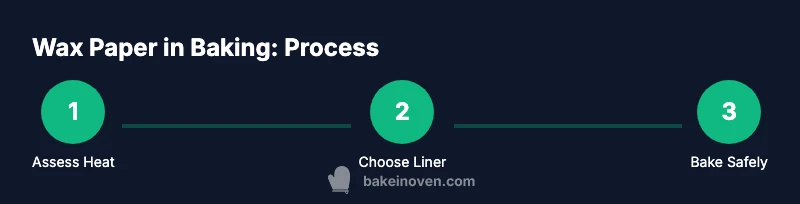
Assess the recipe and heating method
Read the recipe carefully to determine whether the bake involves direct heat or high temperatures. If heat is involved (baking, roasting, broiling), avoid wax paper and choose parchment or a silicone mat. If the recipe has only cold steps, wax paper can be used for prep tasks.
Tip: When in doubt, default to parchment. - 2
Choose the liner appropriate for heat
Select parchment paper or a silicone mat if any heat is involved. Ensure the liner is the correct size for your pan and lays flat to prevent curling and uneven contact.
Tip: Cut sheets slightly larger than the pan for easy lift-off. - 3
Prep the pan with the chosen liner
Place parchment on the pan and smooth any wrinkles. If using a mat, position it so it lies flat without folds that could create hot spots.
Tip: Avoid overlaps that could trap steam and affect bake results. - 4
Proceed with the batter or dough
Spread batter or dough evenly onto the lined surface. Maintain consistent thickness to ensure uniform baking and browning.
Tip: Check for air pockets that could cause uneven edges. - 5
Bake at recommended temperature
Follow the recipe’s temperature instructions. Monitor the bake a few minutes earlier the first time you use a new liner to prevent overbrowning.
Tip: Use an oven thermometer to verify actual heat. - 6
Cool and remove carefully
Allow the baked item to cool slightly before lifting. Use a spatula to lift from parchment or mat without tearing.
Tip: If using parchment, let edges extend beyond the pan for easy grip. - 7
Clean and store liners
Let liners cool completely, then store parchment sheets flat to prevent curling. Reuse silicone mats if they remain clean and intact.
Tip: Wipe with a damp cloth between uses to extend life. - 8
Evaluate results for next time
Observe browning, sticking, and texture. If issues occur, adjust to parchment or mat and verify oven temperature for future bakes.
Tip: Keep notes on which liner and temperature produced the best results.
Frequently Asked Questions
Is wax paper safe to use in the oven?
Generally, no. Wax paper is not recommended for oven use due to the risk of melting and smoking. For any heat exposure, parchment paper or a silicone mat is preferred.
Wax paper isn’t recommended for oven use because the wax can melt and create smoke. Use parchment or a silicone mat for baking heat.
Can I use wax paper for cooling baked goods?
Yes, wax paper can be used for cooling baked goods or for separating layers during storage. It should not be used where heat is involved.
Wax paper is fine for cooling or storage, but not for hot baking surfaces.
What is the best alternative to wax paper for baking?
Parchment paper is the best all-around alternative for baking, offering nonstick performance and oven safety. Silicone mats are a durable, reusable option.
Parchment paper is the top alternative for baking; silicone mats are also a great reusable option.
Does parchment paper ever burn?
Parched paper can scorch if exposed to very high heat or direct flame, but it is designed to withstand standard baking temperatures. Avoid crumpling or overlapping edges that could trap heat.
Parchment paper can scorch if the oven is unusually hot or if it touches a flame; keep it flat and within the pan.
Can wax paper be used at low temperatures?
Wax paper can be used for very low-temperature tasks or no-heat prep, but avoid placing it near heat sources or in the direct oven.
Wax paper is okay for very low-temperature tasks, but avoid it in any hot oven.
Is wax paper recyclable?
Recycling rules vary by locality; wax-coated paper is often not accepted in curbside recycling. Check local guidelines and consider reusable alternatives when possible.
Recycle guidelines vary; wax-coated paper is often not accepted. Check locally and prefer reusable options.
Watch Video
Key Takeaways
- Avoid wax paper for hot bake tasks; use parchment or silicone mats instead.
- Wax paper works for cold prep and storage, not for oven exposure.
- Preheat, line correctly, and monitor temperature with a thermometer.
- Keep records of which liners give best results for future bakes.