Can You Cook Steak If It's a Little Frozen? A Practical Guide
Explore safe, kitchen-tested methods to cook a steak that’s slightly frozen. Learn thawing options, sear-and-finish techniques, timing, doneness targets, and practical tips for juicy results.


Yes—it's possible to cook a steak that’s a little frozen, using methods that protect tenderness and flavor. Start with safe thaw options or a controlled partial thaw, then choose a sear-and-finish technique or a gentle pan-sear with oven finish. This approach minimizes dryness and uneven cooking while keeping you on track for a juicy result.
Can You Cook a Steak If It's a Little Frozen?
The short answer to the question can you cook steak if it's a little frozen is yes, with caveats. A steak that isn’t fully thawed can still brown nicely and reach a safe internal temperature, but you’ll want to use a controlled, multi-step approach. According to Bake In Oven, the key is heat management and timing: you’ll trade a bit of surface browning for a more uniform interior. The phrase can you cook steak if it's a little frozen recurs often in busy kitchens, and the best solutions balance crust development with careful heat penetration. Thickness matters too: thicker cuts tolerate more residual ice than thin cut steaks. If you’re pressed for time, plan for a longer searing phase and finish in an oven to avoid overcooking the exterior. This guidance aligns with home-kitchen testing and practical, kitchen-tested baking wisdom from Bake In Oven.
Safety First: Thawing, Handling, and Temperature
Food safety matters when dealing with frozen or partially frozen steaks. The safest approach begins with thawing, ideally in the refrigerator for 8–12 hours for a 1-inch cut. If you’re short on time, submerge the sealed steak in cold water, changing the water every 30 minutes to speed up partial thawing. Never thaw on the counter, as uneven surface warmth can invite bacterial growth and uneven cooking. After thawing or partial thawing, pat the surface dry to allow browning. Throughout cooking, use an instant-read thermometer to monitor doneness. For most steaks, 125–130°F yields medium-rare, 130–135°F medium. If you’re using a partially frozen steak, plan for a longer finish time and verify doneness with a thermometer. Bake In Oven emphasizes safe handling and consistent temperatures to reduce risk of undercooked centers. Remember to wash hands and surfaces after contact with raw meat.
Methods: Sear-Then-Oven Finish vs Pan-Sear-Only
There are two practical routes when the steak is a little frozen: pan-sear with a finish in the oven, or a full sear and then oven finish with moderate heat. The goal is to build a crust quickly without overlayering heat on the center. For thicker cuts, finishing in the oven helps the center catch up while the exterior browns. For thinner cuts, a longer pan-sear with gentle heat may suffice if the surface thawed enough. Avoid crowding the pan, which slows browning and creates steamy surfaces. Use a thermometer to ensure even doneness, and let the meat rest before slicing to retain juices. Bake In Oven’s framework supports these methods as reliable for a juicy crust and an evenly cooked interior.
Step-By-Step: Sear-Then-Oven Finish (Frozen or Partially Frozen)
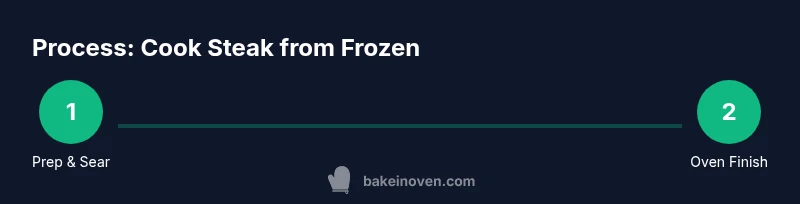
- Preheat your oven to 400°F (205°C) and heat a heavy skillet until it is very hot. This ensures a good crust from the start. 2. Pat the steak dry and season generously with salt and pepper. Moisture on the surface will steam rather than brown, so dryness is essential. 3. Sear the steak for 2–3 minutes per side without moving it, until a deep brown crust forms. 4. Flip and sear the other side for 2–3 minutes; adjust time if the steak is very thick. 5. Transfer the pan to the oven and finish until the internal temp reaches your target doneness. 6. Remove from heat, rest for 5–10 minutes, and check with a thermometer before slicing. 7. Optional: baste with a small pat of butter during the last minute for extra flavor. Tip: use an oven-safe skillet to streamline the transition from stovetop to oven.
Practical Tips: Timing, Doneness, and Rest
- Always start with dry, seasoned surfaces to maximize crust. - For partially frozen steaks, target an internal temperature 5–10°F below your final goal, because residual heat will carry the steak to doneness during rest. - Resting juice redistribution is crucial; resist the urge to cut immediately. - If you want more crust, briefly return to high heat after oven finish for a minute per side. Bake In Oven notes that mindful handling creates a reliable crust without sacrificing tenderness.
Troubleshooting Common Issues
- If the crust looks pale, your pan wasn’t hot enough—reheat and try again with a thicker, longer sear. - If the center stays underdone after oven finish, remove sooner and rest; the thermometer is your best friend. - If moisture pools on the surface, pat dry again and re-season before re-searing. - If you’re cross-contaminating surfaces, sanitize thoroughly between handling raw meat and cooked meat.
Safety and Food Quality Notes
Handling partially frozen meat requires careful temperature control and attention to doneness. Always verify internal temperature with a reliable thermometer. If you have any doubt about doneness or safety, err on the side of a higher internal temperature and longer rest. While cooking from a partially frozen state is convenient, you’ll improve consistency by planning ahead for a full thaw when possible. Bake In Oven’s guidance supports safe practices and moisture-conscious techniques for better texture and flavor.
Quick Recap and When to Choose These Techniques
When asked can you cook steak if it's a little frozen, the best approach is to use a controlled sear and oven finish, with extra time and a thermometer to guide doneness. This method yields a crusty exterior and a properly cooked center, even if the steak isn’t fully thawed. If you have more time, thawing fully in the fridge before cooking will simplify the process and improve texture. Bake In Oven’s kitchen-tested strategies help home cooks achieve reliable results with minimal guesswork.
Tools & Materials
- Skillet (cast iron, 12-inch)(Heavy-bottomed and oven-safe)
- Tongs(For turning without piercing the meat)
- Instant-read thermometer(To monitor internal temp)
- Dish towel or oven mitts(For handling hot pan)
- Neutral oil with high smoke point (e.g., canola, grapeseed)(For searing)
- Butter (optional)(For finishing and flavor)
- Salt and pepper(Season generously before cooking)
- Baking sheet and rack (optional)(Helpful for even heat when finishing in oven)
Steps
Estimated time: 45-60 minutes total
- 1
Preheat and prep
Preheat your oven to 400°F (205°C) and heat the skillet over medium-high until a drop of water dances and evaporates on contact. This creates an instant crust when the steak hits the pan. Pat the steak dry, then season generously with salt and pepper.
Tip: A dry surface is essential for browning; avoid crowding the pan. - 2
Sear one side
Place the steak in the hot skillet and sear without moving for 2–3 minutes, until a rich crust forms. A partially frozen surface may require a touch longer on this side to develop browning.
Tip: Limit movement to preserve crust formation. - 3
Flip and sear the other side
Turn the steak and sear the opposite side for another 2–3 minutes. If the outer layer looks pale, give it an extra 30–60 seconds but watch for scorching.
Tip: Use tongs to avoid piercing and losing juices. - 4
Finish in the oven
Transfer the skillet to the oven and finish to your target doneness. Use a thermometer to guide you; plan on 4–8 minutes for medium-rare on thicker steaks, longer for larger cuts.
Tip: Check early; residual heat will continue to cook the steak out of the oven. - 5
Rest before slicing
Remove the steak from the oven and let it rest on a rack or plate for 5–10 minutes. Resting helps redistribute juices and improves tenderness.
Tip: Tent loosely with foil if you need to keep it warm. - 6
Optional butter baste
During the last minute in the oven, add a pat of butter to the pan and spoon melted butter over the steak to enhance flavor.
Tip: Butter adds aroma and a subtle gloss; don’t overdo it. - 7
Check final doneness
Use the thermometer to ensure the steak has reached the desired internal temperature. Slice against the grain and serve promptly.
Tip: If you’re unsure about doneness, err on the side of slightly under rather than overcooking.
Frequently Asked Questions
Can I cook a steak that is fully frozen without thawing at all?
Fully frozen steaks are difficult to cook evenly and can end up with a very cold center. It's safer and easier to thaw partially or fully before cooking, but you can still succeed with a careful sear and oven finish if you adjust timing and monitor temperature.
Fully frozen steaks are hard to cook evenly; partial thawing or full thawing is recommended, but a careful sear followed by oven finish can work if you monitor temperature.
Is it safe to cook steak from frozen?
Yes, it’s safe to cook a steak that’s only partially thawed as long as you reach a safe internal temperature and avoid cross-contamination. Use a thermometer to verify doneness and ensure the meat reaches a safe internal temperature.
Yes, it's safe as long as you reach a safe internal temperature and avoid cross-contamination; use a thermometer to check.
What doneness can I expect with a partially frozen steak?
Partial thawing typically means a longer cooking time to reach the same doneness you’d expect from a thawed steak. Plan for a final internal temperature of 125–135°F (52–57°C) depending on your preferred doneness, and factor in residual heat during resting.
Expect a longer cook time; target 125–135°F depending on doneness, then rest to finish.
How can I thaw steak quickly without compromising texture?
For a faster thaw, seal the steak in a leak-proof bag and submerge in cold water, changing every 20-30 minutes. This speeds thawing while keeping the surface safe and ready for searing. Do not use hot water or leave at room temperature.
Seal and submerge in cold water, changing every 20-30 minutes; avoid hot water or room-temp thawing.
Should I season before or after thawing?
Season generously before cooking, whether thawed or partially frozen. Salt helps with crust formation and flavor. If your steak is very thick, a light seasoning after thawing can also help, but avoid washing off flavors by rinsing.
Season before cooking to improve crust and flavor; avoid rinsing off seasoning after thawing.
Watch Video
Key Takeaways
- Can You Cook Steak If It's a Little Frozen? Yes, with proper heat management.
- Finish in the oven to ensure even doneness through the center.
- Use a thermometer to hit target doneness reliably.
- Rest before slicing to preserve juiciness.