How to Clean Baked-On Cookie Sheets: A Step-by-Step Guide
Learn safe, effective methods to remove baked-on residue from cookie sheets, protect nonstick finishes, and prevent future buildup with practical, kitchen-tested tips.


You will learn practical, safe methods to remove baked-on residue from cookie sheets, protecting finishes and extending sheet life. This guide covers common stain types, gentle cleaners, soaking strategies, and maintenance to prevent future buildup. Expect a step-by-step approach, material considerations, and safety tips for different sheet finishes.
Why Clean Baked-On Cookie Sheets Matter
Maintaining clean baked-on cookie sheets is essential for even browning, easy food release, and food safety. When residue accumulates, it can transfer flavors, create uneven heat zones, and shorten the sheet’s lifespan. According to Bake In Oven, routine cleaning reduces cross-contamination between batches and preserves nonstick or metal finishes. Clean cookie sheets also promote consistent results—your cookies bake more evenly when the base is flat, smooth, and free of built-up grime. By investing a few minutes after baking, you prevent stubborn stains from forming and keep your baking gear in like-new condition for years to come. The goal is not just aesthetics; it’s reliability, safety, and better performance across your baking sessions.
For home bakers, the phrase clean baked on cookie sheets is more than a task; it’s a habit that supports overall kitchen efficiency and taste. The Bake In Oven team emphasizes that a well-maintained sheet yields more predictable results, reduces scrap, and minimizes the need for harsh scrubbing later. The approach should be practical, non-toxic, and tailored to sheet material, whether aluminum, steel, or nonstick. This section lays the foundation for choosing the right cleaners and methods based on surface type, stain severity, and your preferred baking routine.
Common Causes of Baked-On Residue
Baked-on residue arises from sugars caramelizing, fats drying into crusts, and proteins setting like a glaze during hot baking. On lighter metals, mineral deposits from water can also contribute to stubborn spots. The key to prevention is minimizing wet-to-dry transitions while the sheet is hot; allow cooling on a rack before cleaning to avoid warping or warping-related cracking. Oven drips, sheet-streaks from parchment, and residues from melted cheese or gooey toppings are frequent culprits in this category. Understanding the source helps you apply the most effective method without risking the finish. If you notice darkened rings or pitted areas, it may indicate a coating or metal wear; in such cases, tailor your approach to preserve the surface while removing grime.
Safe, Effective Cleaning Methods
Different finishes require different tactics. For aluminum or stainless steel sheets, a gentle approach using warm water, a small amount of dish soap, and a non-abrasive sponge often suffices for routine cleanup. When baked-on stains resist, a baking soda paste or a vinegar soak can break down tough crusts without scratching. For nonstick surfaces, avoid metal scourers and opt for nylon scrubbers or plastic scrapers to prevent coating damage. A soak in warm water with a tablespoon of dish soap plus a half-cup of white vinegar for 15–30 minutes can loosen the grime without harsh scrubbing. If stains persist, apply a paste of baking soda and water, let sit for 10–15 minutes, then wipe with a soft sponge. The goal is to lift grime, not grind it into the surface.
Non-Abrasive Techniques for Nonstick Surfaces
Nonstick cookie sheets demand extra care to preserve the coating’s longevity. Start with a warm, soapy bath and a soft sponge, avoiding abrasive pads entirely. For stubborn areas, a paste made from baking soda and water can work wonders without scratching. A plastic scraper can help lift crusty bits without gouging the coating. If the sheet is heavily stained, consider rotating the cleaning method: soak first, then wipe with a microfiber cloth, then finish with a gentle scrub. Always rinse thoroughly to remove soap residue that could affect future batches, and dry completely to prevent water spots and corrosion at seams.
How to Tackle Stubborn, Burnt-On Residue
Burnt-on residue presents a tougher challenge, but patience pays off. Create a cleaning solution by mixing baking soda with hot water to form a thick paste, applying it to the burnt areas, and letting it sit for 15–20 minutes before scrubbing gently. A mixture of white vinegar and water (1:1) can help dissolve mineral deposits that lock grime in place. For metal sheets, a non-abrasive sponge with dish soap usually does the trick; for nonstick surfaces, stick to a nylon scrubber and avoid any metal contact. In extreme cases, a commercial non-scratch cleaner can assist, but test a small area first to verify compatibility with your finish. Avoid exposing sheets to harsh chemicals that can degrade coatings over time.
Maintenance Tips to Prevent Future Buildup
Preventive care reduces the work required for future cleanups. Wipe sheets clean after cooling, then rinse and dry before stowing. Place parchment or a reusable liner for easy cleanup between batches, and reuse baking sheets with protective liners when possible to minimize direct contact with sticky residues. Regular maintenance, such as monthly light scrubs, can keep surfaces performing well. Store sheets flat to avoid warping, and inspect edges for chipping that could harbor grime. If you notice recurring build-up in the corners or seam lines, check your oven temperature and ensure it isn’t running hotter than needed. Consistency is the secret to long-lasting results.
Quick Cleaning Routine After Baking
A fast post-bake routine helps keep baked-on cookie sheets in good condition. While the sheet is still warm, wipe away loose crusts with a soft cloth, then rinse with warm water and a small amount of dish soap. If you detect stubborn spots, apply a baking soda paste and let it rest for a few minutes before a gentle scrub. Rinse thoroughly and dry with a towel to prevent water spots. Regularly inspect for dulling or discoloration that could signal coating wear, and adjust your cleaning method accordingly to protect the surface while maintaining cleanliness.
When to Replace Cookie Sheets vs Restore
There comes a time when restoration isn’t practical anymore. If a sheet is warped, badly pitted, peeling coating, or shows corrosion that affects performance or safety, replacement is the best option. While some staining can be improved with specialized cleaners, structural issues jeopardize even heating and food safety. Balance cost and effort: a well-maintained sheet can last for years with proper maintenance, but don’t chase perfection at the expense of safety. When in doubt, assess whether the sheet still provides even browning, clean release, and safe handling.
Troubleshooting by Sheet Type
Different materials require tailored care. Aluminum sheets heat quickly and can warp if overheated; nonstick coatings demand gentler methods to protect the surface; stainless steel is forgiving but can show water spots and streaks if not dried promptly. For parchment-lined sheets, remove parchment carefully after cooking to minimize residue left behind. If you’re unsure of your sheet type, test a small area with your preferred cleaner before proceeding. This approach reduces the risk of damaging your investment while still delivering clean, ready-to-use cookie sheets.
Tools & Materials
- Baking soda(3-4 tablespoons for paste; optional for paste and pastes-based treatments)
- White vinegar(1/2 cup for soaking or to use with water for tough grime)
- Dish soap(Mild, degreasing formula recommended)
- Non-abrasive sponge(Soft sponge or nylon scrubber)
- Plastic scraper(Gentle lifting to avoid scratching)
- Old toothbrush(For corners and seams)
- Parchment paper(Optional for future bake sessions to protect sheet surface)
- Protective gloves(Keep hands dry and protected during scrubbing)
Steps
Estimated time: 30-60 minutes
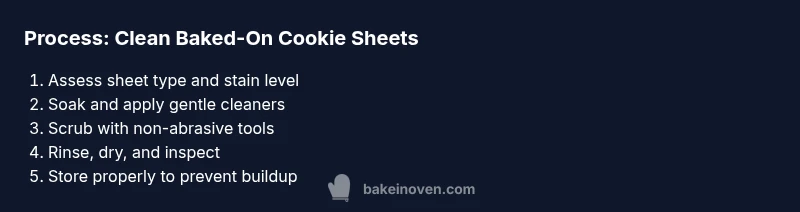
- 1
Inspect sheet and prep
Turn off heat and allow the sheet to cool to a comfortable handling temperature. Inspect for coating type and any warping or pitting. If the surface shows obvious damage, consider gentler cleaning or replacement options.
Tip: Knowing the sheet's material (nonstick, aluminum, stainless) guides safe cleaning choices. - 2
Remove loose debris
Wipe away crumbs with a dry cloth or soft brush. This reduces the amount of grime you’ll contend with during washing and prevents scratching when you scrub.
Tip: Dry debris can turn into abrasive grit during scrubbing. - 3
Choose a cleaning method
If the grime is light, use warm water, dish soap, and a non-abrasive sponge. For heavier stains, consider a baking soda paste or a vinegar soak to loosen crusts.
Tip: Avoid steel wool or metal brushes on nonstick coatings. - 4
Soak for stubborn stains
Soak with warm water and a splash of dish soap for 15–30 minutes. A short soak can dramatically reduce scrubbing time and preserve coatings.
Tip: Cover the surface with a damp cloth during longer soaks to prevent drying. - 5
Scrub gently
Apply cleaner with a soft sponge or nylon scrubber; avoid scrubbing hard in one spot. Focus on edges and corners where residue collects.
Tip: Use a plastic scraper to lift crusts without scratching. - 6
Rinse and inspect
Rinse thoroughly to remove all soap and cleaner residues. Inspect for any remaining spots that require a second pass with baking soda paste.
Tip: Rinse until the water sheets off rather than beads, indicating cleaner removal. - 7
Dry completely
Dry with a clean towel or air-dry on a rack. Ensure corners are dry to prevent rust or warping over time.
Tip: Moisture left in seams can cause rust on metal sheets. - 8
Store and maintain
Store sheets flat to prevent warping. Periodically wipe down and reseason if needed; check for wear on nonstick coatings and consider replacing if peeling occurs.
Tip: A light, monthly scrub keeps grime from building up.
Frequently Asked Questions
What causes baked-on residue on cookie sheets?
Baked-on residue comes from sugars caramelizing, fats drying into crusts, and proteins setting during high heat. Regular cleaning with gentle methods keeps surfaces smooth and ready for the next batch.
Residue forms when sugars caramelize and fats dry during baking; regular gentle cleaning helps.
Are nonstick sheets safe to scrub gently?
Yes. Use a non-abrasive sponge and avoid metal brushes to protect the coating. Soaking can help, followed by a soft scrub if needed.
Yes, but avoid harsh scrubbing on nonstick coatings.
Can I use steel wool on aluminum sheets?
No. Steel wool can scratch aluminum and damage the finish, making cleaning harder and potentially causing corrosion.
Don’t use steel wool on aluminum sheets.
Is soaking in warm water effective for heavy stains?
Yes, soaking for 15–30 minutes with dish soap loosens crusted grime and reduces the effort needed to scrub.
Soaking helps loosen stubborn grime.
Should I use bleach for baked-on residue?
Bleach is not recommended for baked-on residue on cookie sheets. Prefer baking soda, vinegar, or mild cleaners to protect finishes.
Bleach isn’t ideal here; try baking soda or vinegar instead.
When should I replace a sheet?
If a sheet is warped, heavily pitted, peeling coating, or unsafe to use, replacement is the safer option.
Replace warped or peeling sheets for safety and performance.
Watch Video
Key Takeaways
- Soak stubborn grime before scrubbing.
- Use non-abrasive tools on coated surfaces.
- Avoid harsh chemicals on aluminum and nonstick coatings.
- Regular maintenance prevents heavy buildup.
- Choose sheet-specific methods based on material.