How to Bake Costco Chicken at Home
Learn how to bake Costco chicken at home with practical, kitchen-tested methods. Reheat rotisserie leftovers safely or roast a fresh chicken from Costco, using precise temps, rest periods, and flavor ideas for juicy, delicious results.


In this guide, you’ll learn how to bake Costco chicken at home—from reheating rotisserie leftovers to cooking a fresh chicken with reliable, kitchen-tested steps. You’ll get precise temperatures, safe handling tips, and how to avoid drying out the meat, so every bite stays juicy and flavorful. Bake In Oven provides practical, kitchen-tested guidance.
Why Costco Chicken Is a Smart Choice for Home Baking
Costco chicken, especially the company’s popular rotisserie option, is a practical shortcut for busy weeknights and casual entertaining. When you bake Costco chicken at home, you gain control over portion sizes, flavors, and texture, transforming ready-to-eat poultry into a foundation for many meals. The Bake In Oven team has observed that many home bakers use this versatile product as a reliable starting point for everything from weekday salads to cozy family suppers, without sacrificing flavor.
Several factors make Costco chicken appealing: convenience, consistent quality, and the ability to repurpose leftovers creatively. Rotisserie chicken often comes seasoned and pre-cooked, which can save time while still delivering juicy meat if reheated properly. If you purchase a raw chicken at Costco, you’ll get a similar quality pick with cavity-friendly packaging, making it easier to roast evenly. In either case, your goal is uniform heat distribution, minimal moisture loss, and a final temperature safe for serving. This article walks you through safe handling, reheating, and roasting methods that maximize flavor while minimizing waste.
Safe Handling and Food Safety Considerations with Costco Chicken
Handling Costco chicken safely starts with clean hands and clean surfaces. Always wash your hands before and after touching raw poultry, and use separate cutting boards for meat and produce to avoid cross-contamination. If you’re reheating rotisserie chicken, ensure the meat reaches a minimum internal temperature of 165°F (74°C) in the thickest part, such as the breast or thigh. After cooking, let the chicken rest for a few minutes before carving to allow juices to redistribute. Refrigerate leftovers promptly (within two hours) in shallow containers to cool quickly. By following these practices, you minimize food-safety risks and maintain texture and flavor when you bake Costco chicken at home.
Reheating Costco Rotisserie Chicken: Best Practices
Reheating rotisserie chicken is about recapturing moisture and avoiding a dry finish. In the oven, preheat to 325-350°F (165-175°C). Place the chicken on a rack over a baking sheet to promote even heat, loosely cover with foil to trap moisture, and reheat until the internal temperature reaches 165°F (74°C). Rest for 5-10 minutes before serving to let the juices redistribute. If you’re short on time, you can use a skillet to rewarm the meat over medium heat, or finish under a brief blast in a hot oven or broiler to refresh the skin.
For added crispiness, dry the skin gently with paper towels before reheating and brush lightly with olive oil or a glaze. A shorter, gentler reheating cycle keeps the meat tender and flavorful. These methods help you maximize the value of Costco’s rotisserie chicken without sacrificing texture.
Roasting a Fresh Costco Chicken: A Classic Approach
If you’re buying a whole chicken at Costco for a weekend dinner, the roasting method is a reliable way to achieve juicy meat and crisp skin. Start by patting the chicken dry, optionally seasoning with salt, pepper, and your favorite herbs. Preheat the oven to a high heat to set the skin, then reduce to a moderate oven temperature to finish cooking. Place the chicken breast-side up on a rack in a roasting pan, and roast until the thickest part registers a safe internal temperature of 165°F (74°C). Let the bird rest before carving to retain moisture.
If you prefer, brining or dry brining overnight can improve juiciness and flavor. Regardless of the method, using a thermometer to verify doneness is the simplest, most reliable way to avoid overcooking. Costco chicken can be a forgiving starting point for flavorful roasts when you balance heat, time, and moisture.
Flavor Ideas to Elevate Costco Chicken
Even simple Costco chicken frameworks benefit from a quick flavor boost. After reheating or roasting, finish with a brush of herb butter or a glaze using ingredients you already have in the pantry — lemon zest and thyme, a honey-soy glaze, or a smoky paprika rub. Serve with bright sides like roasted vegetables, a citrusy salad, or a green veggie saute. You can also transform leftovers into fast meals: shred the meat for tacos, assemble a comforting chicken pot pie, or fold into a quick pasta with olive oil, garlic, and parmesan. The key is to preserve moisture while layering on flavor—small additions can transform inexpensive Costco chicken into memorable meals.
Troubleshooting and Common Mistakes to Avoid
Common mistakes when baking Costco chicken include drying out the meat, overheating, and under-seasoning. Dryness often happens when reheating too aggressively or not giving the meat a chance to rest. To prevent this, reheat slowly to 165°F and rest briefly before slicing. If skin seems soft or soggy, a brief finish under high heat or a quick broil can restore texture. Always use a meat thermometer to confirm doneness rather than relying on time alone, since oven performance and chicken size vary.
Finally, avoid overcrowding your pan during roasting; airflow matters for even cooking and browning. If you’re roasting multiple pieces, space them evenly and rotate the tray halfway through cooking for uniform results.
Tools & Materials
- Roasting pan with rack(Elevates chicken for even heat and browning)
- Aluminum foil(To tent and keep moist during reheating)
- Instant-read thermometer(Aim for 165°F (74°C) in the thickest part)
- Oven-safe cutting board(For resting and carving after cooking)
- Baking sheet or sheet pan(Useful for reheating on a rack or directly)
- Kitchen shears(For portioning cooked chicken if needed)
- Optional: Air fryer or skillet(For quick reheating or crisping leftovers)
Steps
Estimated time: 60-90 minutes
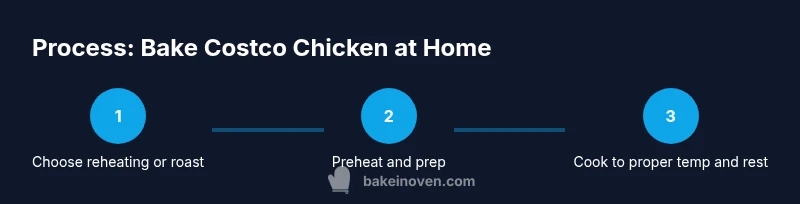
- 1
Decide reheating or roasting
Choose whether to reheat rotisserie chicken or roast a fresh Costco chicken. Reheating is quickest; roasting yields a freshly cooked meal. Your choice should depend on time, leftovers, and desired texture.
Tip: If you’re unsure, start with reheating and switch to roasting if you want crisper skin. - 2
Preheat and prep
Preheat the oven to 325-350°F (165-175°C) for reheating rotisserie meat, or 425°F (220°C) for a crispy roast on a fresh bird. Remove packaging, trim any sinewy bits, and pat dry to promote browning.
Tip: Patting dry prevents steam from softening the skin during reheating. - 3
Arrange on a rack
Place the chicken on a rack set over a baking sheet to allow air to circulate around the meat. This helps heat reach every surface and prevents soggy skin.
Tip: If you don’t have a rack, use crumpled foil under the chicken to lift it slightly off the pan. - 4
Heat to safe temperature
Reheat rotisserie chicken until the internal temperature hits 165°F (74°C) in the thickest part. For a fresh Costco chicken, roast until 165°F at the thigh, then rest.
Tip: Check multiple spots—the breast and thigh may cook at different rates. - 5
Rest and slice
Let the chicken rest for 5-10 minutes after heating. Resting redistributes juices, making slices juicier and more flavorful.
Tip: Cover loosely with foil to keep warmth without steaming the skin. - 6
Serve or repurpose
Serve as a main with sides, or shred for tacos, soups, or salads. Costco chicken is versatile and can be reimagined in many dishes.
Tip: Plan one extra night of meals to minimize waste.
Frequently Asked Questions
What are the best ways to reheat Costco rotisserie chicken without drying it out?
Reheat slowly in a 325-350°F oven on a rack, loosely covered with foil, until the center reaches 165°F. Rest for 5-10 minutes before slicing to retain moisture.
Reheat slowly in a moderate oven on a rack, cover loosely, and rest before serving.
Can I bake Costco chicken from a frozen state?
It’s best to thaw before baking for even cooking. If you must bake from frozen, plan for longer cooking times and use a thermometer to reach 165°F during cooking.
Thaw first for even cooking; if baking from frozen, monitor with a thermometer.
What internal temperature should Costco chicken reach?
Aim for an internal temperature of 165°F (74°C) in the thickest part of the meat for safety and juiciness.
165 degrees, checked in the thickest part.
Is it safe to reheat leftovers more than once?
It’s best to reheat only once to avoid quality drop and safety concerns. Reheat only the portion you plan to eat.
Reheat only what you’ll eat to stay safe and flavorful.
How can I make Costco chicken crispy on the outside?
Finish reheated chicken under a hot broiler or a brief high-heat finish in the oven to re-crisp the skin.
Finish with a quick high-heat blast to crisp the skin.
What are good uses for Costco chicken leftovers?
Shred and add to salads, soups, tacos, quesadillas, or casseroles for quick, flavorful meals.
Shred for salads, soups, tacos, or casseroles.
Watch Video
Key Takeaways
- Choose reheating or roasting based on leftovers.
- Target 165°F internal temperature for safety and juiciness.
- Use a rack for even heating and browning.
- Rest before carving to maximize juiciness.