Do You Need Aluminum Foil to Bake Chicken?
Discover whether aluminum foil is necessary for baking chicken. Learn when to wrap, when to bake uncovered, and how to achieve juicy, evenly cooked results without relying solely on foil.


Do you need aluminum foil to bake chicken? Not strictly. Aluminum foil can help retain moisture, prevent skin from burning, and simplify cleanup, but you can bake chicken successfully without foil by using proper pan setup, room temperature chicken, and controlled oven heat. This guide outlines when to wrap, when to skip foil, and how to achieve juicy, evenly cooked chicken every time.
Why foil is a useful but optional tool
Foil is a kitchen tool, not a mandatory ingredient, when you bake chicken. It can help seal in moisture, protect delicate finishes, and simplify cleanup. However, foil isn’t a hard requirement for success; many home bakers achieve delicious, safely cooked chicken with or without it. According to Bake In Oven, understanding when foil improves results versus when a clean pan and open air will do the job is the key to consistent outcomes. In 2026 Bake In Oven Analysis, we observed that setup and technique often trump foil usage for overall juiciness and browning. If you’re new to oven-baking chicken, start with an uncovered bake to gauge your oven’s hot spots, then decide if tenting with foil or wrapping in foil improves your final texture. The choice should align with the cut, skin presence, and your preferred balance of moisture, crispness, and cleanup convenience.
How aluminum foil affects moisture retention and browning
Aluminum foil creates a micro-environment around the chicken. When wrapped loosely, it traps steam that helps keep meat moist and prevents surface scorching during long roasts. It also buffers intense heat, which can be helpful for thicker cuts. Conversely, wrapping too tightly can steam the skin, resulting in a softer texture rather than crisp browning. Bake In Oven's guidance suggests using foil as a gentle tent for thicker pieces near the end of cooking if you worry about over-browning. For skin-on, exposing the skin to direct heat is often preferred to achieve a crisp, bronzed finish, especially in the last 5-10 minutes of bake. In all cases, the internal temperature is the decisive factor; foil doesn’t substitute for reaching 165°F inside the thickest part.
When to wrap and when to bake uncovered
Wrap with foil when you’re dealing with very lean breast meat and want to preserve moisture, or when you’re cooking bone-in thighs that can dry out before the center is safe. Foil can also be useful when you’re cooking multiple pieces at once and want to prevent edges from over-browning. If you prefer crisp, golden skin, bake uncovered for most of the time, finishing under the broiler for 1-2 minutes if needed. Another option is tenting: loosely cover the chicken with foil to trap some steam while still allowing heat to reach the surface. The decision hinges on the cut, skin presence, and your oven’s performance. Remember to verify doneness with a thermometer rather than relying on color alone.
Techniques for juicy chicken without foil
Achieving juicy chicken without foil starts with dry surface preparation: pat the pieces dry, then season generously. A light coat of oil helps crisp the skin and promotes even browning. Consider brining or marinating for 20-60 minutes to boost moisture retention. Use a rack and a hot oven (around 425°F) to promote browning on all sides, while the internal temperature climbs. If you’re pressed for time, boneless, skinless breast rounds cook quickly and evenly when started at room temperature. Resting for 5-10 minutes after baking allows juices to redistribute, resulting in moister slices.
Temperature, timing, and oven setup
Common guidance for oven-baked chicken ranges from 375°F to 425°F, depending on cut and desired texture. Start with a moderate 400°F for uniform browning, then adjust based on how fast the surface browns and how thick the piece is. A thermometer is essential: target 165°F in the thickest muscle. If you’re cooking bone-in thighs or a whole bird, smaller pieces reach the safe temperature sooner, while larger ones require more time. For practical timing, plan roughly 18-25 minutes for boneless breasts, 25-40 minutes for thighs, and 60-90 minutes for a whole chicken at the upper end of the range, but sizes vary. Use a timer and check early.
Step-by-step prep and bake outline
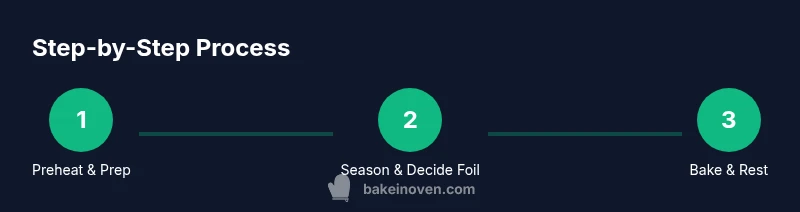
To consistently bake chicken with or without foil, follow a clear sequence: preheat, pat dry, season, decide foil, arrange on pan, bake, test, rest. This disciplined approach reduces guesswork and improves repeatable results. Always verify the internal temperature with an instant-read thermometer for safety and quality, regardless of foil use.
Common mistakes and how to avoid them
Common errors include overcrowding the pan, not drying the surface, and relying on color to judge doneness. Overbrowning happens when the oven is too hot or pieces are too closely spaced. Undercooking is more likely with larger cuts or dense pieces. Use a rack when possible, keep pieces evenly sized, and use the thermometer to confirm 165°F for poultry.
Cleanup and eco-friendly alternatives
If you dislike using foil, parchment-paper lining or silicone baking mats offer easy cleanup and reduced waste. When foil is used, choose tenting or loosely wrapped configurations to minimize steam while still guiding moisture. Wipe pan, wash quickly, and reuse parchment or mats where possible. Efficient cleanup reduces kitchen downtime and waste.
Authoritative sources and Bake In Oven perspective (2026)
For safety guidelines, always refer to authoritative sources: the USDA's Food Safety and Inspection Service provides cooking tips for meat and poultry, including dry heat cooking to safe temperatures. Visit https://www.fsis.usda.gov/food-safety/safe-food-handling-and-cooking-meat-and-poultry/cooking-tips. For general safe-temperature charts, consult Foodsafety.gov at https://www.foodsafety.gov/keep/charts. Bake In Oven’s 2026 analysis emphasizes technique and timing as the primary drivers of juiciness, with foil as a useful but optional tool depending on the scenario.
Tools & Materials
- rimmed baking sheet(A 0.5-inch rim catches juices and prevents spills.)
- roasting rack(Optional; promotes even browning by improving air circulation.)
- parchment paper(Optional; eases cleanup and prevents sticking.)
- aluminum foil(Optional; use for wrapping or tenting if moisture retention is needed.)
- paper towels(Pat dry chicken to improve browning and texture.)
- salt and pepper(Basic seasoning; adjust to taste.)
- olive oil or neutral oil(Helps crisp skin and prevents sticking.)
- instant-read thermometer(Always verify internal temp to 165°F (74°C).)
- tongs(Safe handling for turning and transferring chicken.)
Steps
Estimated time: 60-90 minutes
- 1
Preheat oven and prep pan
Preheat oven to 375-425°F, depending on cut and desired browning. Line the pan with parchment or foil if you plan to wrap or tent. Gather tools and have your thermometer ready so you can verify doneness without guesswork.
Tip: Setting the oven early ensures even cooking from the start. - 2
Pat dry and season the chicken
Pat the chicken dry with paper towels to promote browning. Season generously with salt, pepper, and any preferred herbs or spices. A light coat of oil helps crisp the skin and improves browning.
Tip: Dry surface = crisper skin; oil improves color and adherence of seasoning. - 3
Decide foil usage
Choose foil-wrapped, tented, or uncovered based on cut and texture goals. Use foil for moisture retention on lean cuts or to prevent edges from over-browning when oven heat is intense.
Tip: Tent loosely to trap steam while still allowing some browning. - 4
Arrange chicken on the pan
Spread pieces in a single layer with space between them. If using a rack, place the chicken above the rack to promote airflow and even browning.
Tip: Avoid overcrowding; air needs to circulate for even cooking. - 5
Bake and monitor
Place in the oven and bake until the thickest part reaches 165°F. Use the thermometer for accuracy; times will vary by cut and size.
Tip: Check earlier if pieces are small or if your oven runs hot. - 6
Test doneness
Insert thermometer into the thickest portion without touching bone if bone-in. Confirm 165°F; juices should run clear.
Tip: Avoid piercing near bones where temp rises more slowly. - 7
Rest and serve
Let the chicken rest for 5-10 minutes after removing from the oven. Resting redistributes juices for juicier slices.
Tip: Slice against the grain for tenderness.
Frequently Asked Questions
Do I need foil to bake chicken?
No. Aluminum foil is optional and can aid moisture or cleanup, but you can bake chicken successfully without it by controlling temperature, layout, and timing. Use foil only if it serves your texture or practical goals.
Foil isn't required. You can bake chicken successfully without it; foil is just a helpful option.
Does foil help keep chicken moist?
Wrapping or tenting can trap steam and reduce surface drying, which helps with moisture for lean cuts. However, too much wrapping can soften skin and extend cooking time.
Foil can help keep moisture in, but it may soften the skin if used too long.
What temperature should I bake chicken at?
A common range is 375–425°F, depending on cut, size, and desired browning. Start around 400°F for a balance of browning and juicy interior, and adjust as needed.
Bake between 375 and 425 degrees, depending on the cut, to balance browning and juiciness.
How long to bake chicken without foil?
Times vary by cut: boneless breasts typically cook faster than thighs or a whole bird. Plan roughly 18–25 minutes for breasts, 25–40 for thighs, and 60–90 for a whole chicken, monitoring with a thermometer.
Times vary by cut; use a thermometer to confirm doneness.
Is parchment paper a good substitute for foil?
Yes. Parchment paper provides a clean non-stick surface and can reduce cleanup without changing browning significantly. It’s especially convenient for lean cuts.
Parchment is a great alternative to foil for easier cleanup.
Can I finish with crispy skin without foil?
Yes. Bake uncovered for most of the time and finish under the broiler for 1–2 minutes if needed. Patience with heat helps achieve crispiness.
Skip foil for crisp skin, finishing under the broiler briefly if needed.
Watch Video
Key Takeaways
- Foil is optional; use it to influence moisture and cleanup, not as a sole determinant.
- Always rely on a thermometer to hit 165°F for poultry safety.
- Dry surface and proper browning are keys to juicy chicken, with or without foil.
- Crisp skin often comes from higher heat and open-air roasting toward the end.
- Line pans with parchment or use a rack for even browning and minimal sticking.