Egg Bake for Breakfast: A Complete How-To Guide
Kitchen-tested guide to egg bake for breakfast with make-ahead options and customizable fillings. Learn texture, timing, and serving tips for reliable morning meals.


Learn to make a comforting egg bake for breakfast: gather ingredients, prep a pan, mix eggs with dairy and fillings, bake until set, and finish with toppings. This guide covers two common variations, make-ahead tips, oven settings, and how to store leftovers for busy mornings. Bake In Oven provides kitchen-tested guidance to deliver reliable morning results.
Why egg bake for breakfast is a smart choice
Egg bake for breakfast offers a reliable, scalable way to feed a family or meal-prep for the week. The dish takes advantage of pantry staples—eggs, milk, cheese, and whatever vegetables you have on hand—making it highly adaptable. With a single bake, you get evenly cooked eggs, a balanced protein-and-vegetable profile, and minimal active cooking time. The result is a creamy, satisfying slice that can be reheated without drying out if you follow the right technique. For busy mornings, this approach saves time because you mix ingredients once, bake, and simply slice servings as needed. According to Bake In Oven, starting with room-temperature eggs and a well-greased pan yields the most even rise and the best slice. The method scales up easily for weekend brunches or family gatherings, turning simple ingredients into a crowd-pleasing centerpiece.
Core ingredients and building blocks
At the heart of an excellent egg bake for breakfast are five building blocks: eggs, dairy, vegetables, proteins, and seasoning. A standard base uses 6–8 large eggs whisked with ½–1 cup of milk or cream, plus a pinch of salt and pepper. For richness, add cheese such as cheddar or gruyère; for binding, a little sour cream or yogurt can help. Vegetables like spinach, bell peppers, onions, mushrooms, and zucchini bring color, texture, and nutrition. Optional proteins include sausage, ham, or cooked bacon. You can also fold in fresh herbs, garlic, or chili flakes for brightness. The exact ratios aren’t sacred, but aim for a well-balanced mix where the egg-to-liquid ratio stays at about 1:0.75 to 1:1, depending on fillings. This balance prevents a watery bake and ensures the center sets properly.
Flavor profiles and dietary variations
Egg bake for breakfast is inherently versatile. For a meat-forward version, use crumbled sausage or diced ham with cheddar; for a light option, load in leafy greens and mushrooms with feta. Dairy-free or lower-fat versions swap in almond milk or skim milk and use vegan cheese if desired. To create a vegetarian model that still feels satisfying, emphasize protein-rich vegetables like broccoli, spinach, or lentils. If you crave a spicy kick, add jalapeños or crushed red pepper. The key is to tailor the fillings to your dietary needs while preserving a cohesive texture and a balanced flavor profile. With a flexible format, this dish adapts to what you have on hand without sacrificing results.
Equipment and pan prep essentials
Choosing the right pan and planning for even heat are crucial for a successful egg bake for breakfast. A standard 9x13 inch baking dish works well for most households, offering generous portions and uniform cooking. If you’re feeding a smaller group, you can split the batter into two 8x8 inch pans; bake times may be slightly shorter. Grease or line the pan with parchment, then lightly spray for extra release. Preheat the oven to 350–375°F (177–190°C) so the bake proceeds evenly from the center. A sturdy whisk, measuring cups and spoons, a sharp knife, and cutting board will keep prep efficient. Having a large bowl to whisk eggs and a separate bowl for fillings helps organize the workflow.
Common mistakes and how to avoid them
The most common missteps in egg bake for breakfast are under-seasoning, overloading with watery fillings, and undercooking the center. To avoid soggy results, drain vegetables of excess moisture and pat meats dry before mixing. Salt and pepper early to let flavors meld; you can adjust salt at the end after tasting. Don’t forget to rest the bake for 5–10 minutes after removing from the oven; this helps the texture set and makes slicing neater. Overbaking can turn eggs rubbery; aim for a gentle jiggle in the center and a light golden edge. If your fillings are dense, dice them small enough to distribute evenly so every bite has a balanced texture.
Make-ahead and meal-prep strategies
One of the biggest advantages of an egg bake for breakfast is its mak e-ahead potential. You can assemble the dish the night before, cover, and refrigerate; then bake in the morning. For freezing, bake until just set, cool completely, and slice; freeze portions in airtight bags and reheat in a low-temp oven or microwave. To preserve moisture while reheating, add a splash of milk or reserve some cheese to melt on top. Flavor improves with a rest, so consider adding fresh herbs or a squeeze of lemon after reheating. If you’re short on time, prepare fillings in advance and mix with whisked eggs just before baking.
Flavor ideas and finishing touches
Elevate your egg bake for breakfast with a few finishing touches. Sprinkle chopped chives, parsley, or green onions after baking for a fresh note. A drizzle of hot sauce, a dollop of sour cream, or a spoonful of pesto can add brightness. For extra texture, toss in a handful of breadcrumbs or crushed tortilla chips on the top before baking. If you want a golden crust, brush the top with a little melted butter during the final 5 minutes of bake. These small extras keep the dish exciting while staying simple.
Testing doneness and safe handling
To ensure safety and ideal texture, test doneness by gently shaking the pan; the center should be set with a slight wobble. The edges should be visibly firm and lightly browned. Use a thermometer to confirm the internal temperature reaches about 160°F (71°C) for eggs if you want extra certainty, though many cooks rely on visual cues. After baking, rest the dish for 5–10 minutes before slicing to avoid runny slices. Refrigerate leftovers within two hours and reheat to 165°F (74°C) before eating.
Quick-start templates you can adapt today
If you’re short on time, start with a simple two-ingredient base: eggs and cheese, then add one vegetable or protein. For weekend brunch, consider a more filling version with sautéed vegetables and breakfast sausage. Use the templates as a base and adjust fillings based on what you have in your fridge. The key is to maintain balance between eggs, dairy, and fillings so every slice has uniform texture.
Troubleshooting and adjustments
If your bake turns out dry, consider adding a splash more milk or cream and restarting with a shorter bake. If the edges brown too quickly, cover loosely with foil for the remaining time. For a lighter texture, whisk eggs just until blended and fold fillings gently to avoid deflating air pockets. Finally, taste and adjust seasonings after the bake since flavors intensify as it rests.
A note on safety and quality
Always practice safe handling of eggs and dairy. Keep ingredients refrigerated until use, and avoid cross-contamination with raw proteins. When in doubt, check the internal temperature of the bake and rely on texture cues rather than color alone to judge doneness.
Tools & Materials
- Oven(Preheat to 350-375°F (177-190°C))
- 9x13 inch baking dish(Or two 8x8 inch pans; adjust bake time)
- Mixing bowls(For eggs and fillings)
- Whisk or fork(Beat eggs and dairy until smooth)
- Measuring cups/spoons(Accurate liquids and seasonings)
- Sharp knife and cutting board(Prep vegetables and proteins)
- Parchment paper or cooking spray(Prevents sticking and makes cleanup easier)
- Optional: dairy-free substitutes(Use if needed for dietary needs)
Steps
Estimated time: 40-60 minutes
- 1
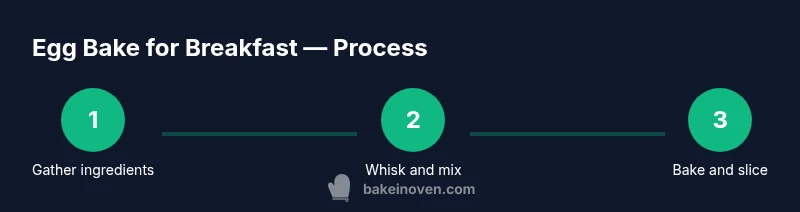
Gather ingredients and tools
Collect eggs, dairy, fillings, and seasonings. Prepare your pan, utensils, and any add-ins. Having everything ready reduces interruptions during assembly.
Tip: Lay out items in the order you’ll use them to streamline the process - 2
Preheat oven and prep pan
Preheat to 350–375°F (177–190°C). Grease the baking dish and line with parchment if desired for extra release. This ensures even cooking and easy slicing.
Tip: A hot pan helps seal the edges and prevent sticking - 3
Whisk eggs with dairy and seasonings
Whisk eggs with milk or cream, salt, and pepper until just combined. Avoid overmixing to keep the texture tender.
Tip: Room-temperature eggs mix more evenly with dairy - 4
Add fillings and mix gently
Stir fillings into the egg mixture or spread them evenly after pouring. Distribute vegetables and proteins so each slice has comparable bites.
Tip: Cut fillings into small pieces for uniform distribution - 5
Bake until set and golden
Pour into the prepared pan and bake until the center is just set and the edges are golden. If using two pans, rotate halfway for even browning.
Tip: Avoid opening the oven too often to maintain steady heat - 6
Rest, slice, and serve
Let the bake rest 5–10 minutes before slicing. Serve warm with toppings of choice.
Tip: Resting helps the texture firm up for clean slices
Frequently Asked Questions
What is the best pan size for egg bake for breakfast?
A 9x13 inch baking dish is standard for even cooking and generous portions. If you use two 8x8 pans, shorten the bake time slightly and monitor doneness.
Use a 9x13 inch pan for standard recipes; two smaller pans cook faster, so watch closely.
Can I make egg bake ahead?
Yes. Assemble the base and fillings, refrigerate overnight, then bake the next day. You can also bake, cool, and reheat slices.
Yes, you can assemble ahead and bake later, or bake and reheat slices.
How do I know when it’s done?
The center should be set with a slight wobble and edges lightly browned. A thermometer near 160°F (71°C) is a safe check.
Check that the center is set and the edges are golden; you can use a thermometer for safety.
Can I freeze leftovers?
Yes. Freeze individual portions after cooling, then reheat in a low oven or microwave until hot.
Yes, you can freeze slices and reheat later.
What substitutions work well?
Swap dairy for non-dairy milk, use different vegetables or proteins, and choose dairy-free cheese if needed. Keep the egg-to-fill ratio balanced.
Try different veggies and meats, but keep the balance so it bakes evenly.
Is this dish kid-friendly?
Yes. It’s easy to portion and customize fillings to suit children’s tastes. Use milder cheeses and milder vegetables.
Absolutely—kid-friendly and easy to tailor to their likes.
Watch Video
Key Takeaways
- Prep ingredients ahead for easy mornings.
- Grease the pan well to prevent sticking.
- Bake until center is just set for creamy texture.
- Let the bake rest before slicing for clean portions.
- Store leftovers safely for later meals.