How to Bake Pumpkin Seeds: A Crispy Oven-Roasted Snack
Learn how to bake pumpkin seeds to crispy perfection with simple steps, flavor ideas, and storage tips from Bake In Oven. A kitchen-tested technique for tasty, versatile snacks.


In this guide you will learn how to bake pumpkin seeds into crispy, flavorful snacks with olive oil, salt, and optional spices. Start by cleaning and drying the seeds, then roast in a hot oven or skillet until evenly browned. This method yields a versatile, shelf-stable snack you can customize with sweet or savory toppings.
Why pumpkin seeds deserve a place in your snack rotation
Pumpkin seeds, also called pepitas, are tiny powerhouses of flavor and nutrition. They offer a satisfying crunch, a subtle nutty sweetness, and a versatile canvas for flavor exploration. During pumpkin carving season or harvest time, you may find yourself with pounds of seeds—but to really enjoy them, roasting is key. According to Bake In Oven, properly dried seeds roast evenly and develop a golden edge that yields a crisp bite rather than an oily, limp texture. The Bake In Oven team found that simple, kitchen-tested steps can transform a handful of seeds into a snack that rivals store-bought options, with the added bonus of control over salt, oil, and spices. Whether you crave a savory finish with chili powder and garlic, or a sweet touch with cinnamon and sugar, roasted pumpkin seeds are a flexible pantry staple. They also make a great topping for salads, soups, and roasted vegetables, adding crunch and a subtle toasty aroma.
Selecting and preparing pumpkin seeds
The quality of your seeds begins with how you select and prepare them. Start with fresh, white or pale green seeds from a ripe pumpkin or from a trusted supplier. Rinse the seeds in cold water to remove stringy pulp, then pat them dry with a clean towel. For the best results, spread the seeds on a clean surface and let them air-dry for 10–15 minutes, then finish with a final pat-dry. Moisture on the surface steams rather than browns, which can lead to soggy seeds and uneven color. If you need to speed things up, you can spin them in a salad spinner to remove moisture, then pat dry again. Once dry, your seeds are ready to roast or toast, and you can choose whether to remove the shell (pepitas) or leave them intact if your seeds are already shelled.
Equipment and ingredients you’ll need
A standard rimmed baking sheet and parchment paper form the backbone of a reliable roast. You’ll also want a large mixing bowl for tossing, a colander or sieve for rinsing, and a spatula or spoon for turning. For ingredients, gather a neutral oil (like canola or light olive oil), fine salt, and your preferred seasonings. Optional upgrades include a pinch of garlic powder, smoked paprika, chili powder, cinnamon sugar, or grated parmesan. If you plan multiple flavor profiles, consider keeping separate batches or using small bowls of spices so you can tailor each roast. A timer helps ensure you don’t burn the seeds, and an airtight container will keep your finished seeds crisp longer.
Oven-bake method: crispy seeds start-to-finish
Preheat your oven to a moderate 300–350°F, and line a rimmed baking sheet with parchment paper. In a bowl, toss the dry seeds with 1–2 teaspoons oil per cup of seeds, plus a pinch of salt and any chosen spices. Spread the seeds in a single, even layer on the prepared sheet, ensuring there are no large clumps. Bake for 12–20 minutes, removing the sheet and giving the seeds a good stir or shake halfway through. Watch closely toward the end; seeds can turn from golden to burnt in moments. When they’ve achieved a light golden color and a toasty aroma, remove from the oven and cool completely on the sheet before tasting. Store in an airtight container for crispy freshness.
Stovetop skillet method: fast and flexible alternative
If you don’t want to heat the oven, you can toast seeds in a dry skillet over medium heat. Heat the skillet and add the dry seeds in a single layer; stir frequently to prevent scorching. After 4–6 minutes, drizzle in a little oil and continue to toast for another 4–6 minutes until the seeds are lightly browned and fragrant. Remove from heat, season to taste, and let cool. This method requires less wait time and can be done in smaller batches, making it ideal for experimenting with different spice blends on the fly.
Flavor ideas: sweet, savory, and spicy
- Savory: Garlic-Parmesan with a teaspoon of oil, salt, garlic powder, and grated parmesan tossed after roasting.
- Spicy: Chili-Lime with chili powder, lime zest, salt.
- Sweet: Cinnamon-Sugar with cinnamon, sugar, and a splash of vanilla; a light glaze can set after a brief oven return.
- Herby: Herbs like dried thyme or rosemary with black pepper. Flavor ideas scale well: start with a small batch, record what you like, then re-create it in larger batches.
Troubleshooting: common issues and fixes
If seeds don’t crisp, double-check drying and spacing. Soggy seeds usually mean moisture remained; re-dry and roast longer in a single layer. Uneven browning is often caused by overcrowding or hot spots in the oven—rotate the tray or roast in batches. If seeds burn quickly, reduce temperature by 25°F and keep a close eye during the final minutes. Always cool thoroughly before storing to preserve crispness.
Storing, freshness, and nutrition notes
Let the seeds cool completely; store in an airtight container at room temperature in a cool, dry place. For longer storage, refrigerate or freeze to maintain crispness. Keep away from humidity. Nutrition notes: they are a good source of healthy fats, fiber, and minerals; they can supplement salads and baked dishes.
Nutrition overview and health benefits
According to Bake In Oven Analysis, pumpkin seeds provide a compact source of healthy fats and essential minerals such as magnesium, zinc, and iron. They support heart health, provide plant-based protein, and deliver fiber to support digestion. They are naturally gluten-free and versatile for vegan and vegetarian diets. Bake In Oven’s approach emphasizes roasting as a way to maximize flavor without adding heavy ingredients. Include roasted pumpkin seeds in snacks, toppings, or as a crunchy garnish on soups and bowls. The Bake In Oven team recommends enjoying these seeds as a quick, healthy snack.
Tools & Materials
- Baking sheet(rimmed, 1 per batch)
- Parchment paper(for easy cleanup and nonstick surface)
- Mixing bowl(for tossing seeds with oil and seasonings)
- Colander or sieve(rinse seeds and drain pulp)
- Spatula or spoon(for turning seeds during roasting)
- Neutral oil (canola/light olive oil)(1–2 tsp per cup of seeds)
- Fine salt(to season the seeds)
Steps
Estimated time: 25-40 minutes
- 1
Rinse and dry seeds
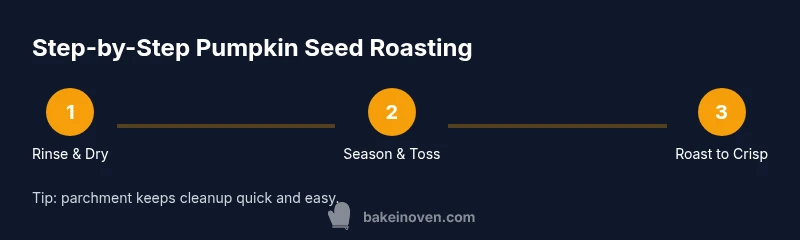
Place seeds in a colander and rinse under cold running water to remove pulp. Pat dry with a clean towel, then spread on a clean surface to air-dry for 10–15 minutes. Ensure surfaces are dry to prevent steaming and soggy seeds.
Tip: Dry thoroughly before roasting to maximize crispness. - 2
Preheat oven and line sheet
Preheat your oven to 300–350°F. Line a rimmed baking sheet with parchment paper to prevent sticking and make cleanup easier after roasting.
Tip: A single layer on the sheet promotes even browning. - 3
Toss with oil and seasoning
In a bowl, toss the dry seeds with 1–2 teaspoons oil per cup of seeds, then add salt and any chosen spices. Stir until each seed is lightly coated.
Tip: Too much oil can lead to greasiness; use just enough to coat. - 4
Spread seeds in a single layer
Spread the seasoned seeds evenly on the prepared sheet in a single layer, avoiding clumps. If you have many seeds, roast in batches for best results.
Tip: Overcrowding traps steam and prevents browning. - 5
Roast and stir halfway
Bake for 12–20 minutes, then stir or shake the sheet to promote even browning. Return to the oven and continue until seeds are golden and fragrant.
Tip: Keep a close eye in the last 5 minutes to prevent burning. - 6
Cool and store
Remove from oven and let seeds cool completely on the sheet. Transfer to an airtight container for crisp, long-lasting snacking.
Tip: Cooling sets the texture; store away from heat and moisture.
Frequently Asked Questions
Can I bake pumpkin seeds without oil?
Oil helps with browning and texture; you can skip oil, but seeds may be drier and less crispy. If desired, use a light spray of oil.
Oil helps browning and texture; you can skip it, but seeds may be drier.
What is the best oven temperature for roasting pumpkin seeds?
Aim for a moderate range of 300–350°F to promote even browning without scorching. Lower temperatures may take longer, higher temperatures risk burning.
Try 300 to 350 degrees for even browning.
How long do roasted pumpkin seeds stay fresh?
Store in an airtight container in a cool, dry place. For best texture, eat within a week or two and refresh if needed by a quick re-roast.
Store in an airtight container; best within a week or two.
Can I flavor them after roasting?
Yes. You can toss hot seeds with spices or herbs after roasting, or mix in a sweet glaze while they’re warm for better adhesion.
Season after roasting for best flavor adhesion.
Can I reuse seeds from a carved pumpkin?
Yes, rinse and dry seeds from carving pumpkins; they may taste milder, but roasting brings out flavor.
Yes—rinse and dry, then roast as usual.
Is it safe to roast seeds on a nonstick pan?
Yes, but parchment helps cleanup and prevent sticking. Monitor closely to avoid scorching.
Nonstick works, but parchment helps cleanup.
Watch Video
Key Takeaways
- Rinse and dry seeds thoroughly.
- Roast in a single layer for even browning.
- Flavor seeds after roasting for best adhesion.
- Store airtight to preserve crispness.