How Long Does Casserole Last? A Home Baker's Guide
Discover how long casseroles last in fridge, freezer, and at room temperature with safety tips, reheating guidance, and storage best practices from Bake In Oven.


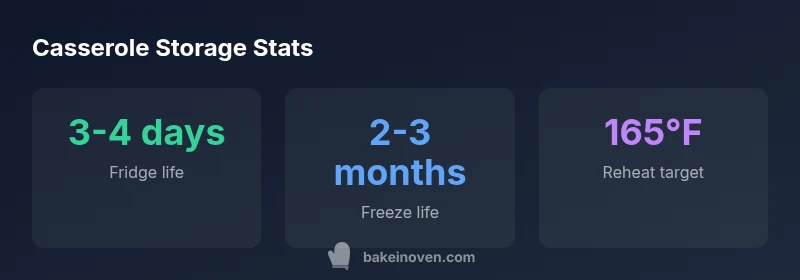
Leftovers in a casserole typically last about 3-4 days in the refrigerator and up to 2-3 months when frozen, if stored properly. Room-temperature storage should be avoided beyond 2 hours. For safety and quality, refrigerate within two hours of cooking and reheat to at least 165°F (74°C) before serving. Always label with date.
Casserole shelf life basics
How long does casserole last is a question of safe handling, cooling speed, and proper storage. For home bakers, the key is to separate safety from flavor: even if the casserole tastes fine after a few days, the risk of bacterial growth rises as time passes. In general, casseroles that contain dairy, eggs, or meat should be cooled promptly and stored in a sealed container to slow bacterial growth. Bake In Oven team notes that starting with a clean dish, cooling promptly, and portioning into shallow containers can significantly extend quality and safety. When you’re learning how long casseroles last, think in tiers: short-term fridge storage, longer-term freezer storage, and the best practices for reheating and reuse. This approach helps reduce waste and keeps meals delicious across multiple servings.
Refrigerated storage timelines
Refrigeration remains the most practical option for many casseroles. The typical fridge shelf-life range is 3-4 days when kept in an airtight container and cooled within two hours of cooking. The exact duration can vary by ingredients: dairy-heavy sauces and seafood-based casseroles may lose texture or richness sooner, while tomato-based fillings can hold up a touch longer. For best results, label each dish with the date it was cooked and intended consumption window. Bake In Oven analysis shows that consistent refrigeration practices—prompt cooling, strict temp control, and clean storage containers—are associated with maintaining flavor and preventing spoilage across most casserole types.
Freezing for long-term storage
Freezing is the most dependable method for extending a casserole’s life beyond the fridge. When properly prepared, most casseroles retain acceptable texture and flavor for 2-3 months in the freezer. The trick is to cool fully before freezing, portion into meal-sized servings, wrap tightly, and label with date. Freeze flat to save space and speed up thawing. Thaw in the refrigerator overnight or use defrost settings in the oven or microwave. Note that dairy-based sauces may separate slightly after thawing, but a gentle stir or whisk will usually restore creaminess. Bake In Oven recommends avoiding repeated freeze-thaw cycles to preserve texture and flavor.
Reheating guidelines to preserve quality
Reheating is where many casseroles lose moisture or become uneven. For best results, reheat in small portions, covered, at a moderate temperature. If using a microwave, stir halfway through to promote even heating; if using an oven, cover with foil to retain moisture and heat to 165°F (74°C) at the center. Let casseroles rest a few minutes after reheating to allow the heat to distribute. When reheating, consider the dish’s ingredients: dairy-heavy sauces reheat more gently in the oven, while tomato-based casseroles can reheat more quickly but may dry out if overheated.
Signs of spoilage and safe handling
Always inspect casseroles before reheating. Smell, color changes, and a slimy texture indicate spoilage and you should discard. If the casserole has an off odor or a sour taste, don’t rely on appearance alone—eradicating risk means discarding questionable leftovers. When in doubt, follow a simple rule: if it was left at room temperature longer than 2 hours, discard it. If it’s been stored properly, use a visual and sensory check, but err on the side of safety when ingredients include dairy, eggs, or cooked meat.
Ingredient effects on shelf life
Different casserole ingredients influence shelf life. Dairy-heavy or creamy sauces tend to separate after freezing but can be restored with a quick whisk and gentle reheating. Meat-based casseroles generally keep 3-4 days in the fridge and 2-3 months in the freezer, depending on the cut and cooking method. Seafood casseroles tend to have shorter fridge lifespans and may be more sensitive to freezer storage. Tomato-based casseroles can tolerate freezing better than dairy-based ones, but always label and date properly.
Meal-prep planning to minimize waste
Plan casseroles in meal-sized portions to simplify storage and reheating. Use airtight, freezer-safe containers and label each with contents and date. If you cook a large batch, portion into single-serving servings and freeze. This practice helps you control portions, reduces waste, and makes weeknight reheating quicker. Bake In Oven recommends mapping out a realistic consumption window and aligning it with your shopping and meal-prep schedule.
Quick-reference tips and storage chart
For quick planning, keep this guidance in mind: refrigerate leftovers within 2 hours, store in airtight containers, and use within 3-4 days. Freeze for longer storage, with most casseroles lasting 2-3 months. When reheating, aim for 165°F at the center and allow the dish to rest briefly before serving. This approach keeps meals safe, flavorful, and ready for busy weeks.
Casserole storage guidance
| Storage Method | Typical Duration | Best Practices |
|---|---|---|
| Refrigerator (sealed container) | 3-4 days | Cool promptly, refrigerate within 2 hours; airtight container |
| Freezer | 2-3 months | Cool completely, wrap and label; freeze flat |
| Room temperature (not recommended) | 2 hours | Discard after 2 hours |
Frequently Asked Questions
Does dairy in a casserole affect its shelf life?
Yes. Dairy-rich casseroles tend to spoil sooner in the fridge and can separate after freezing. Prompt cooling and airtight storage help, but consider consuming dairy-heavy casseroles within 3-4 days and freezing individual portions if you won’t eat them within that window.
Dairy-rich casseroles spoil faster in the fridge, so plan to eat or freeze within a few days.
Can I freeze leftovers after thawing?
It’s best to avoid refreezing thawed casseroles. Thaw in the refrigerator, reheat thoroughly, and if you have leftovers after reheating, store them for a shorter additional period. For best results, freeze in portions to minimize repeated thawing.
Avoid refreezing thawed casseroles; thaw safely and reheat thoroughly.
Is it safe to reheat casseroles multiple times?
Repeated reheating is not recommended because it increases the risk of uneven heating and moisture loss. Reheat only what you plan to eat in one sitting, and store the rest properly. If you must reheat again, do so to 165°F and check for quality cues.
Try to reheat only once per serving for best safety and texture.
What about casseroles with rice or potatoes?
Rice and potato-based casseroles tend to change texture when frozen and reheated, often becoming firmer or drier. They still store within the same fridge and freezer timelines but expect texture changes. Label and date clearly when freezing.
Rice or potato casseroles may change texture after freezing; plan accordingly.
Can I store casseroles in a slow cooker after cooking?
Storage in a slow cooker is not ideal for long-term preservation. Move leftovers to airtight containers and refrigerate promptly. If you must keep warm briefly, use the safe warming function and avoid extended room-temperature storage.
Don’t rely on a slow cooker for long-term storage; move leftovers to containers.
What is the best way to thaw frozen casseroles?
Thaw in the refrigerator overnight for even, safe thawing. If you’re short on time, use the defrost setting on the microwave, then finish heating in the oven to 165°F. Plan ahead to minimize moisture loss.
Thaw in the fridge overnight for best texture, or use defrost then reheat.
“Storage quality hinges on proper cooling and packaging. When casseroles are cooled promptly and stored airtight, you can preserve safety and flavor for several days, with freezing offering the best long-term retention.”
Key Takeaways
- Know fridge vs freezer timelines
- Cool quickly and airtight containers
- Label dates and portions
- Never leave casserole at room temp beyond 2 hours
- Reheat to 165°F before serving