How Long to Bake Sweet Potatoes
Learn exactly how long to bake sweet potatoes for creamy centers and crisp skins. Covers size, temperature, prep, testing doneness, and time-saving variations for perfect results every time.


Goal: bake sweet potatoes until the centers are creamy and the skins are lightly crisp. For most medium to large potatoes, roast at 425°F (220°C) for 45–60 minutes, turning once. Smaller potatoes take 35–45 minutes. If you’re short on time, microwave first, then finish in the oven for texture and flavor.
Why Timing Matters for Sweet Potatoes
According to Bake In Oven, oven temperature and potato size are the biggest timing factors when baking sweet potatoes. The goal is a creamy interior with a lightly crisp skin. If you bake at too low a temperature, the interior will be underdone and the skin may become dry; too high, and the outside can burn before the center is tender. Uniform size helps recipes cook evenly, so when possible choose potatoes that are similar in girth. Additionally, whether you bake them whole or cut them into halves or wedges changes the timing and texture you’ll achieve. This section lays the foundation for reliable results across different sizes and methods.
Bake In Oven’s guidance emphasizes consistency: pick potatoes of comparable size, preheat your oven, and avoid crowding the pan. If you notice hot spots in your oven, rotate the pan halfway through to promote even cooking. With those basics in mind, you can tailor timing to your preferred texture by small adjustments to temperature and surface area.
Choosing the Right Size and Type
Sweet potatoes come in a range of sizes: small (about 4–5 ounces), medium (6–8 ounces), and large (9+ ounces). For predictable timing, aim for uniformity within a batch. Smaller tubers will bake faster, producing a very soft interior and potentially crisper skins if exposed to direct heat. Larger tubers require more time, and the interior will be creamier when fully cooked. The orange-flesh varieties are the most common for baking, but you may also encounter purple or white-flesh sweet potatoes. The texture difference is subtle, but the size and flesh color can influence cooking time by a few minutes. Once chosen, wash them well to remove any dirt and pat dry before baking to help the skins crisp up.
To maximize consistency, consider grouping tubers by size on the baking sheet. If you have a wide variety in a single batch, plan for the larger ones to determine the total time and remove smaller ones early if needed. This approach minimizes under- or over-baking and yields reliably creamy centers with a pleasant contrast in texture.
Temperature, Prep, and Oven Setup
The standard bake is at a moderate-to-hot oven, typically 425°F (220°C). Cooking at this temperature allows the interior to become tender while the skin develops a gentle crispness. You can bake them uncovered for crisper skins or wrap them loosely in parchment or foil for softer skins and a more steamed texture. Before placing tubers in the oven, preheat it to the target temperature and prepare a rimmed baking sheet lined with parchment for easy cleanup. Piercing the skin with a fork once before baking prevents steam from building up inside the potato and reduces bursting. Rubbing a light coat of oil on the skin can enhance browning and flavor, but it’s optional if you’re aiming for a leaner result.
For a hands-off approach, you can bake potatoes directly on the rack, which can improve air circulation but increases the chance of scorching on the bottom. If you’re short on time, you can start with a 5–10 minute microwave pre-cook to reduce oven time, then finish in the oven to develop the skin texture. The choice between direct heat and partial steaming is a matter of texture preference and time constraints.
The Bake In Oven team notes that oven performance varies; if your oven runs hot, you may reduce the temperature by 25°F (about 15°C) and extend the bake time slightly to avoid over-browning while ensuring the center becomes tender.
Step-by-Step Timing Guidelines
Timing should be approached with a combination of size awareness and texture testing. Medium-sized potatoes typically cook in the mid-range of 45–60 minutes at 425°F (220°C). Start checking doneness at the 35–40 minute mark if you’re using small potatoes, or at 50–60 minutes for very large ones. A reliable test is to pierce the thickest part of the potato with a fork or skewer; it should slide through with only gentle resistance when fully done. If you’re using cut potatoes (halves or wedges), reduce the time by about a third since the increased surface area results in faster cooking. Always rotate the pan halfway through to promote even browning and don’t crowd the pan, which can trap steam and slow browning.
As you gain experience, you’ll develop a sense for your particular setup. Remember: carryover heat continues to finish cooking the potatoes slightly after you remove them from the oven, so a short rest can improve texture. If you prefer a softer skin, consider finishing the bake with the potatoes wrapped in parchment for the last 5–10 minutes to trap some moisture and soften the skin a bit more.
How to Check Doneness and Resting
Doneness is best judged by texture rather than time alone. When a fork or knife slides easily into the thickest part of the potato with minimal resistance and the flesh is pale and creamy, you’re there. If the center still feels firm, reinsert the potato on the sheet and bake for an additional 5–10 minutes, checking again after each interval. Removing potatoes from the oven a few minutes before the exact moment of tenderness can help keep the interior from becoming too soft as they rest. Let the potatoes rest for 5–10 minutes after removal; the residual heat will continue to gently soften the flesh and set the texture, making them easier to mash or fluff if you plan to serve with toppings.
If you’re serving with toppings like butter, sour cream, or chives, a brief rest ensures the butter melted into the flesh and skin to create a more cohesive texture that’s easier to spoon or split open for stuffing.
Common Mistakes and How to Avoid Them
One common mistake is overloading the baking sheet, which leads to uneven cooking and steaming rather than roasting. Use a single layer and give each potato space for hot air to circulate. Another pitfall is under-seasoning the skin; a light oil or even a pinch of salt on the skin enhances browning, texture, and flavor. Piercing without enough holes or piercing too shallowly can trap steam, causing the potato to explode or burst in the oven. Don’t cut corners on preheating: a properly heated oven ensures you don’t end up with a tough center or underdone texture. Finally, avoid starting with cold tubers; let them sit at room temperature for a short period after washing to promote even heat penetration.
Variations and Shortcuts
If you’re in a rush, microwave the potatoes for 4–6 minutes per potato (depending on size) and finish in a hot oven for 8–12 minutes to develop skins and flavor. For a smoky flavor, you can add a pinch of smoked paprika or cayenne to the skin before baking. If you’re meal-prepping, bake a batch ahead of time and rewarm portions in the oven at 350°F (175°C) for 10–15 minutes to refresh texture and flavor. Wrapping with parchment or foil for the final 10 minutes can soften the skin for a different texture profile. These variations allow you to tailor the final product to your time constraints and preferred texture.
Quick Tips for Perfect Results
- Choose potatoes of similar size for even cooking.
- Preheat the oven to 425°F (220°C) and avoid crowding the pan.
- Pierce skins to vent steam and prevent bursting.
- Rotate the pan halfway through for even browning.
- Rest the potatoes briefly after baking to finish the texture.
Tools & Materials
- Medium to large sweet potatoes(Choose uniform size for even baking; 1-2 per person depending on appetite)
- Baking sheet(Line with parchment for easy cleanup)
- Parchment paper or foil (optional)(Wrap for softer skins or finish with moisture retention)
- Oven thermometer (optional)(Helps verify accurate baking temperature)
- Fork or small sharp knife(Pierce skins to vent steam)
- Tongs or oven mitts(For safe handling of hot potatoes)
- Optional toppings(Butter, salt, sour cream, chives, or yogurt)
Steps
Estimated time: 40-70 minutes total depending on size and method
- 1
Preheat and prep
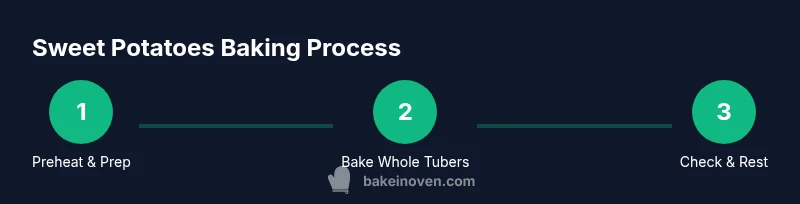
Preheat the oven to 425°F (220°C). Scrub the potatoes under cold running water, pat dry, and lightly oil the skins if desired. Place them on a baking sheet in a single layer, ready for roasting.
Tip: Uniform sizing reduces cooking time variability. - 2
Pierce and season
Pierce each potato several times with a fork to vent steam. If you like crisper skins, rub a light coat of oil and sprinkle a pinch of salt on the skins.
Tip: Salt on the skin enhances browning and texture. - 3
Bake whole potatoes
Bake unwrapped with space between tubers for even heat. Larger potatoes will take longer; smaller ones cook faster. Turn the potatoes halfway through for uniform browning.
Tip: Avoid crowding the pan to prevent steaming. - 4
Check for tenderness
Start checking at 35–40 minutes for small potatoes or 50–60 minutes for large ones by inserting a fork; it should slip in easily with creamy flesh.
Tip: If resistance remains, continue baking in 5–10 minute increments. - 5
Rest before serving
Remove from oven and rest 5–10 minutes. The residual heat finishes the interior texture and makes the potato easier to cut or fluff.
Tip: Resting helps set the texture for easier topping or stuffing. - 6
Optional finish or toppings
Slice open and add toppings of choice. Serve immediately for best texture and flavor.
Tip: Butter melts into the flesh and skins for extra richness. - 7
Technique variations
For faster results, microwave for a few minutes before a short oven finish; for ultra-crisp skins, bake uncovered the entire time.
Tip: Experiment with finishing temps and times to suit your oven.
Frequently Asked Questions
Should I wrap sweet potatoes in foil when baking?
Wrapping in foil traps moisture, yielding softer skins. For crisper skins, bake uncovered or with a light oil on the skin. Your choice impacts texture and cooking time.
Wrapping them in foil makes the skins softer, while baking uncovered gives crisper skins. Your choice changes texture and time.
Can I bake sliced sweet potatoes?
Yes. Slicing increases surface area and reduces total bake time. Ensure uniform slice thickness for even doneness and adjust time accordingly.
Yes, sliced potatoes bake faster. Keep slices even and check for doneness sooner.
What temperature is best for baking sweet potatoes?
A common standard is 425°F (220°C). It provides a tender interior and nicely browned skin. You can adjust by ±25°F if your oven runs hot or cool.
Most folks bake at 425 degrees Fahrenheit for a good balance of tenderness and brown skin.
How do I know when sweet potatoes are done?
Pierce the thickest part with a fork; it should slide in easily and the flesh should be creamy. If there’s resistance, continue baking in 5–10 minute increments.
Check for easy fork penetration and creamy flesh; otherwise bake a bit longer.
Can I bake sweet potatoes ahead of time and reheat?
Yes. Bake, cool, then store in the fridge. Reheat in the oven at 350°F (175°C) for 10–15 minutes or microwave until warmed through.
You can bake ahead, then reheat in the oven or microwave when ready to serve.
Should I wash or dry potatoes before baking?
Rinse to remove dirt, dry completely, then bake. Drying helps skins crisp up; leaving moisture can steam the skins.
Rinse, dry well, then bake for best texture and browning.
Watch Video
Key Takeaways
- Preheat to 425°F for reliable results.
- Choose uniform potatoes to cook evenly.
- Test tenderness with a fork for doneness.
- Rest before serving to maximize texture.