How to Bake Brie: A Simple, Foolproof Guide for Home Bakers
Learn to bake brie to creamy perfection with puff pastry or tasty toppings. This step-by-step guide covers temperatures, pastry options, flavor boosters, and serving ideas for gatherings.


Learn to bake brie at home to achieve a silky, melty center with a crisp crust. This guide covers pastry options, timing, flavor boosters, and serving ideas, so you can craft a crowd-pleasing appetizer or elegant party bite. From prep to plating, follow simple steps to consistently deliver creamy, savory bliss.
What makes a great brie for baking
According to Bake In Oven, the quality of your brie sets the foundation for a creamy center and a lightly browned crust. Choose an 8- to 12-ounce wheel with a pale, edible rind and a creamy interior. If the cheese is too small, it can melt too quickly, making it hard to manage; if too large, the center may stay firm. Look for brie that is intact, with no excess liquid in the package, and avoid pre-sliced wedges that dry out the inside. A fresh, well‑ripened brie will melt evenly and deliver richer flavor, so start with a wheel that feels soft to the touch when pressed gently. For most home bakers, an 8-ounce wheel provides reliable melt and shape, while a 12-ounce wheel works well for parties but may require a slightly longer bake or a larger pastry shell.
Choosing pastry options
Brie can be baked in several pastry envelopes or on its own with toppings. Puff pastry yields a crisp, golden shell that protects the cheese while creating a flaky bite. Phyllo dough, applied in multiple delicate layers, produces a lighter crust but requires careful sealing to prevent tearing. You can also skip pastry entirely and top the cheese with a savory crumble, jam, or a drizzle of honey for a simpler bite. If you use puff pastry, keep it cold and rolled to a uniform thickness, then center the brie and seal the edges. Always line your sheet pan with parchment paper to prevent sticking and for easier cleanup. For a polished finish, brush the pastry with an egg wash to achieve a glossy golden color.
Temperature, timing, and doneness
Aim for 350–375°F (175–190°C) and bake until the pastry is deeply golden and the brie is visibly soft in the center, typically 12–20 minutes depending on size and pastry thickness. A larger wheel or extra pastry may require 20–25 minutes. The best indicator is the center: when the cheese starts to ooze slightly, it’s near ideal. Let it rest for 5–10 minutes after removing from the oven to allow the cheese to set a bit and make slicing neater. If edges brown too quickly, reduce the oven temperature by 25°F and finish the bake at a lower heat, or tent the surface with foil for a gentler finish.
Flavor boosters and toppings
Enhance the brie with complementary flavors. Fruit jams such as apricot, fig, or raspberry pair wonderfully with creamy cheese. Nuts like toasted walnuts or pecans add texture, while a drizzle of honey provides warmth. Fresh herbs such as thyme or rosemary offer aromatic notes that balance richness. Serve with crusty bread, crackers, or apple slices to vary textures. For an elevated presentation, add a small handful of flaky sea salt on top just before serving and present with a few sprigs of fresh herbs.
Troubleshooting and serving ideas
Common issues include a brie wheel that oozes too quickly or a pastry that becomes soggy. If overflow is heavy, bake on a rimmed sheet to catch drips and avoid puddles on your board. If the pastry browns too fast, lower the oven temperature slightly and extend bake time, or tent the surface with foil for a gentler finish. Serve warm with crackers, baguette slices, or slices of apple; pair with a tart chutney or fig jam for contrast. For a crowd, offer a few toppings so guests can customize each bite.
Safety, storage, and leftovers
Baked brie is best enjoyed immediately while warm; it can firm up as it cools. Refrigerate any leftovers promptly and reheat gently to restore softness. Do not leave perishable cheese at room temperature for more than two hours. To reheat, cover loosely with foil and warm in a low oven (around 325°F) for 5–7 minutes, or until softened. If you plan ahead, you can prepare wrapped pastry ahead of time and bake just before serving. Always discard cheese that smells off or shows signs of mold beyond the rind.
Quick recap for home bakers
- Use an 8–12 oz brie wheel for balanced melt and handling.
- Choose pastry option based on desired texture: puff pastry for crispness, phyllo for light layers, or skip pastry for a toppings-focused bite.
- Bake at 350–375°F until golden and center oozes slightly; rest briefly before serving.
- Enhance with jams, nuts, honey, and herbs for depth of flavor.
- Serve warm with a variety of dippers for best experience.
Tools & Materials
- Brie wheel (8–12 oz)(Rind intact; choose well-ripened for best melt)
- Puff pastry sheet (or phyllo sheets)(Thawed if frozen; large wheel may require two sheets)
- Egg wash (1 egg + 1 Tbsp water)(For gloss and color)
- Parchement paper(Line sheet pan to prevent sticking)
- Baking sheet
- Rolling pin
- Knife
- Small bowl and pastry brush or fork
- Optional toppings: jam, nuts, honey, herbs(For flavor boosters and garnish)
Steps
Estimated time: 30-40 minutes
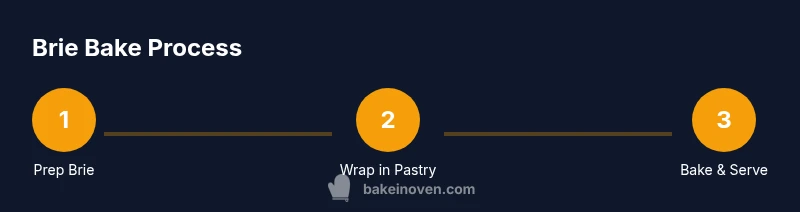
- 1
Gather ingredients and preheat
Collect all ingredients and heat your oven to 375°F (190°C) to ensure a fast, even bake. This step reduces the risk of uneven melt and helps you time the bake accurately.
Tip: Preheat early to avoid waiting mid-bake. - 2
Prepare brie for wrapping
If using puff pastry, keep the cheese whole. You can cut a small circle in the top rind to guide melting, but avoid removing too much rind. A ready-to-wrap wheel ensures even heat distribution.
Tip: Handle gently to keep the rind intact. - 3
Roll pastry and wrap cheese
Roll pastry to a thickness of about 1/8 inch. Center the brie on the pastry and wrap tightly, sealing edges with a light egg wash. Use extra pastry to cover fully if needed.
Tip: Seal edges well to prevent leaks during baking. - 4
Apply egg wash and decorative cuts
Brush the outer pastry with egg wash for a glossy finish. Score a decorative pattern if desired to aid airflow and appearance, which helps avoid bursting the pastry.
Tip: Avoid over-wetting the surface to prevent sogginess. - 5
Bake until golden and center soft
Place on parchment-lined sheet and bake 12–20 minutes depending on wheel size and pastry thickness. Look for deep golden color and a soft center that oozes slightly.
Tip: If the cheese oozes too quickly, reduce heat by 25°F and continue baking. - 6
Rest and serve
Let the wheel rest 5–10 minutes before slicing for neater portions. Serve with crusty bread, crackers, and fruit. The resting time helps the cheese set slightly for cleaner cuts.
Tip: Pair with a fruit chutney or honey for contrast.
Frequently Asked Questions
Can I bake brie without pastry?
Yes. Bake the brie directly on a lined sheet and top with a flavorful jam or a drizzle of honey, or wrap in a light layer of herbs or nuts for extra flavor. The result will be less crispy but still delicious and creamy.
Yes, you can bake brie without pastry. It will be creamier and softer with a different texture, and you can top it with jam or herbs.
What temperature should I bake brie at?
A steady 350–375°F (175–190°C) is ideal. Lower temps will take longer and risk under-melting, while higher temps can burn pastry or over-crisp the crust.
Bake at about 350 to 375 degrees for a good melt and golden crust.
Should I remove the rind before baking?
Keep the rind on if you want a clean slice and a smoother melt. You can remove a small top rind to help heat reach the interior, but fully removing the rind is not necessary.
You can leave the rind on for texture and easy slicing; remove just a small portion on top if you want faster melt.
What should I serve with baked brie?
Offer crusty bread, crackers, apple slices, and a sweet-tart jam. Add nuts or honey for texture and contrast, and a light salad to balance richness.
Serve with crusty bread, crackers, fruit, and a little jam or honey for contrast.
How long will leftovers keep?
Store leftovers in the refrigerator in an airtight container for up to 3–4 days. Reheat gently to restore softness, covering with foil and warming at a low temperature.
Leftovers last a few days in the fridge; reheat slowly to keep texture.
Can I freeze baked brie?
Freezing baked brie is not recommended for best texture. If you must, freeze unbaked pastry-wrapped brie and bake fresh when needed.
Freezing baked brie isn’t ideal; bake fresh when possible, or freeze the wrapped cheese before baking.
Watch Video
Key Takeaways
- Choose an 8–12 oz brie wheel for best melt and handling
- Pick pastry option based on desired texture and ease
- Bake at 350–375°F until center soft and pastry golden
- Boost flavor with jams, nuts, honey, and herbs