How to Bake Cookies from Cake Mix
Learn the simplest way to bake delicious cookies from cake mix with practical tips, substitutions, and flavor ideas. A kitchen-tested method from Bake In Oven to make cookies fast without sacrificing texture or taste.


You can transform any standard cake mix into soft, chewy cookies in minutes by adding melted butter and 1 large egg per box, then folding in your favorite add-ins. Preheat to 350°F, scoop dough onto a parchment-lined sheet, and bake 9–11 minutes for best edges and center. This method delivers consistent texture with minimal fuss.
Why Cake Mix Cookies Are a Smart Shortcut
Using cake mix as a base for cookies gives you a reliable starting point: a balanced balance of sweetness, lightness, and a tender crumb. This approach is especially helpful for busy households or bakers who want reliable results without starting from scratch. According to Bake In Oven, cake mix cookies can deliver bakery-like texture with less time and fewer ingredients, making midweek treats practical and delicious. By choosing a mix you already enjoy, you can customize flavors with simple add-ins and basic pantry staples, keeping the process approachable for beginners while still satisfying for experienced bakers.
Key benefits include speed, consistency, and flexibility. With the right technique, you can tweak crumb structure from soft and chewy to a tiny bit crisper, simply by adjusting the fat content, bake time, or add-ins. This section will explore how to maximize those benefits while avoiding common pitfalls.
Understanding Cake Mix Composition and Texture Factors
Cake mixes already contain flour, sugar, fat, leavening, and flavoring. When used for cookies, this combination tends to produce cookies with a lighter, cakier crumb than traditional sugar cookies. The leavening and starches interact with fat to impact spread—more fat usually means wider, thinner cookies, while less fat yields thicker bites. Choosing a mix with a flavor you like (vanilla, chocolate, or lemon) sets the base profile, and you can tailor texture by eggs, butter, or oil amounts. Bake In Oven’s guidance emphasizes controlled changes: small adjustments yield noticeable differences without complicating the recipe.
Eggs, Fat, and Mix-Ins: How They Shape Results
The fat source (butter vs. oil) and eggs play crucial roles in tenderness and structure. Melted butter adds depth of flavor and helps cookies spread, while oil can produce a moister, denser bite. Eggs act as binders and contribute structure; one egg per box is a common starting point, with extra yolk boosting richness and white eggs supporting fluff. Mix-ins like chocolate chips, chopped nuts, or sprinkles not only flavor the dough but also affect bake time and texture. Start with 1 cup mix-ins per batch as a baseline and adjust to your preference.
To optimize texture, consider room-temperature additions and gentle mixing to avoid over-developing gluten. Overworking the dough can lead to dense cookies; mix until just combined and rest briefly if the dough seems stiff. These small adjustments yield noticeable improvements in crumb and mouthfeel.
Step-by-Step Process Overview
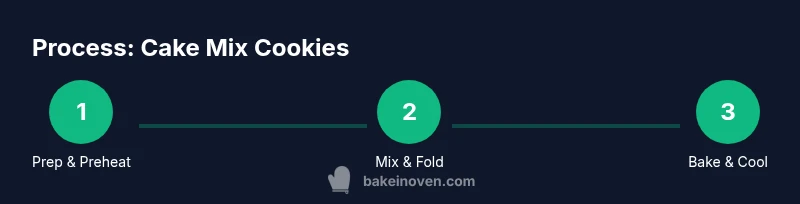
This overview sets the stage for the hands-on steps. Begin by preheating your oven, then prepare your baking sheet. Mix the cake mix with melted butter and eggs until a cohesive dough forms, fold in add-ins, and portion dough onto the sheet. Bake until the edges set and centers appear slightly soft for fudgy chewiness. Let cookies cool on the sheet briefly before transferring to a rack. This sequence keeps you in control of texture and ensures even baking. Remember, precise timing and proper spacing are essential for uniform results.
Substitutions and Ingredient Hacks to Expand Possibilities
Cake mix cookies respond well to simple substitutions. If you’re dairy-free, replace butter with a plant-based margarine or oil. For a lighter crumb, reduce the egg by half or swap half the butter for applesauce. Gluten-free cake mixes work with the same method, though texture may vary slightly. You can experiment with different flavors by choosing cake mixes that complement add-ins—peanut butter chips with chocolate mix, or lemon cake mix with white chocolate and zest. The key is to maintain balance: don’t overload the dough with mix-ins that prevent spreading.
Troubleshooting: Chewy, Cakey, or Crispy Variations
Texture outcomes depend on proportions and bake time. For chewier cookies, increase the fat-to-flour ratio slightly and shorten bake time to leave a soft center. For cakier cookies, use more egg or a touch more cake-mix and extend baking by 1–2 minutes. For crisper edges, bake a touch longer or use a higher heat for a shorter time, and ensure the dough balls are evenly spaced and not overly large. If your cookies spread too much, chill the dough for 15–20 minutes before baking. These adjustments let you tailor results to your preference without changing the core recipe.
Flavor Variations and Add-Ins to Try
The flavor canvas for cake mix cookies is broad. Try adding chocolate chips, white chocolate chips, or peanut butter chips for bursts of flavor. Chopped nuts add crunch; dried fruit offers tangy notes. For a fun twist, incorporate citrus zest, a pinch of sea salt, or a drizzle of caramel after baking. If you’re making a themed batch (holiday, birthdays, seasonal), coordinate add-ins with the occasion. The versatility of cake mix cookies means you can adapt quickly for guests or picky eaters.
Storing, Freezing, and Reheating Leftovers
Store baked cookies in an airtight container at room temperature for up to several days. For longer storage, freeze cookies in an airtight bag or container for up to a few weeks, separating layers with parchment to prevent sticking. To rewarm, briefly heat in a low oven (about 300°F) or microwave in short bursts to preserve freshness. Label with the flavor and date so you can rotate through batches. Proper storage preserves texture and taste, helping you enjoy the cookies beyond the day they come out of the oven.
Tools & Materials
- Cake mix (standard flavor)(Any flavor works; use a standard box size as a base.)
- Eggs (large)(Typically 1 per mix; 2 eggs for richer cookies.)
- Butter, melted(Usually 1/3 to 1/2 cup depending on batch size.)
- Mix-ins (optional)(Chocolate chips, nuts, or dried fruit.)
- Mixing bowls(One large for batter, one for add-ins.)
- Wooden spoon or spatula(For stirring and folding.)
- Measuring cups/spoons(Accurate measurements help consistency.)
- Parchment paper or silicone mat(Line baking sheets to prevent sticking.)
- Baking sheets(Flat, rimmed sheets work best.)
- Cooling rack(Cool cookies evenly after baking.)
- Oven thermometer (optional)(Helps ensure accurate temperature.)
- Cookie scoop (optional)(Evenly sized dough portions.)
Steps
Estimated time: 40-60 minutes (active), plus 9–11 minutes per batch
- 1
Preheat oven and prep sheet
Preheat your oven to 350°F (175°C). Line baking sheets with parchment paper or a silicone mat to prevent sticking and promote even browning.
Tip: Use an oven thermometer if your oven tends to run hot or cool. - 2
Whisk dry ingredients
In a mixing bowl, whisk the cake mix with any optional dry additions (like cocoa powder if making chocolate flavor). This creates a uniform base before adding wet ingredients.
Tip: Sift if the mix is very clumpy to ensure smooth dough. - 3
Combine wet ingredients
Add melted butter and eggs to the dry mix. Stir until the dough comes together; avoid overmixing to keep cookies tender.
Tip: If the dough seems dry, add a splash of milk or water 1 teaspoon at a time. - 4
Fold in add-ins
Gently fold in chocolate chips, nuts, or other add-ins of choice. Keep add-ins evenly distributed for consistent flavor in every bite.
Tip: Start with 1 cup add-ins per batch and adjust to taste. - 5
Scoop dough onto sheet
Use a cookie scoop or spoon to portion dough into evenly sized mounds, spacing them about 2 inches apart to allow for spreading.
Tip: Chill dough for 15 minutes if you want thicker cookies. - 6
Bake and monitor edges
Bake for 9–11 minutes until edges are set and centers appear slightly soft. Ovens vary, so start with 9 minutes and check at the 9-minute mark.
Tip: If edges brown too quickly, reduce temperature by 25°F and bake a bit longer. - 7
Cool briefly, then transfer
Let cookies rest on the baking sheet for 2–3 minutes, then transfer to a cooling rack to finish cooling. This helps set the cookie structure.
Tip: Cooling on a rack prevents soggy bottoms. - 8
Store or freeze for later
Store cooled cookies in an airtight container at room temperature for several days, or freeze for longer storage. Label with flavor and date.
Tip: For best texture after freezing, thaw at room temperature and re-crisp in a 300°F oven for a few minutes.
Frequently Asked Questions
Can I use any flavor of cake mix to make cookies?
Yes. Most flavors work, especially vanilla, chocolate, or butter cake mixes. The flavor of the mix will influence the overall cookie profile, so choose a variety that complements your add-ins.
Yes, you can use any flavor. Vanilla and chocolate work well, and you can tailor add-ins to match the cake mix flavor.
How long do cake mix cookies stay fresh?
When stored in an airtight container at room temperature, cookies typically stay fresh for several days. For longer storage, freeze the cookies and rewarm as needed.
They stay fresh for several days at room temperature and can be frozen for longer storage.
Can I make gluten-free or dairy-free versions?
Absolutely. Use a gluten-free cake mix and dairy-free butter or oil. Results may vary slightly, but you can still achieve a tasty, texture-friendly cookie.
Yes, you can, with gluten-free mixes and dairy-free fats. Expect minor texture differences.
What if my dough is too dry or too wet?
Too dry: add a teaspoon of milk or water at a time. Too wet: chill the dough or add a bit more cake mix. Small adjustments prevent overcomplicating the recipe.
If dry, add a little liquid; if wet, chill or add more mix. Tiny tweaks go a long way.
Can I freeze the dough for later baking?
Yes. Roll dough into balls, freeze on a tray, then transfer to a bag. Bake from frozen, adding 1–2 minutes to the bake time.
Yes, dough can be frozen; bake from frozen with a minute or two added.
How do I achieve a chewier texture?
Increase fat slightly, use more brown sugar if available, and bake just until edges set. Rest the dough to allow moisture distribution.
For chewier cookies, tweak fat, sugar balance, and bake time a bit shorter.
Watch Video
Key Takeaways
- Start with a standard cake mix as your base.
- Balance fat and eggs to control texture (chewy vs cakey).
- Add-ins customize flavor without complicating the base dough.
- Bake until edges set, centers appear soft for best texture.
- Store properly to maintain freshness for days or weeks.