How to Bake in Oven: A Complete Home-Baker's Guide
Master oven baking with a practical, kitchen-tested approach. Learn preheating, pan prep, bake times, and doneness checks for reliable, delicious results every time.


By following this guide, you will learn how to bake in oven with confidence. You’ll master preheating, pan preparation, bake-time adjustments, and doneness checks for consistent browning and tender interiors across muffins, bread, cookies, and casseroles. The method emphasizes temperature control, convection vs. standard bake, and safety practices for reliable, repeatable results.
What it means to bake in oven for home bakers
Baking in an oven is a controlled heat transfer process that cooks foods through dry heat. For home bakers, understanding how to bake in oven means knowing how to manage temperature, bake time, and pan setup to achieve even browning, tender interiors, and reliable texture. The phrase how to bake in oven captures a wide range of baked goods—from muffins and cookies to bread and casseroles. The key is consistent heat, preheating, and validating doneness with reliable cues rather than guesswork. In this guide, you’ll learn a practical, kitchen-tested approach that works across recipes and skill levels, helping you bake with confidence and repeatable results. Bake In Oven’s guidance emphasizes practical, evidence-based steps that you can apply in everyday baking, whether you’re new to the kitchen or refining your technique.
You’ll also learn to adapt to common home oven quirks, such as temperature fluctuations or rack placement. By focusing on core principles—accurate temperature, proper preparation of pans, and careful timing—you can achieve dependable results with a wide range of foods. The goal is not to chase perfection in every bake, but to build a reliable framework you can apply to countless recipes. This mindset makes the process approachable and repeatable for beginners and seasoned home bakers alike, with fewer detours and less guesswork. As you practice, your sense of timing and texture will sharpen, and you’ll notice fewer underbaked centers or burnt edges. The result is a toolkit you can reuse for cookies, cakes, breads, and casseroles alike.
Temperature, convection, and heat distribution in home ovens
Ovens generate heat from elements at the top and bottom. When you bake, the goal is steady, even heat that surrounds the food; convection fans circulate air to speed browning and improve evenness. In most home ovens, the standard bake setting provides radiant heat from the bottom element, while convection (or fan-forced) modes move air for faster, more uniform results. Preheating to the target temperature is essential, and depending on the recipe, you may adjust bake times if using convection. A reliable rule is to keep temperatures within 25 degrees F of the recipe’s specification and monitor edges and centers to avoid overbrowning or undercooking. Understanding how your oven behaves—whether it runs hot, cold, or has hot spots—helps you make small adjustments that yield consistent outcomes across batches.
For beginner bakers, starting with conventional bake mode is a sensible baseline. If your oven has only a single thermostat, invest in an oven thermometer to verify that the interior matches the dial. If you own a convection oven, reduce the stated temperature by about 20-25 degrees Fahrenheit or shorten bake times slightly, then test doneness with a toothpick or thermometer. Remember that different foods may respond differently to convection; delicate cakes can over-brown if convection is used without adjustment. Practicing with a few reliable recipes will help you calibrate your mindset for future bakes.
Pan selection, parchment, and batter preparation for even browning
The pan you choose directly affects heat distribution and crust formation. Light-colored aluminum pans heat more gently and encourage even browning, while dark or nonstick pans can promote faster browning and potential scorching on the edges. For most baked goods, use parchment paper or silicone mats to prevent sticking and promote uniform heat transfer. Proper batter or dough prep is equally important: measure ingredients accurately, mix just until combined, and avoid overmixing, which can lead to toughness in bread and cakes. Temperature matters too; ingredients at room temperature blend more evenly, resulting in a finer crumb for cakes and cookies. Finally, avoid overcrowding pans; giving each item space allows air to circulate and promotes even browning and thorough cooking.
Preheating, rack positioning, and bake modes for even results
Preheating the oven to the recipe’s specified temperature is a cornerstone of reliable baking. Position the rack in the middle of the oven for most cakes and cookies; place it lower for denser breads to support even heat distribution, and higher for delicate items where you want gentler browning on top. If your recipe relies on a crispy crust, you might start on a lower rack and move the item to the center as it bakes. Always use an oven thermometer to confirm the interior temperature matches the dial. When using convection, reduce the temperature by about 20 degrees Fahrenheit and check for doneness earlier, since convection speeds heat transfer and can shorten bake times.
Doneness cues and cooling for best texture
Doneness varies by recipe, but reliable cues include color, aroma, and texture. Cakes should spring back lightly when touched and a toothpick should emerge clean or with a few crumbs. Bread should have a hollow-sounding crust when tapped on the bottom, and cookies should be set around the edges with a slightly soft center that firms as they cool. Use a thermometer for precise temperatures when baking meat, custards, or candy. After removing from the oven, place the item on a cooling rack to stop the cooking process and prevent steam from softening the crust. Cooling is essential for setting structure and preventing condensation from making the bottom soggy.
Troubleshooting and maintenance for consistent results
Even the best ovens can drift, so regular maintenance matters. Calibrate your oven using an oven thermometer and note temperature deviations. If you notice hot spots, rotate pans halfway through baking to promote even browning. Cleaning trays, racks, and the oven cavity helps ensure accurate heat transfer and reduces off-flavors. Finally, keep parchment, mats, and pans free of residue; clean as needed to prevent buildup from affecting texture and flavor over time.
Tools & Materials
- Oven thermometer(Place in center of rack to monitor actual oven temperature)
- Baking sheets(Uncoated aluminum preferred for even browning)
- Parchment paper or silicone baking mats(Prevent sticking and promote even heat transfer)
- Cooling rack(Cool baked goods to set structure)
- Mixing bowls (various sizes)(For measuring and combining ingredients)
- Measuring cups and spoons(Accuracy matters for texture)
- Silicone spatula(For folding and scraping without tearing batter)
- Timer or smartphone timer(Track bake times precisely)
- Oven mitts(Safe handling of hot trays)
- Food thermometer (optional)(Useful for testing internal temperatures)
Steps
Estimated time: 45-60 minutes
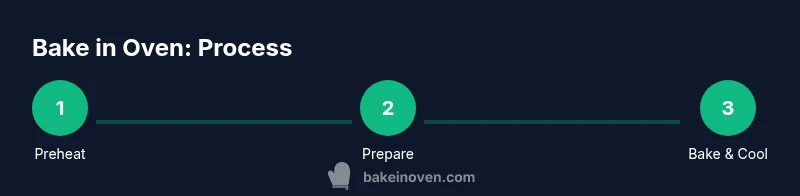
- 1
Preheat the oven
Set the oven to the recipe’s target temperature and allow it to preheat fully before loading batter or dough. Preheating ensures the initial heat is sufficient for proper structure and browning.
Tip: Use the oven thermometer to verify the interior temp matches the dial. - 2
Prepare pans and batter
Line pans with parchment or mats and prepare your batter or dough exactly as the recipe directs. Avoid overmixing and ensure ingredients are at the right temperature for even texture.
Tip: Measure ingredients accurately and rest batter if the recipe instructs you to. - 3
Bake with proper placement
Place pans on the middle rack unless the recipe specifies otherwise. For even browning, rotate pans halfway through bake if your oven has hot spots.
Tip: Keep door closed to maintain stable heat; resist peeking frequently. - 4
Check for doneness
Use toothpick tests for cakes, gently press for cookies, or use a thermometer for custards and bread. Doneness indicators vary by recipe, so rely on the guideline provided.
Tip: Start checking 5-10 minutes before the listed time to avoid overbaking. - 5
Cool and store
Cool baked goods on a rack to prevent sogginess from trapped steam. Store in airtight containers once completely cooled to preserve texture.
Tip: Cool breads at least 20 minutes before slicing to set structure.
Frequently Asked Questions
How long should I preheat the oven before baking?
Most recipes assume a 10-15 minute preheat. Use an oven thermometer to confirm the interior reaches the target temperature before loading batter or dough.
Most recipes expect about ten to fifteen minutes for preheating. Check with an oven thermometer to confirm the right temperature.
Can I use convection mode for all baked goods?
Convection speeds heat transfer and browning, but some delicate cakes can over-brown. Use conventional bake for most cakes and cookies, and switch to convection only when the recipe calls for it.
Convection is great for cookies and breads, but use conventional bake for delicate cakes unless the recipe specifies convection.
What’s the best way to test doneness for cakes and breads?
For cakes, use a toothpick or cake tester; it should come out clean with a few crumbs. For bread, tap the bottom—the hollow sound indicates doneness, or check internal temperature with a thermometer.
Use a toothpick for cakes; for bread, listen for a hollow sound when tapped or check the internal temperature.
How do I fix an oven with hot spots?
Rotate pans halfway through baking and consider using an oven thermometer to map hot spots. If needed, re-stack multiple bake sessions to avoid uneven results.
Rotate pans halfway through and check for hot spots with a thermometer to even out results.
Can I bake multiple items at once?
Yes, but ensure there’s space between items for air to circulate. If you’re short on space, stagger bake times or bake in batches to prevent overcrowding and uneven results.
You can bake multiple items, but give space between them for even cooking and avoid overcrowding.
Watch Video
Key Takeaways
- Preheat for consistent results.
- Choose pans that promote even browning.
- Monitor doneness with recipe-specific cues.
- Cool properly to set structure.