How to Bake Without an Oven: Practical Alternatives
Learn practical oven-free baking methods for home cooks. Explore stove-top, microwave, grill, and solar techniques with step-by-step guidance and safety tips.


To bake without an oven, you’ll rely on alternative heat sources such as a stovetop or Dutch oven, a microwave, a grill, or a solar setup. This guide shows practical methods, required tools, and beginner-friendly steps to produce reliable baked goods in a typical kitchen. It also includes safety tips and simple, oven-free recipes to try today.
What Oven-Free Baking Is (and Isn't)
If you're wondering how to bake without an oven, you're in the right place. Oven-free baking means using heat sources other than a conventional oven to cook batter and dough into finished treats. You can make breads on a stovetop in a heavy pot, bake cakes in a grill, or create quick desserts in a microwave. The scope includes everyday snacks, quick breads, muffins, and some desserts, but it isn't suitable for most yeast-leavened loaves that rely on consistent oven heat. With practice, you can achieve reliable textures by controlling heat, using proper cookware, and adjusting recipes. According to Bake In Oven, oven-free techniques are especially useful for apartment kitchens, camping trips, or when your oven is broken. The key is to understand how heat transfer works in non-oven setups: conduction from a pan, convection around a lid, and, in solar methods, radiant energy from the sun. Start with simple recipes that rely on electric or gas heat sources you already own, and gradually explore other methods as you gain confidence. In this guide, you’ll learn how each approach handles moisture, browning, and structure so you can decide which method fits your goal, your equipment, and your schedule.
Method 1: Stove-Top Baking with a Heavy Pan or Dutch Oven
This approach uses a heavy, heat-retaining vessel such as a cast-iron skillet or a Dutch oven with a tight-fitting lid placed on a low, steady flame or on a burner with a heat diffuser. The idea is to mimic oven heat by trapping steam and distributing heat through the vessel. Begin by lightly oiling the pan and lining with parchment if you’re baking bread or cakes that might stick. Preheat the vessel for a few minutes while you prepare your batter, then add the batter and cover with the lid. Maintain a gentle simmer rather than a roaring flame; too much heat will scorch the bottom before the center sets. Check doneness with a toothpick or thermometer, rotating the pan halfway through to promote even browning. This method works well for small loafs, crusty breads, and dense cakes. The main challenge is heat control: you’ll need a flame that’s low enough to cook through without burning the exterior. If you don’t have a cast-iron Dutch oven, a heavy stainless steel pot with a tight lid can also work, though heat distribution may differ slightly. For best results, use a rack or trivet to prevent direct contact with the flame and to promote even heat transfer. This approach offers a familiar texture and crust that many bakers crave, without relying on an electric oven.
Method 2: Microwave Baking for Quick Bakes
Microwave baking is fast and convenient for small batches and quick desserts. Use microwave-safe glass or ceramic cups, mugs, or small baking dishes with a vented cover. Start with a basic batter that contains a little more liquid and less gluten development to prevent toughness. Microwave at short intervals, typically 60-90 seconds per mug, then check and repeat in short bursts to avoid overcooking. For larger cakes, cook in a microwave-safe dish and rotate halfway through to ensure even heating. Use parchment or silicone liners to reduce sticking. Because microwaves heat unevenly, you may need to experiment with power settings and time. Microwave baked goods lack the deep browning of conventional oven baking, but you can build color by finishing with a quick broil in a conventional oven if one is available, or by using a grill for a brief searing.
Method 3: Grilling or Campfire Baking
Grilling can replicate some oven functions, delivering browning and a crisp crust. Use a heavy cast-iron skillet or a grill-safe baking dish with a lid. Preheat the grill to a steady medium heat. Oil and line the pan, then pour in the batter and close the grill lid to trap heat like an oven. Check regularly and rotate the pan to avoid hot spots. This method works well for breads, biscuits, muffins, and fruit crisps. For campfire baking, use a Dutch oven or a heavy-lidded pot placed in coals. Build a bed of hot embers, set the pot on top, and cover with a layer of hot coals. Maintain heat by adding or adjusting coals as needed. The smoky flavor is a bonus, but you’ll need to monitor temperature carefully to prevent scorching.
Method 4: Solar Oven or Sun-Powered Baking
A solar oven uses reflected sunlight to heat a contained chamber. It’s a sustainable option for sunny days and gives a distinct crumb and crust. Use a purpose-built solar oven or create a simple reflector box with a clear window and dark interior. Place a baking dish inside, and align the oven toward the sun. Expect longer bake times depending on light intensity; have patience and plan for extra time. Solar baking is best for cookies, flatbreads, scones, and other quick breads that bake well at moderate heat. It’s less practical in cold or cloudy climates but can be surprisingly effective in warm, sunny environments. Always monitor the bake and maintain a stable angle to maximize heat capture.
Tools, Techniques, and Safety Tips
Essential gear includes a heavy pot with a lid, parchment, oil, a measuring set, and an instant-read thermometer. For heat management, use a trivet or a diffuser to prevent scorching and to spread heat evenly. Techniques include rotating the pan, adjusting flame intensity, and layering ingredients to protect delicate batters. Safety is critical when cooking with open flames or hot oils: never leave cooking unattended, keep a fire extinguisher accessible, and use heat-resistant gloves or mitts. If you are using a grill or campfire, manage airflow to maintain a steady temperature; a sudden rise can burn the bottom of your bake. Always check the internal temperature of baked goods and rely on sensory cues like aroma and color to judge doneness. When experimenting with no-oven techniques, start with simple recipes and gradually scale up to more complex ones as you become more confident. Bake In Oven emphasizes that oven-free baking is a practical, flexible skill that expands your repertoire without needing a traditional oven.
Simple Oven-Free Recipes to Try
Here are a few beginner-friendly options that illustrate oven-free baking across heat sources. Skillet banana bread uses a cast-iron skillet and a lid on the stovetop; the batter comes together quickly, and the crust forms a pleasing crust. Microwave mug cakes are ideal for a single serving and require minimal cleanup. Apple skillet crisps showcase fruit with a crumbly topping baked in a covered pan. If you have a grill, you can bake biscuits on the grill, or even a small loaf in a Dutch oven; the key is to monitor temperature and rotate for even browning. When starting, choose recipes that you know well and adjust the times as you learn your heat source’s quirks. With practice, you’ll create comforting, home-baked treats without using an oven.
Tools & Materials
- Cast-iron skillet(6-10 inch pan works; use lid.)
- Dutch oven with lid(5-6 quart works; pre-seasoned preferred.)
- Stovetop-safe heavy-bottom pan(With a lid if possible.)
- Parchment paper(Line pans to prevent sticking.)
- Oil or nonstick spray(Light coating to prevent sticking.)
- Silicone spatula(For mixing and scraping.)
- Mixing bowls(Multiple sizes helps prep.)
- Measuring cups/spoons(Accurate ingredients.)
- Instant-read thermometer(Check doneness where appropriate.)
- Trivet or heat diffuser(Keeps cookware off direct flame.)
- Timer(Monitor bake times accurately.)
- Tongs or oven mitts(Handle hot cookware safely.)
Steps
Estimated time: 60-90 minutes
- 1
Gather ingredients and equipment
Collect all ingredients and the no-oven hardware you will use. This ensures you can execute the plan without hunting for pieces mid-bake.
Tip: Have everything within arm's reach before you start. - 2
Prepare batter or dough
Whisk or combine wet and dry ingredients according to your recipe; avoid over-mixing to keep tenderness in the final bake.
Tip: Measure ingredients accurately to avoid dry or gummy textures. - 3
Prep pan and heat source
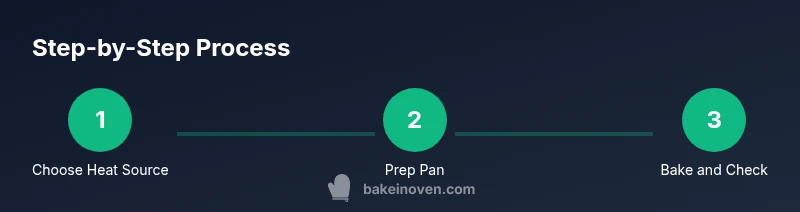
Lightly grease the pan or line with parchment, then set on a low heat source with a trivet to distribute heat evenly.
Tip: Pre-warm the vessel for 2-3 minutes if using a skillet. - 4
Pour batter and cover
Pour batter into the prepared pan and cover with a lid or foil to trap heat and moisture for even cooking.
Tip: Ensure the cover fits tightly for steam retention. - 5
Bake using your chosen method
Cook on stove-top, grill, microwave, or solar setup per recipe timing; rotate once halfway for even browning.
Tip: Keep heat gentle to prevent scorching. - 6
Check doneness and rest
Insert a toothpick or thermometer to check; if needed, return to heat for a few minutes. Let cool before slicing.
Tip: Cooling helps finish setting and improves texture.
Frequently Asked Questions
Can I bake bread without an oven?
Yes, bread can be baked on a stove or grill in a heavy pot. The crust and crumb depend on heat control and steam; results vary with recipe.
Yes, you can bake bread on a stove or grill using a heavy pot with good heat control.
What equipment do I need to get started?
A heavy pan with a lid, parchment, oil, measuring tools, and heat diffusers will cover most oven-free bakes.
You mainly need a heavy pan with a lid and basic measuring tools.
Is microwave baking safe for eggs and dairy?
Microwaves can safely bake many batters; ensure eggs are fully cooked and dairy is not overheated to avoid curdling. Use microwave-safe containers.
Yes, but follow safe microwave guidelines and check doneness carefully.
How do I know when it's done without an oven thermometer?
Rely on visual cues, toothpick tests, and internal temperature targets from your recipe. Adjust time based on heat source.
Check doneness with a toothpick and, if available, a thermometer.
Can you bake cookies without an oven?
Yes, cookies can be made on a hot skillet or in a microwave; expect different textures and shorter bake times.
Yes, you can bake cookies on a skillet or in a microwave.
What is the best no-oven method for beginners?
Start with stove-top or microwave methods to learn heat control before trying grills or solar ovens.
Begin with stove-top or microwave to build confidence.
Watch Video
Key Takeaways
- Master heat control for even baking.
- Choose the right vessel for your method.
- Different no-oven methods suit different recipes.
- Safety cannot be ignored; monitor heat and steam.
- Practice yields consistent oven-free results.