How to Blind Bake Pastry Base: A Complete Guide
Learn how to blind bake a pastry base for a crisp, leak-free crust. This guide covers essential tools, timing, and troubleshooting to prevent soggy bottoms and ensure a professional finish.


What blind baking is and when to use it
Blind baking is the technique of prebaking a pie or tart crust before adding a filling. The goal is to create a firm, dry base that won’t become soggy when juicy fillings are added. This method is essential for custards, fruit tarts, and quiches where a fully cooked shell improves texture and structure. In Bake In Oven testing, properly blind-baked bases stay crisper longer and hold their shape better than shells baked with filling from raw dough. You’ll use blind baking for lemon tarts, chocolate ganache tarts, and cream pies, especially when the filling is liquid or high-moisture. The process minimizes shrinkage and ensures even browning, which makes the finished dessert look professional and feel sturdy when sliced.
Essential tools and ingredients for blind baking
Before you start, gather the tools and ingredients you’ll rely on. A well-chilled dough is easier to fit into the pan and resists shrinking. Parchment paper or a silicone liner provides a stable shield against direct heat and makes removing the weights easier. Baking weights—ceramic or metal, or even dried beans—keep the crust from puffing. A round tart pan, a rolling pin, a sharp knife, and an accurate oven thermometer help ensure even results. Finally, have a cooling rack and a timer so you can monitor progress precisely. With the right setup, you’ll keep the base intact and ready for a smooth fill.
Dough preparation and chilling for best results
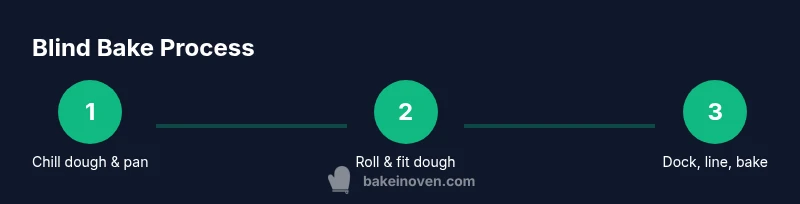
Start with a cold, well-made dough. After mixing, press the dough into a disk, wrap, and chill for at least 30 minutes (or up to 2 hours). The chill relaxes gluten, making the dough easier to roll and less likely to shrink in the oven. Roll on a lightly floured surface to a diameter larger than your pan by about 1/2 inch (1.3 cm) all around. If the dough warms, chill again briefly. Resting the dough helps develop flavor and ensures clean, straight edges when lined into the pan.
Docking, lining, and weighting correctly
Docking means pricking the bottom with a fork to allow steam to escape. Line the chilled dough with parchment so the weights sit on an even shield rather than directly on the dough. Place weights in the center and spread outward; avoid letting weights slide to the edges, which can cause uneven browning. The parchment can be folded so it sits flush against the crust; this helps keep the sides upright as the base bakes. If you don’t have traditional weights, a few coins or dried beans can substitute, but avoid overloading the crust and creating air gaps.
Partial-baking vs full-baking: timing and temperatures
For most shortcrusts, aim for a partial bake at a moderate temperature until the edges begin to color and the center looks dry. Typical guidelines are bake at around 350-375°F (175-190°C) for 12-15 minutes with weights; then remove the parchment and weights and bake 5-8 minutes longer to set the base. If your filling is very dense, you may need a longer final bake. Always monitor the crust; it should look lightly golden and feel firm to the touch.
Troubleshooting: soggy bottoms and over-browning
If the base looks soggy after partial baking, return it to the oven with weights for a few more minutes and ensure the parchment lies flat with no folds. Over-browning can be avoided by shielding the crust edges with foil during the final bake, and sogginess can be reduced by ensuring an even layer of parchment and weights. If your dough shrinks, chilling longer or rotating the pan halfway through can help. For pastry with high fat content, keep the edges from curling by avoiding overhandling and ensuring thorough chilling.