How to Get Baked-On Grease Off Pans: A Practical Guide
Discover safe, kitchen-tested methods to remove baked-on grease from pans. Soaking, baking-soda pastes, and gentle scrubbing work on nonstick, cast iron, and metal surfaces, with prevention tips to keep pans clean for longer.


Learn a proven, kitchen-tested approach to remove baked-on grease from pans. This method covers soaking, baking-soda pastes, gentle scrubbing, and safe cleaners for nonstick, cast iron, and metal pans. You’ll know when to soak, what paste to use, how to scrub effectively, and how to finish with drying and storage.
Why how to get baked on grease off pans matters
Greasy, baked-on residues are among the most stubborn cleaning challenges in the kitchen. If you’ve ever tried to scrub away a dried film from a cookie sheet or a seasoned skillet, you know how easily the surface can dull or scratch. This guide explains practical, kitchen-tested techniques that work across common pan materials—nonstick, aluminum, stainless steel, enamel, and cast iron. According to Bake In Oven, starting with a gentle, materials-safe approach preserves coatings and seasoning while breaking the bond between grease and metal. You’ll learn when soaking helps, which pastes to mix, and how to scrub without causing damage. The goal is a pan that’s clean, polished, and ready for your next bake. The steps are simple, repeatable, and designed to minimize wear over time.
Understanding pan types and how they react to cleaners
Pan materials behave differently when faced with grease and cleaners. Nonstick coatings are sensitive to abrasive scrubbers and harsh chemicals; enamel-coated pans resist scratches but can discolor with aggressive acids. Cast iron and carbon steel gain protection from seasoning, but aggressive scrubbing can strip that layer. Stainless steel is durable but can show stubborn specks if not washed properly. When choosing a method, start with the gentlest option and escalate only as needed. Bake In Oven’s guidance emphasizes testing cleaners in a small, inconspicuous area first and avoiding metal tools on delicate surfaces. This approach reduces the risk of scratches or coating damage while delivering reliable results.
The three core methods: soaking, paste, and mechanical scrubbing
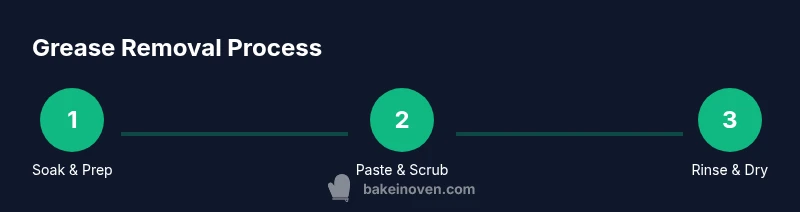
Soaking loosens baked grease before any physical action. A warm, soapy bath for 15–30 minutes is often enough for light buildup; longer soaks may be needed for heavily baked layers. A baking-soda paste acts as a mild abrasive without scratching surfaces, making it a staple for stubborn areas. Mechanical scrubbing with non-scratch sponges or soft brushes helps lift residue without gouging. Combining these methods—soak, paste, scrub—usually yields the best balance of safety and effectiveness. Bake In Oven’s tested approach shows that starting with soaking and paste reduces the need for harsh scrubbing on most pans.
Step-by-step concept: soaking and pre-clean
Before you reach for cleaners, rinse away loose debris with warm water. Soak the pan in hot, sudsy water for 15–30 minutes; for very stubborn grease, extend to 60 minutes. The aim is to soften the dried grease so that a paste or gentle scrub can dislodge it more easily. Use a mild dish soap and a non-scratch sponge. This foundational step protects coatings and reduces the amount of mechanical abrasion needed later in the process.
Common mistakes that ruin pans
Overly aggressive scrubbing with metal pads can scratch nonstick surfaces or grind away seasoning on cast iron. Using harsh chemical cleaners—especially near delicate coatings—can cause discoloration or peeling. Never place hot pans in cold water; thermal shock can warp metal. Don’t skip drying; moisture left on metal pans invites rust and flavor transfer. A frequent pitfall is assuming stronger chemicals yield faster results; in most cases, gentler, repeated steps win the race against baked grease.
Natural cleaners that work safely
Baking soda paste (baking soda with water to a thick consistency) is a cornerstone of safe, effective grease removal. White vinegar can help dissolve grease but should be diluted and never used at full strength on delicate coatings. A splash of white vinegar combined with hot water can clean and deodorize, especially after the paste scrub. For metal pans, a loop of lemon juice can help brighten surfaces without harsh chemicals. Always rinse thoroughly to remove any residue that could affect future bakes.
Dealing with stubborn grease on difficult pans
If initial methods fail, escalate gradually: re-soak, reapply paste, and use a softer scrubber or a plastic scraper to lift residues in small circular motions. For cast iron, re-season the pan after cleaning with a light coat of oil and heat to restore the surface. Enamel surfaces may tolerate gentle baking soda scrubs but should avoid acidic cleaners that could dull glaze over time. If food particles are baked into corners, use an old toothbrush to reach crevices. Bake In Oven’s full guide suggests staying patient—most grease yields to repeated gentle efforts rather than brute force.
Maintenance, storage, and prevention
Prevent buildup with routine quick cleans after baking: wash while warm, dry immediately, and store in a dry area to prevent corrosion. Line baking sheets with parchment paper to reduce direct contact of food fats with the metal; this practice saves scrubbing time later. For cast iron and carbon steel, maintain seasoning by wiping with a thin coat of oil after cleaning and heating briefly. Regular upkeep extends the life of pans and keeps surfaces ready for high-quality results every bake.
Safety tips and environmental considerations
Always use gloves when handling hot pans to prevent burns, and work in a well-ventilated area when using concentrated cleaners. Avoid pouring large quantities of hot, greasy water down household drains if your plumbing is older or septic systems are sensitive. Dispose of used paste residue in the trash or compost if appropriate. Choose milder cleaners for enamel and nonstick to protect coatings and reduce environmental impact. The care you invest today pays off with fewer replacements and better baking results.
Tools & Materials
- Warm water(Hot but safe to touch; aids loosening grease)
- Mild dish soap(For initial soaking and cleaning)
- Baking soda(Make as a paste for stubborn spots)
- White vinegar(Dilute and use sparingly on sensitive coatings)
- Non-scratch sponge(Avoid metal pads on delicate coatings)
- Soft-bristle brush(Good for corners and edges)
- Plastic scraper or silicone spatula(Gently lift residue without scratching)
- Microfiber cloth(For drying and buffing)
- Old toothbrush(Reach crevices and corners)
Steps
Estimated time: 45-75 minutes
- 1
Remove loose debris
Rinse the pan under warm water to remove loose food particles. This reduces grit that can scratch the surface during cleaning. Keep the water warm, not hot, to avoid warping metal edges.
Tip: A quick pre-rinse saves effort later and helps keep your sponge clean. - 2
Soak in hot, soapy water
Fill the sink or a tub with hot water and a few drops of mild dish soap. Submerge the pan and let it soak for 15–30 minutes; longer for heavy baked grease. The soaking softens the film so paste and scrubbing are more effective.
Tip: If you’re cleaning multiple pans, stagger so each gets adequate soaking time. - 3
Apply baking-soda paste
Mix baking soda with a small amount of water to form a thick paste. Rub it onto the greasy areas with a non-scratch sponge, focusing on corners and stubborn spots. Let the paste sit for 5–10 minutes to work.
Tip: Avoid applying paste to nonstick coatings in a way that could coat the surface; cover only the grease-rich areas. - 4
Scrub using safe tools
Use a non-scratch sponge or a soft brush in gentle circular motions. For corners and rims, use a plastic scraper to lift residue without gouging. Rinse and repeat as needed.
Tip: Never use metal scrapers on nonstick or enamel surfaces. - 5
Rinse, inspect, and repeat
Rinse thoroughly with warm water. Inspect for any remaining residue; repeat soaking and paste if necessary. If grease persists, a diluted vinegar rinse can help, but test first on a small area.
Tip: If you smell a lingering odor, a final rinse with a little dish soap can help neutralize it. - 6
Dry and restore finish
Dry completely with a microfiber cloth. For cast iron, apply a light coat of oil and heat briefly to restore seasoning. Store pans in a dry, ventilated area to prevent moisture-related corrosion.
Tip: Always dry pans immediately after washing to prevent rust.
Frequently Asked Questions
Can I use oven cleaner on baked-on grease?
Oven cleaners are strong and can damage coatings. It’s best to reserve them for metal oven interiors and stick to milder cleaners for pans. If you must use a stronger product, test on a small area first and follow the manufacturer’s instructions.
Oven cleaners are too harsh for most pans. Test a small area first if you must, but safer milder cleaners are usually enough.
Is it safe to soak metal pans overnight?
Soaking metal pans overnight is generally safe for durable stainless steel or enamel-coated pieces but can cause issues with some coatings. Always check manufacturer guidance and avoid long soaks on delicate surfaces.
Soak overnight only if your pan is sturdy and manufacturer-approved; otherwise, stick to shorter soaks.
What should I do if grease won’t come off after paste and scrubbing?
If grease stubbornly sticks, repeat soaking and paste application, and consider a second-pass with a diluted vinegar rinse. Avoid forcing the residue with abrasive tools; stop if you see coating wear.
Repeat soaking and paste, then try a diluted vinegar rinse. Don’t scrub hard if the coating shows wear.
Can baking soda paste damage stainless steel?
Baking soda paste is generally safe for stainless steel, but avoid prolonged contact on polished or brushed finishes. Rinse thoroughly to prevent any residue that could dull the surface.
Safely use baking soda on stainless steel, but rinse well to avoid dulling the finish.
How often should I clean pans to prevent buildup?
Clean pans after each use when possible. A quick warm wash prevents heavy buildup and extends the life of nonstick coatings and seasoned finishes.
Clean pans after every use when you can, to prevent tough buildup.
Does this method work on cast iron?
Yes, with care. Use minimal water, re-season after cleaning, and avoid harsh detergents that strip seasoning. A light oil wipe after drying helps maintain a strong seasoning layer.
Cast iron respond well to gentle cleaning and a light oil re-season after drying.
Watch Video
Key Takeaways
- Identify pan material before choosing cleaners.
- Soaking plus baking-soda paste handles most grease.
- Be gentle with nonstick and enamel surfaces.
- Dry thoroughly and restore seasoning on cast iron.
- Prevent buildup with quick post-bake cleaning