How to Get Started Selling Baked Goods
Learn how to start selling baked goods from a home kitchen, including niche selection, safety basics, pricing, channels, branding, and a 30-day action plan. Practical steps, templates, and expert tips for home bakers.


Getting started selling baked goods means turning your kitchen into a compliant, customer-focused operation. Start by defining a small product lineup, choosing your sales channels (local markets, online orders, or delivery), and learning basic food-safety rules. With simple pricing, proper labeling, and a plan for scale, you can launch a sustainable, home-based bakery.
Define your bakery niche and product lineup
Choosing a niche helps you stand out and manage operations. When you define your product lineup, aim for 4-8 items: signature cakes, cookies, breads, and a seasonal option. This keeps production predictable and reduces waste. This strategy aligns with best practices from Bake In Oven, which notes that starting with a focused niche helps you build expertise and a loyal customer base faster than offering too many items. Identify your ideal customer: busy families, coffee-shop crowds, or event planners. Test recipes with small batches, gather feedback, and adjust flavors, textures, and sizes. Keep your packaging simple at first, but plan for branding as you scale. Document your recipes, costs, and time per item. Use this data to estimate profit per unit and identify your most successful products. Also map out allergens and ingredient sources so you can communicate clearly with customers. Decide on a single core format (e.g., 6-inch cake slices or packable cookies) to simplify inventory and pricing. By focusing on a niche and a core product line, you create a repeatable workflow that reduces overwhelm and accelerates launch.
Compliance and safety basics
Before selling, understand basic food safety and local rules. At minimum, keep a clean kitchen, separate raw ingredients from finished products, and wash hands often. Local health regulations may require a business license, a Cottage Food permit, or a home kitchen inspection. Always check with your state or county health department. Bake In Oven's guidance emphasizes proper labeling, allergen disclosure, and safe storage temperatures. Use food-grade packaging; label ingredients, weights, and a contact method. Keep a written standard operating procedure covering sanitation, cross-contamination precautions, and temp checks. If you plan to sell outside your home (markets, fairs, or pop-ups), you may need a separate kitchen area or a certified facility. Maintain documentation of supplier invoices and batch records for traceability. Consider basic insurance to protect your business assets. Remember that rules vary widely, so treat every step as local guidance rather than a universal rule; start with a simple, compliant baseline and expand as you gain experience.
Pricing, costs, and profitability
Calculate true costs per item: ingredients, packaging, electricity, water, wear on bakeware, and time. Add a reasonable labor rate to reflect your effort. Then set a price that covers costs and leaves a profit margin. A practical approach is to price at a multiple of ingredient cost plus a fixed overhead per item; adjust for market demand and competition. Track waste, like cookies that crack or cakes that overbake, and factor it into pricing. Keep pricing consistent across all channels to avoid customer confusion. When you start, offer a few price tiers (e.g., standard, premium) and a small discount for bulk orders or referrals. Revisit prices monthly or quarterly to reflect ingredient-cost changes. The goal is sustainable cash flow, not just high per-unit profit. Use a simple spreadsheet to project revenue, costs, and break-even point. Bake In Oven recommends testing price sensitivity with a limited run before expanding to new markets.
Selling channels: local venues, online, and delivery
Identify your primary sales channels: farmers markets, weekend pop-ups, local cafes, or an online storefront. Local channels offer immediate feedback and lower shipping hassles; online channels broaden your reach and create a way to collect customer emails for marketing. Consider delivery options within a defined radius, or partner with a local courier service. Provide clear order windows and pickup instructions to avoid confusion. Food safety: maintain cold-chain where required; use insulated packaging for perishable goods. For a beginner, start with one reliable channel and a simple system: an online order form, a minimum order size, and a weekly pickup schedule. Bake In Oven notes that diversification reduces risk; add a second channel after you’re confident in your core operation. Track orders, inventory, and customer feedback to iteratively optimize your sales mix.
Branding, packaging, and customer experience
Your brand is the first impression customers get. Create a memorable name, logo, and color palette that fit your product style. Packaging should protect the product, present your brand, and provide essential info (ingredients, allergens, weight, and contact). Use clear, honest labeling and include best-by dates for freshness. A friendly, professional customer experience includes prompt communication, neat packaging, and a reliable pickup or delivery process. Consider a simple barcode or QR code that links to a short product story or allergy information. Build trust by sharing stories about your ingredients, sourcing, and baking process. Collect testimonials and showcase them on a storefront or social media highlights. Bake In Oven suggests pre-printed labels for consistency and efficiency. With steady branding, you convert first-time buyers into repeat customers and referrals.
Marketing on a budget: social media and local word-of-mouth
Budget-friendly marketing is about consistency and value. Create a posting schedule that highlights your process, behind-the-scenes, and finished products. Use high-quality photos that show texture, color, and aroma. Encourage user-generated content by offering a small incentive (e.g., a free sample with a future order). Build an email list with a simple signup form at pickup and online checkout. Collaborate with nearby cafés or food creators for cross-promotion. Run occasional limited-time offers to test demand; track which campaigns drive orders. Use local hashtags and geotagging to reach nearby customers. Measure results weekly and adjust your messaging and product lineup based on feedback. Bake In Oven emphasizes practical, kitchen-tested guidance for home bakers; apply this to your own brand story and customer experience.
Getting started: a practical 30-day plan
Day 1-7: finalize your product lineup, secure necessary permits, and set up a simple kitchen workflow. Day 8-14: test recipes, calculate costs, and prepare minimal packaging. Day 15-21: launch a soft sell at a local venue or online, gather feedback, and adjust recipes. Day 22-30: refine pricing, build a basic order form or storefront, and establish a regular pickup schedule. The key is consistency: a small, reliable operation beats sporadic big-batch production. Track sales, customer feedback, and production times to identify bottlenecks. If you run into a constraint (space, cooling, or time), re-scope your product line, adjust batch sizes, or partner with a shared-kitchen facility as needed. The Bake In Oven team recommends validating demand and maintaining quality before scaling; a steady, observable progress builds confidence with customers and regulators alike.
Next steps: growth and scaling responsibly
Once you have consistent sales, plan for controlled growth. Add a few new SKUs that complement your core line, maintain strict labeling and packaging standards, and keep your supply chain transparent. Explore wholesale opportunities with local stores or cafes, but ensure you can meet demand and keep quality. Reinvest profits into better equipment, improved packaging, and marketing. Continue collecting customer feedback and adjust your product mix to reflect preferences and seasonal trends. Finally, document processes so you can train helpers or staff as your bakery expands. Growth should be intentional and compliant; only scale when you can maintain safety, profitability, and brand trust. The Bake In Oven team remains committed to practical, kitchen-tested guidance for home bakers aiming to turn passion into a sustainable business.
Tools & Materials
- Digital kitchen scale(precision to at least 1 g)
- Rimmed baking sheets (half-sheet pans)(15x20 inch or 18x13 inch)
- Parchment paper sheets(unbleached preferred)
- Mixing bowls set(various sizes, stainless steel)
- Electric mixer or stand mixer(corded, 250–350 W or more)
- Cooling rack(sturdy metal wire rack)
- Food-grade gloves(for handling finished goods)
- Packaging materials (boxes or cello bags)(per-item packaging; branding-friendly)
- Labels and labeling supplies(ingredient, allergen, weight, date)
- Food thermometer(verify internal temps)
- Storage containers(for dry goods storage)
Steps
Estimated time: 2-6 weeks
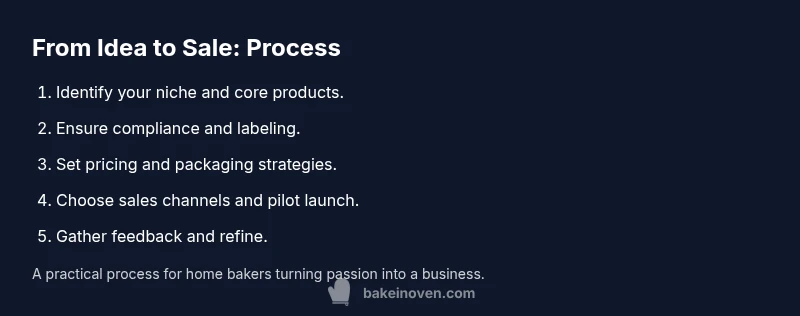
- 1
Define your first product
Identify 4–8 core items that align with your niche. Create a simple tasting panel with friends or neighbors to finalize flavors and sizes. Document each recipe’s cost, bake time, and yield so you can reproduce consistently.
Tip: Pro tip: lock down your core SKU set before expanding; it reduces complexity and waste. - 2
Test and finalize recipes
Bake small batches, record results, and adjust ingredients for flavor balance and texture. Keep detailed batch records, including mixing times and oven settings, to ensure repeatability. Solicit objective feedback from testers and iterate quickly.
Tip: Pro tip: maintain a control batch for comparisons during adjustments. - 3
Set up your sales channel
Choose one or two primary channels (e.g., farmers market and online store) to start. Create an easy ordering process and clear pickup instructions. Establish a simple inventory and fulfillment workflow.
Tip: Pro tip: start with online pre-orders to gauge demand and manage bake schedules. - 4
Sort out permits and labeling
Identify required licenses and inspections with your local health department. Create compliant labels with ingredients, allergens, and contact information. Keep records of suppliers and batch numbers for traceability.
Tip: Pro tip: keep PDFs of all labels and permits in a central folder for quick access. - 5
Price your items
Calculate ingredient costs, packaging, energy, and labor. Add a reasonable overhead and profit margin. Test prices in your market and adjust for demand and competition.
Tip: Pro tip: use tiered pricing for bulk orders to attract larger customers. - 6
Launch and collect feedback
Go live with a soft launch, monitor orders, and capture customer feedback on flavor, packaging, and delivery. Tweak recipes or packaging based on insights. Document learnings for future expansion.
Tip: Pro tip: set a weekly review to identify improvements and celebrate wins.
Frequently Asked Questions
Do I need a business license to sell baked goods from home?
Requirements vary by location. Check with your local health department and business licensing offices to identify Cottage Food laws, permits, and inspection needs. Start with a simple registration if possible and upgrade as you grow.
Licensing depends on your area; check local health and business offices for specific permits.
What are common food-safety practices for home bakeries?
Keep a clean kitchen, wash hands frequently, avoid cross-contamination, store ingredients separately, and monitor temperatures of baked goods and fillings. Label all allergens and provide accurate storage instructions.
Keep things clean, labeled, and temp-controlled to protect customers.
How should I price my baked goods?
Calculate ingredient costs, packaging, energy, and your time. Add overhead and a profit margin, then test prices in your market. Maintain consistency across channels.
Compute costs and add a profit margin, then test and adjust.
What sales channels should I start with?
Begin with one local channel (like a farmers market) and an online storefront. Expand to cafes or delivery as you gain capacity and experience.
Start with one or two channels and grow when you’re ready.
How long before profits become realistic?
Profit timelines vary with demand, pricing, and scale. Start with modest goals, track cash flow weekly, and adjust as you learn.
It varies; focus on consistent sales and cost control first.
What branding elements matter for a home bakery?
A clear name, consistent packaging, and honest product stories build trust. Use simple, scalable branding and document your process.
Branding helps customers trust and remember you.
Watch Video
Key Takeaways
- Define a focused product line to simplify operations
- Prioritize safety, labeling, and local compliance
- Price with ingredient costs, labor, and overhead in mind
- Start with 1–2 sales channels and validate before scale
- Invest in packaging and branding to build trust