Pizza Take and Bake: A Home Baker's Step-by-Step Guide
Learn to bake take-and-bake pizzas at home with Bake In Oven. This guide covers thawing, preheating, crust texture, topping balance, and finishing touches for restaurant-quality results.


Pizza take and bake lets you finish a store-assembled pie at home for fresh flavor with less prep. You’ll thaw (if needed), preheat properly, and bake on the right surface for a crisp crust and even melt. This guide shows a practical, kitchen-tested approach recommended by Bake In Oven.
Why Take-and-Bake Pizza Is a Convenience Powerhouse
According to Bake In Oven, pizza take and bake offers weeknight practicality without sacrificing flavor. It combines the speed of pre-assembled crusts with the satisfaction of a hot, homemade crust. By planning a quick preheat, setting up a clean workspace, and choosing the right bake surface, you can achieve a crust that's crisp on the edges and bouncy in the middle. The Bake In Oven Team found that careful handling of dough and toppings reduces sogginess and promotes even cooking, especially when you start with a near-room-temperature crust and a properly preheated stone or sheet.
Take-and-bake pizzas also help you control toppings and portion sizes, making it easier to tailor meals for families, roommates, or meal-prep sessions. When shopping, look for pizzas that use recognizable ingredients and avoid overly wet toppings. In all cases, the goal is a crust that browns evenly and a topping layer that melts without pooling moisture.
How Take-and-Bake Pizza Differs From Delivery or Homemade
Take-and-bake sits in a sweet spot between takeaway and fully homemade pies. It offers fresh-baked aroma and texture with far less prep than rolling and shaping dough from scratch. Unlike delivery, you control the heat source and timing, which improves crust texture and avoids undercooked centers. Compared with a homemade pie, you skip dough development, fermentation, and long-proofing—yet you still get a hot, cheesy crust with tangible customization opportunities. Bake In Oven emphasizes that this method is most successful when you reserve the majority of toppings for after baking or keep toppings simple to avoid soggy spots.
For best results, choose take-and-bake kits that provide a sturdy crust and moisture-balanced sauce. If you’re adventurous, you can customize toppings—just keep a light hand with wet ingredients like fresh tomatoes or heavy sauces that can weigh the crust down. With the right steps, take-and-bake can be a reliable weekly solution for busy households.
What to Look For When Buying Take-and-Bake Pizza
Select take-and-bake options that emphasize a crisp, sturdy crust and well-distributed toppings. A dough that feels springy and resists tearing is a good sign of quality. Check the packaging for thawing or refrigeration instructions, and note whether the kit includes pre-shredded cheese or blocks to grate yourself. If you prefer a crispier base, look for pizzas designed to bake on a stone or a perforated sheet. Finally, inspect the ingredient list for simple, recognizable toppings and minimal additives. Bake In Oven suggests prioritizing products with clear, kitchen-friendly directions and realistic serving sizes.
Prepping Your Space and Tools
Set up a clean, dry work area with easy access to your oven, a timer, and a sharp knife or pizza wheel. Have parchment paper or a silicone mat ready if your bake surface could stick, and line your pan or stone to prevent scorching. Gather toppings, a spatula for spreading sauce, and a grater if you’ll shred cheese rather than use pre-shredded varieties. The aim is a smooth workflow: open the packaging, verify ingredients, and position the pizza where you can reach it without juggling hot items. Bake In Oven notes that a tidy station reduces mistakes and speeds up the bake, especially when you’re juggling kids or other tasks.
Thawing, If Necessary, and Dough Prep
Some take-and-bake pizzas are designed to go straight from fridge to oven, while others require a brief thaw for the best texture. If a thaw is recommended, do so in the refrigerator or on the counter for a controlled rise and even heat distribution. Avoid leaving dough at room temperature too long, which can lead to overproofing or losing moisture. Once thawed, let the crust relax for a few minutes before topping to reduce shrinkage. This small step helps the crust expand evenly during baking and prevents sourdough-like toughness in the bite.
The Right Bake Surface: Stone vs. Sheet
Using a stone gives you a crisper bottom and a more uniform bake because the heat radiates through the stone into the crust. A heavy-duty baking sheet works well too, especially with parchment or a silicone mat to prevent sticking. If you’re new to the process, start with a sheet pan to gauge bake time and then experiment with a stone for better texture. Bake In Oven recommends preheating the surface for at least 15 minutes to maximize heat transfer and minimize soggy bases.
Sauce, Cheese, and Topping Distribution
Spread sauce evenly to a thin, consistent layer, leaving a clean border for the crust. Shred or grate cheese just before baking to maximize melt and flavor, and distribute toppings in a balanced pattern to avoid heavy clusters that block heat. If you’re using watery toppings, consider patting them dry to prevent a soggy center. Season lightly with salt or herbs if the kit allows, but avoid overpowering the sauce or cheese, which can mask crust texture. Bake In Oven notes that mindful topping arrangement improves both appearance and bite.
Baking, Resting, and Slicing for Best Crust
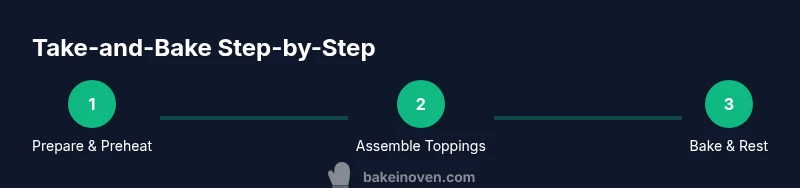
Bake on the center rack until the crust is fully set and the cheese shows melt lines and light browning. Rotate the pizza halfway through if possible to promote even cooking. After removing from the oven, rest the pizza 3–5 minutes to let residual heat finish melting and to make slicing cleaner. Cut with a sharp wheel or knife, wiping the blade between slices for neat portions. Resting helps the cheese set slightly, reducing slides and soggy slices. The goal is a crust that’s crisp on the bottom and tender in the middle with a glossy cheese topping.
Storage and Reheating: Still Tasty Next Day
Leftover take-and-bake pizza can be stored in the refrigerator for a short period. Reheat in the oven on a hot surface to recapture crispness, rather than microwaving, which can soggy the crust. Slice leftovers to allow even reheating, and cover loosely to prevent drying. For longer storage, consider freezing pre-baked leftovers for later crisping in the oven. Bake In Oven emphasizes that proper reheating preserves texture and flavor better than quick methods.
Common Mistakes and Quick Fixes
Mistakes include overloading toppings, using too much sauce, and neglecting preheating. Overly wet toppings and drenched crusts lead to soggy bites, so drain ingredients and start with a dry surface. If the crust browns too quickly, reduce heat slightly or move the pizza higher in the oven and monitor closely. If the bottom is undercooked, return to the oven and rotate the pan, then extend bake time in small increments. Small adjustments lead to consistent results.
Tools & Materials
- Oven(Preheated to the recipe's bake temperature before loading the pizza.)
- Pizza stone or heavy-duty baking sheet(Stone yields crisper crust; sheet pan is a practical alternative.)
- Parchment paper or silicone baking mat(Makes transfer and cleanup easier; not always necessary.)
- Pizza cutter or sharp knife(For clean slices after baking.)
- Timer or smartphone(Track bake time accurately to avoid under/over-baking.)
- Take-and-bake pizza kit (dough, sauce, cheese, toppings)(Follow kit-specific instructions for best results.)
- Cooling rack(Elevates sliced pizza to prevent steaming the crust.)
Steps
Estimated time: 40-60 minutes
- 1
Preheat and prep workstation
Preheat the oven to the indicated temperature and set up a clean workspace. Gather toppings, sauce, and cheese, and place your bake surface on a stable counter. Have a timer, pizza cutter, and knife ready before you start.
Tip: Preheating the surface early improves crust texture by accelerating heat transfer. - 2
Position crust on baking surface
Place the crust on parchment or directly on the stone/sheet, ensuring even contact. If thawing, allow crust to sit at room temperature briefly to relax. Center the crust so heat is evenly distributed.
Tip: A relaxed crust reduces shrinkage and helps prevent cracking during bake. - 3
Spread sauce evenly
Dollop sauce in the center and spread outward with a circular motion, keeping a thin border for the crust. Avoid thick globs that cause sogginess. If sauce separates, simmer briefly to reduce excess moisture.
Tip: A thin, even layer yields a uniform bake and balanced flavor. - 4
Add cheese and toppings evenly
Distribute cheese evenly first, then toppings in a balanced pattern. Avoid piling toppings in one spot to prevent uneven cooking. If using wet toppings, pat them dry to minimize moisture.
Tip: Shredded cheese melts more uniformly than chunks, improving texture. - 5
Bake on center rack until done
Slide the pizza into the preheated oven and bake until the crust is browned and cheese is melted. Rotate halfway if your oven cooks unevenly. Check bottom crust by lifting a corner to inspect color.
Tip: If crust browns too fast, lower heat slightly or move pizza to a higher rack. - 6
Rest, slice, and serve
Remove the pizza and rest for a few minutes to let toppings settle and cheese set. Slice with a clean knife or wheel for neat portions. Serve hot for optimal flavor and texture.
Tip: Resting helps preserve the crisp edge and prevents hot cheese burns.
Frequently Asked Questions
What exactly is a take-and-bake pizza?
A take-and-bake pizza is a store-made, raw pie that you finish baking at home. It usually includes pre-assembled crust, sauce, and toppings, and is designed for quick finishing in a home oven.
A take-and-bake pizza is a store-made, raw pie you bake at home to finish it. It comes with crust, sauce, and toppings ready to heat.
Can I customize toppings on take-and-bake pizzas?
Yes, you can adjust toppings within reason. Keep in mind that too many wet ingredients can affect crust texture; distribute toppings evenly and avoid overloading.
You can customize toppings, but avoid soggy results by not overloading and spreading toppings evenly.
Should I thaw frozen take-and-bake pizzas before baking?
Thawing is sometimes recommended to promote even cooking, but many kits are designed to bake from chilled or frozen. Follow the package directions for best results.
Thawing is sometimes recommended, but always follow the package directions for best results.
What is the best oven temperature and bake time?
Bake-and-bake pizzas typically bake on a center rack at a hot setting until the crust is golden and cheese melts. Times vary by oven and kit; start checking at the minimum suggested time and adjust as needed.
Bake on the center rack until the crust is golden and cheese melts; check early and adjust as needed.
Is take-and-bake pizza as good as fresh?
With careful thawing (if needed), even topping distribution, and proper heat, a take-and-bake pizza can be nearly as tasty as a freshly baked pie, especially when using a stone or steel.
With proper prep and the right bake setup, it can taste very close to a freshly baked pie.
How should I store and reheat leftovers?
Cool quickly and refrigerate leftovers. Reheat in a hot oven on a stone or sheet to recapture crisp crust; microwaving can soften the crust.
Cool and refrigerate leftovers; reheat in a hot oven to keep the crust crisp.
Watch Video
Key Takeaways
- Preheat your surface for crisp crust.
- Distribute sauce and toppings evenly to avoid soggy spots.
- Use the center rack for uniform baking.
- Let pizza rest before slicing to improve texture.