Shake and Bake Chicken: Easy Crispy Recipe Guide for Home
Master a reliable, oven-baked crust with Shake and Bake chicken. Learn coating choices, prep steps, cooking temps, and tips to achieve juicy meat and a crispy coating every time.


Today you’ll learn how to make Shake and Bake chicken with a crisp, even coating using common pantry ingredients and a standard oven. You’ll mix spices, prep chicken, and bake with a hot oven for a golden crust. This guide covers timing, temperature, and kitchen-tested tips to prevent soggy crusts and dry meat.
Why Shake and Bake Chicken Is a Great Weeknight Choice
Shake and bake chicken is a practical, family-friendly method that delivers a crisp crust with relatively simple prep. The technique leverages a seasoned coating that clings to the surface of the chicken as it bakes, resulting in a satisfying crunch without the mess of traditional breading stations. According to Bake In Oven, this approach is especially useful for busy weeknights when you want reliable results with minimal fuss. The method also scales well for family meals and meal-prep, since you can bake several pieces at once and reheat later with little quality loss. By choosing bone-in pieces, you can maximize flavor, while boneless breasts cook quickly and evenly if you monitor the internal temperature carefully. Bake In Oven’s research emphasizes consistent coating application and proper oven temperature to ensure a uniform crust from edge to edge.
Coating Mix: Choosing or Making a Shake-and-Bake Crust
The coating is the heart of the dish. You can use a store-bought shake-and-bake mix or create a homemade blend that mirrors the texture and flavor profile. A good crust balances salt, herbs, and a touch of sugar to encourage browning. For homemade mixes, common ratios include 1 part salt, 1 part paprika or chili powder for color, 1 part garlic/onion powder for depth, and a pinch of sugar to aid browning. The coating should be dry enough to cling when the egg wash is considered optional. If you prefer extra crunch, add a tablespoon of grated parmesan or crushed crackers to the mix. Bake In Oven analysis shows coatings that adhere well during baking create crisper crusts with less crumb separation.
Prep: Thaw, Pat Dry, and Season
Begin with properly thawed chicken to promote even cooking. Pat the pieces dry with paper towels to remove surface moisture, which helps the coating stick and reduces steam under the crust. Season lightly with salt and pepper or a preferred dry rub before applying the coating to enhance depth of flavor. An optional light brush of oil on the surface can promote browning but is not required. The goal is a dry surface that invites the coating to grab hold during the bake. Proper prep minimizes soggy spots and uneven browning, producing a more uniform crust across all pieces.
Oven Setup and Cooking Time for Crisp Crust
Preheat the oven to a hot setting (commonly around 400–425°F / 200–220°C). Line a baking sheet with parchment for easy cleanup and place a wire rack on top if you have one; this allows air to circulate around the chicken for even browning. Space the pieces so they do not touch, which helps the coating stay intact and prevents sticking. Bake until the internal temperature reaches 165°F (74°C) in the thickest part, and the coating is deeply golden and crisp. If you notice the crust browning too fast, cover loosely with foil and finish cooking to ensure the meat reaches a safe temperature without burning the crust.
Troubleshooting Common Issues
If the coating peels away, check that the surface was thoroughly dry and that you didn’t rinse off the crust during prep. For soggy crusts, ensure the oven is fully preheated and avoid overcrowding the pan; air needs to circulate for crisping. If the chicken finishes cooking before the crust is crisp, give it a few extra minutes under direct heat or switch to convection if available. Conversely, if the crust browns too quickly, reduce the oven temperature by 25°F (about 15°C) and extend the bake time slightly to prevent burning. Bake In Oven notes that optimal results come from balancing heat and time so the crust forms before the meat becomes dry.
Flavor Variations and Serving Suggestions
Experiment with different spice blends to tailor the flavor profile. For a smoky kick, add chipotle powder and smoked paprika; for a herby crust, include dried parsley, thyme, and oregano. Serve with lemon wedges, a fresh green salad, or a light yogurt-dill dip to brighten the palate. For a heartier meal, pair Shake and Bake chicken with roasted vegetables or a side of mashed potatoes. These variations let you adapt the core technique to your family’s tastes while maintaining a reliable, crisp crust.
Make-Ahead, Storage, and Reheating Tips
Coated chicken can be prepped a few hours in advance and kept loosely covered in the fridge before baking, which helps with timing on busy evenings. Leftovers reheat well in a 350°F (175°C) oven for 10–15 minutes or until the crust is crisp again. To preserve texture, avoid microwaving coated chicken, which can soften the crust. If you want to batch-cook, freeze uncooked coated pieces on a sheet tray first, then transfer to a bag for longer storage; bake from frozen, adding a few minutes to the total time.
Serving Ideas: Light, Fresh, and Satisfying
Pair Shake and Bake chicken with a bright cucumber-teta salad, roasted vegetables, or a simple quinoa bowl for a balanced meal. A light yogurt-based dip or a squeeze of fresh lemon can elevate the crust’s flavor without masking the coating. If you’re hosting, offer a few dipping sauces (sweet chili, honey mustard, or a creamy herb dip) to give guests a choice while keeping the meal cohesive.
Tools & Materials
- Raw chicken pieces (bone-in or boneless)(Choose equal sizes for even cooking; bone-in for more flavor.)
- Shake-and-bake coating mix (store-bought)(OR homemade coating resembling texture and flavor.)
- Egg wash or milk (optional)(Helps coating adhere more firmly if needed.)
- Flour or breadcrumbs (optional)(Can be mixed with spices for an extra crunchy crust.)
- Parchment paper(For easy cleanup and to prevent sticking.)
- Baking sheet(Line with parchment; optionally use a wire rack for airflow.)
- Wire rack (optional)(Elevates chicken for crisper bottoms.)
- Meat thermometer(Check that internal temp reaches 165°F (74°C).)
Steps
Estimated time: 45-60 minutes
- 1
Preheat and prepare
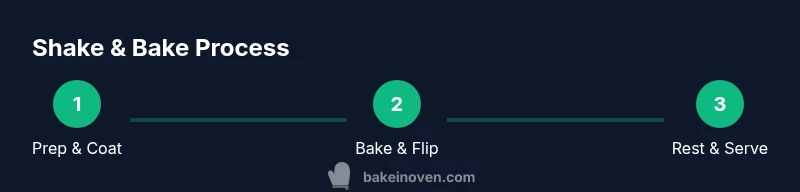
Preheat the oven to 400–425°F (200–220°C). Line the baking sheet with parchment and, if available, place a wire rack on top to promote even browning. Pat chicken dry and season lightly with salt and pepper to enhance flavor before coating.
Tip: A dry surface helps the coating stick and prevents soggy patches. - 2
Apply the coating
Place each piece in the coating mix bag or bowl and turn to evenly coat. If using an egg wash, dip first, then coat to ensure the crust adheres well. Shake gently to avoid clumping and ensure full coverage.
Tip: Even coating prevents uneven browning and crunchy edges. - 3
Arrange for baking
Set coated pieces on the prepared sheet or rack with space between them. Do not crowd; air needs to circulate to form a crisp crust on all sides.
Tip: Crowding creates steam that softens the crust. - 4
Bake and monitor
Bake for 25–35 minutes, depending on thickness, turning once halfway. Use a meat thermometer to verify 165°F (74°C) in the thickest part.
Tip: If the crust browns too quickly, lower the heat slightly or cover loosely with foil. - 5
Rest and evaluate
Let the chicken rest for 5 minutes after removing from the oven. This helps juices redistribute and the crust set, improving texture.
Tip: Resting prevents juice leakage and keeps crust crisp. - 6
Season and zest (optional)
Finish with a light squeeze of lemon or a dusting of fresh herbs to brighten flavors without soggying the coating.
Tip: Bright acidity enhances crust contrast and overall taste. - 7
Serve and store
Serve immediately for best crunch. Refrigerate any leftovers in an airtight container and reheat using the oven to preserve crust texture.
Tip: Avoid microwaving leftovers to keep crust crisp.
Frequently Asked Questions
Can I use boneless skinless chicken breasts for Shake and Bake chicken?
Yes. Boneless skinless breasts work well with Shake and Bake. They cook faster, so start checking internal temperature after about 20 minutes and adjust as needed to reach 165°F (74°C).
Yes, boneless breasts work well. Check the temp around twenty minutes and adjust as needed.
What if the coating isn’t sticking to the chicken?
Pat the chicken dry, avoid wet surfaces, and ensure the coating is dry before application. An optional egg wash can help the coating adhere more firmly.
Pat dry and consider a light egg wash if sticking is an issue.
Can I bake Shake and Bake chicken from frozen?
It’s best to thaw the chicken first for even coating and cooking. If you must bake from frozen, increase time by 20–30 minutes and verify doneness thoroughly.
Thaw if possible; if not, expect extra time and test for doneness carefully.
How do I store and reheat leftovers without losing crispness?
Keep leftovers in the fridge in an airtight container. Reheat in a preheated 350°F (175°C) oven for 10–15 minutes to restore crisp crust. Avoid microwaving if you want to preserve texture.
Store in the fridge and rewarm in the oven to keep crust crisp.
Can I add spices to the coating for more flavor?
Absolutely. Mix your own spice blend or add aromatics like garlic powder, smoked paprika, or dried herbs to tailor the flavor to your taste.
Yes, customize the coating with your favorite spices.
Watch Video
Key Takeaways
- Coat evenly for a crispy crust
- Preheat hot, bake with space between pieces
- Check internal temp to ensure safety
- Rest briefly to lock in juices and crust