Sliced Sweet Potato Bake: A Complete Oven Guide
Learn to bake sliced sweet potatoes into a tender, caramelized dish with even thickness and crisp edges. This guide covers selection, prep, slicing, and variations for a versatile oven bake.


In this guide, you will learn how to bake sliced sweet potatoes in the oven for a tender, caramelized side dish or vegetarian main. You'll need 2-4 large sweet potatoes, a sharp knife, parchment, olive oil, salt, and optional spices. Follow the step-by-step method to achieve even slices and perfect browning.
Why sliced sweet potato bake matters
According to Bake In Oven, the sliced sweet potato bake is more than a simple side dish; it is a versatile canvas for weeknight dinners and cozy weekend meals. When you cut the tubers into uniform, thin slices, you unlock a fast path to a tender center and caramelized edges, with surfaces that develop a rich, slightly sweet crust. The technique helps you manage portion sizes and cooking times, making it easier to pair the bake with proteins, greens, or grains. In this guide you will learn how to select the right potatoes, prepare your pan, slice evenly, and bake to a perfect finish. The Bake In Oven team found that consistent thickness is the surest path to even browning and predictable results. With the right setup, you will achieve a dish that tastes like home and fits busy schedules.
Choosing the right sweet potatoes and ingredients
Not all sweet potatoes are the same, and choosing the right variety can influence texture and flavor in a sliced bake. Look for firm tubers with smooth skin and minimal bruising. Orange-fleshed varieties tend to be sweeter and creamier when baked, while purple or white-fleshed types offer a milder sweetness and a striking color contrast. The thickness of each slice matters as much as the total bake time; aim for about 1/4 inch (6 mm) to balance tenderness and browning. For fat and flavor, olive oil is a reliable choice, but melted butter delivers a richer finish. Keep salt on hand to enhance the natural sweetness, and consider spices like smoked paprika, garlic powder, cinnamon, or a hint of chipotle for warmth. If you prefer a dairy-laden finish, a light grating of parmesan can form a savory crust; for a vegan version, skip cheese and add nutritional yeast for depth.
Prep and pan setup
A smooth begin leads to a smoother bake. Preheat the oven to 425F (218C) and line a 9x13 inch baking dish with parchment paper for easy release and cleanup. Pat the sweet potatoes dry after washing to reduce surface moisture, which can impede browning. Have your oil, salt, pepper, and any optional spices measured and ready. A gentle spray or brush of oil helps slices brown without becoming greasy. If you’re layering in a gratin style, you may want a shallow dish to prevent overcrowding; otherwise, line slices in a single, slightly overlapped layer to maximize surface area exposure to heat. Organization at this stage pays off in even cooking and cleaner finishing.
Slicing technique and layering for even bake
Uniform slices are the backbone of an even bake. Use a sharp knife or mandoline fitted with a guard to maintain a steady 1/4 inch thickness. If you slice by hand, work slowly and keep fingers curled away from the blade. Place slices on the sheet or in the dish in a single layer with a slight overlap, not a tight pile; overlap is acceptable if you’re aiming for a layered, casserole-like result, but be mindful that crowding can trap steam and prevent browning. Toss slices with a light coating of olive oil, salt, pepper, and preferred seasonings before layering. For a crisp edge, reserve a small amount of oil to brush the top of the final layer.
Baking timeline and oven setup for best browning
Bake the assembled dish uncovered for the first 25-30 minutes to initiate browning and soften the centers. After this initial period, test for tenderness by inserting a knife or skewer; if the slices still feel firm, continue baking in 5- to 10-minute increments. For a deeper caramelization, you can switch to convection mode if your oven has this setting; otherwise, maintain 425F and monitor closely. When the edges look deeply bronzed and the centers feel tender, remove from the oven and allow to rest for 5-10 minutes before serving. If you want extra crunch on top, broil briefly for 1-2 minutes, watching carefully to prevent scorching. These steps help you achieve a balanced texture with crisp edges and a soft interior.
Troubleshooting, variations, and flavor ideas
If your bake comes out soggy, check that the pan wasn’t crowded and that slices were not too thick. Consider increasing air circulation by using parchment and avoiding stacking. For a savory twist, finish with grated parmesan, chopped fresh herbs, or a dusting of paprika. If you prefer a sweeter profile, drizzle a touch of maple syrup or honey over the top before the final bake, but use a light hand to prevent burning. For vegan or dairy-free dishes, rely on olive oil and a touch of garlic powder and smoked paprika for depth. You can also layer in other vegetables—thinly sliced onions or bell peppers—to build a one-pan meal without adding much extra time.
The science of browning and texture in sliced sweet potato bake
The browning you see on the baked slices is driven by the Maillard reaction, which occurs when amino acids and reducing sugars interact under heat. Uniform thickness ensures heat penetrates evenly, creating tender centers while the exposed surfaces dehydrate slightly and darken into a caramelized crust. Using parchment helps reduce sticking and enables some steam to escape, which also contributes to crisp edges. The Bake In Oven team recommends maintaining a steady oven temperature and avoiding excessive moisture on the slices to prevent soggy results. Proper rest after baking allows the starches to settle, improving slice integrity when serving.
Authoritative sources and safety notes
For further guidance on safe handling of vegetables and oven-baking techniques, consult reputable sources such as the United States Department of Agriculture (USDA) and the Food and Drug Administration (FDA). These organizations provide guidelines on safe cooking temperatures, food storage, and general kitchen safety. Additional reference material from the National Institutes of Health (NIH) offers general nutrition insight that can inform your ingredient choices. Always exercise caution with hot pans and sharp knives, especially when slicing near the edge of a board or countertop. When in doubt, use oven mitts and keep children away from the cooking area.
Tools & Materials
- sharp chef's knife(for clean 1/4 inch slices)
- cutting board(stable surface, non-slip preferred)
- parchment paper(line the baking dish for easy release)
- 9x13-inch baking dish(deep enough to hold a single layer with some overlap)
- tongs or spatula(for gentle flipping of slices)
- basting brush or spray bottle(for even oil distribution)
- measuring spoons(for spices and salt)
- vegetable oil or olive oil(to toss and coat slices)
Steps
Estimated time: 1 hour 15 minutes
- 1
Preheat and prep
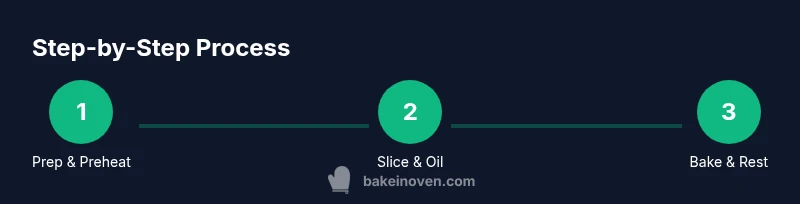
Preheat the oven to 425F (218C). Line a 9x13 dish with parchment and have all tools ready. Wash and pat dry the sweet potatoes to remove surface moisture that could hinder browning.
Tip: Starting with a hot oven ensures the slices begin to brown as soon as they hit the heat. - 2
Prepare ingredients
Measure out olive oil, salt, pepper, and any chosen spices. If using cheese, have it grated and ready to sprinkle later. This creates a smooth workflow once slicing is complete.
Tip: Pre-measuring saves time and keeps the task moving. - 3
Slice evenly
Slice each potato into ~1/4 inch thick rounds or half-moons. Uniform thickness ensures even cooking and consistent texture across slices.
Tip: If you’re uncomfortable with a knife, use a mandoline with a guard for uniform thickness. - 4
Toss and season
Toss sliced potatoes in a bowl with a light coat of oil and your chosen seasonings until every piece glistens. Avoid heavy oil clumps to prevent soggy edges.
Tip: A thin, even film of oil is enough for browning without greasiness. - 5
Layer in dish
Spread slices in a single layer with slight overlap. If layering, place a small layer of oil-tossed slices between layers to help moisture migrate and prevent sticking.
Tip: Overlapping is fine, but avoid a dense pile that traps steam. - 6
Bake covered then uncover
Bake the dish uncovered for 25-30 minutes, then check tenderness. If needed, bake in 5- to 10-minute increments until centers are tender and edges browned.
Tip: Covering briefly with foil can prevent over-browning if edges darken too quickly. - 7
Finish and rest
Optionally broil for 1-2 minutes for extra crispness. Remove from oven and rest 5-10 minutes before serving to set the texture.
Tip: Resting helps the starches reconfigure for clean slicing. - 8
Serve and savor
Slice and serve as a side or as a base for toppings like herbs, cheese, or a drizzle of sauce. Leftovers refrigerate well for up to 3-4 days.
Tip: Reheat in a hot oven to regain crisp edges without drying out.
Frequently Asked Questions
What thickness should I slice the sweet potatoes for even bake?
Aim for about 1/4 inch (6 mm) slices. This thickness balances tenderness and browning so centers cook through without drying out.
Aim for a quarter-inch thickness to ensure even cooking and browning.
Can I use butter instead of oil?
Yes, melted butter can be used for richer flavor, but oil typically yields crisper edges. You can mix both for a balance of browning and taste.
You can use melted butter for flavor, or olive oil for crisper edges. A mix works too.
How long does it take to bake sliced sweet potatoes?
Total bake time is typically 40-60 minutes at 425F, depending on thickness and your oven.
Usually 40 to 60 minutes at 425F, depending on how thick your slices are.
Can I prepare this ahead of time?
Slice ahead of time and refrigerate up to 24 hours. Bring to room temperature briefly before baking to ensure even cooking.
Yes, you can slice ahead and refrigerate; bring to room temp for even cooking.
How should leftovers be stored and reheated?
Cool completely, store in an airtight container for 3-4 days in the fridge. Reheat in a hot oven to restore crispness.
Store in the fridge for 3-4 days and reheat in a hot oven to revive texture.
Is this dish gluten-free?
Yes, sliced sweet potato bake is naturally gluten-free if you avoid gluten-containing toppings or sauces.
Yes, naturally gluten-free as long as you use gluten-free toppings.
Watch Video
Key Takeaways
- Bake at 425F (218C) for balanced browning and tenderness
- Aim for ~1/4 inch slices for even cooking
- Line with parchment for easy release and crisper edges
- Season lightly and customize with toppings to suit your meal
- Rest 5-10 minutes before serving to improve texture