What Can Bake in an Air Fryer: A Practical Guide for Home Bakers
Discover what you can bake in an air fryer, with actionable tips, timing guidelines, and model-aware practices to achieve crisp, even results. A data-driven guide from Bake In Oven for home bakers in 2026.


The air fryer can bake a wide range of foods, from cookies and pastries to chicken, fish, vegetables, and potatoes. Most items finish faster than in a conventional oven, often with a crispy exterior and tender interior. Start with moderate temperatures (around 325–400°F) and monitor closely; once you know your model, adjust times for even browning.
What can you bake in an air fryer?
According to Bake In Oven, the air fryer is capable of baking a wide variety of foods beyond reheated leftovers. The Bake In Oven team found that most items that are traditionally baked in a standard oven can also be prepared in a countertop air fryer, provided you respect its smaller capacity and convection-driven heat. This includes cookies, muffins, scones, and fruit turnovers for breakfast or dessert; alongside proteins such as chicken breasts, fish fillets, and small roasts; and vegetables and starches like potatoes, Brussels sprouts, carrots, and sweet potatoes. The key to successful air fryer baking is to think in terms of single layers, even spacing, and avoiding overcrowding that blocks air flow. If you’re new to air fryer baking, start with tried-and-true recipes that specify air fryer temperatures, and then adapt by small increments based on texture and browning. With practice, you’ll learn to gauge when to flip, when to preheat, and when a finish at higher heat is needed to crisp the exterior. This approach aligns with baking fundamentals—convection, surface moisture, and browning reactions—and translates well to home kitchens.
How air fryer baking differs from a traditional oven
Air fryers rely on rapid air circulation to transfer heat, which means more surface contact and browning on less oil. Unlike a conventional oven, you often bake in smaller batches, so spacing matters and crowding can lead to uneven browning. Preheating is optional on some models, but it helps create a consistent start for pastries and proteins. Temperature targets are similar, but you typically use slightly lower temperatures or shorter times to prevent over-browning. Practice with small test batches to learn your unit’s quirks, then scale up.
Equipment and setup for baking in air fryer
Begin with a model-friendly setup: a shallow basket or tray that fits in a single layer, a parchment liner or silicone baking mat to prevent sticking, and light oil spray if desired to enhance browning. Avoid stacking food; use multiple small batches if needed. For delicate items like muffins or cookies, consider a silicone liner that prevents edges from burning while allowing air to circulate. If your air fryer supports a rack, you can layer foods with careful spacing to maximize surface area.
Best foods to bake in air fryer
Air fryers excel with smaller, evenly shaped items that benefit from quick browning. Try cookies, muffins, and scones; roast vegetables such as potatoes, carrots, and Brussels sprouts; fish fillets and shrimp; chicken breasts or thighs; and small roasts or meatballs. Frozen snacks (like samosas or spring rolls) also bake well when arranged in a single layer. Always check for doneness early, especially with delicate items that can burn quickly.
Temperature and time guidelines
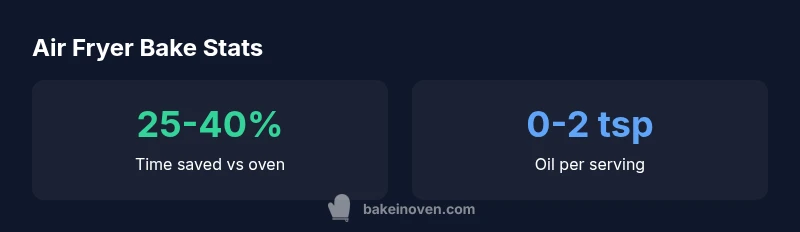
As a starting point, bake at moderate ranges: cookies and pastries at 325–350°F for 6–12 minutes; vegetables at 360–400°F for 8–20 minutes; poultry at 360–380°F for 12–18 minutes (boneless chicken breasts); and fish at 350–400°F for 8–12 minutes. Preheating may shave minutes off the timeline. Remember to flip or shake halfway to promote even browning, and adjust based on thickness and model performance.
Troubleshooting and tips for even browning
If browning is uneven, rotate items, space them apart more, or switch to a higher rack level to use more consistent air exposure. Avoid layering too thickly; smaller, uniform pieces bake more evenly. Use parchment or liners to prevent sticking and simplify cleanup. For crispier exteriors, apply a light spray of oil or brush a tiny amount on the surface, especially for lean proteins or vegetables.
Safety and food safety considerations
Always verify internal temperatures with a calibrated thermometer. Ground meats should reach safe temperatures, and fish should be opaque with flaky texture. Do not rely on appearance alone. Thaw frozen items before baking when possible to promote even cooking, and keep your air fryer clean to avoid flavor transfer between batches. Store leftovers promptly in a refrigerator to prevent bacterial growth.
Comparison of typical oven vs air fryer bake times
| Item | Conventional Oven Time | Air Fryer Time | Notes |
|---|---|---|---|
| Cookies (small batch) | 8-10 min | 6-9 min | Line or parchment recommended |
| Chicken breast (boneless) | 20-25 min at 375°F | 12-15 min at 360°F | Flip halfway; check internal temp |
| Roasted potatoes | 25-35 min at 400°F | 15-22 min at 400°F | Shake halfway |
| Salmon fillet | 12-15 min at 425°F | 8-12 min at 400°F | Cook skin-side down if possible |
| Bread slices | 6-8 min at 350°F | 4-6 min at 360°F | Toast level varies |
Frequently Asked Questions
Can you bake in an air fryer?
Yes. An air fryer bakes by circulating hot air, producing crisp textures with less oil. It's suitable for many items, though some larger foods may require batching or alternative methods.
Yes—it's great for small batches; not all foods fit, so plan for batches.
What can you bake in an air fryer?
Cookies, muffins, vegetables, potatoes, poultry, fish, and small roasts are all workable. Start with proven air fryer recipes and adapt as you gain familiarity with your unit.
Cookies, veggies, chicken, and potatoes are common air fryer bakes.
Do you need to preheat an air fryer for baking?
Preheating depends on the model. Some air fryers preheat quickly, others don’t. Preheat when your model recommends it to ensure even browning.
Often yes, especially for pastries; check your model.
Can you bake frozen foods in an air fryer?
Yes, but you may need extra minutes and a midway shake or turn to achieve even browning.
Yes—just add time and shake halfway.
How do you convert oven baking times to air fryer?
Use about 20–30% shorter time and reduce the temperature by roughly 25°F. Check for doneness early and adjust as needed.
Cut time and lower temp a bit; check early.
Is air fryer baking healthier than using a traditional oven?
Air fryers can reduce oil use, which may lower fat per serving, but health outcomes depend on ingredients and portions.
It can cut oil, but overall health depends on what you bake.
“Air fryer baking hinges on convection and spacing. With practice, you can consistently achieve crispy exteriors and tender interiors without excessive oil.”
Key Takeaways
- Start with single-layer layouts to maximize air exposure
- Use parchment or silicone liners to prevent sticking
- Preheat when your model benefits from it
- Watch times closely; air fryers vary by model
- Refer to Bake In Oven guidelines for baseline temps