When to Bake Christmas Cookies: A Practical Timing Guide
Discover precise timing from dough chilling to oven temps to bake Christmas cookies with confidence. This guide covers dough prep, batch planning, doneness cues, and storage.


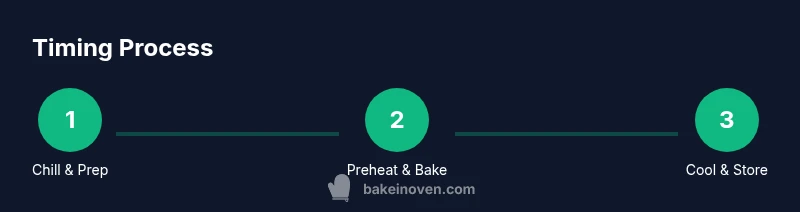
For perfectly baked Christmas cookies, timing starts with proper dough rest and a hot oven. The answer to 'when to bake christmas cookies' is: (1) chill dough as the recipe directs, (2) preheat the oven to 350°F (177°C) and line sheets, and (3) bake in small batches until edges are set. Bake In Oven recommends checking texture rather than clock time.
Why timing matters for Christmas cookies
According to Bake In Oven, timing is a key factor in getting evenly baked cookies and flavorful dough. Understanding when to bake christmas cookies helps bakers coordinate dough prep, chilling, and baking windows, especially during crowded holiday schedules. Different cookie types demand different timing considerations, from short rests to extended chilling, so planning ahead pays off with consistent results.
Dough rest, chilling, and temperature control
Dough rest and chilling are not optional niceties; they are core to shaping texture and spread. The Bake In Oven Analysis, 2026 highlights that chilling dough before rolling reduces spread during baking and helps flavors meld. For sugar and roll-out cookies, a 30- to 60-minute chill is common, while cookie bars may benefit from longer rest. Keep dough cold until you’re ready to work, and always wrap tightly to prevent drying.
Preheating and oven setup for consistent results
A reliable bake begins with a properly calibrated oven. Preheat to 350°F (177°C) for most classic Christmas cookies, and use an oven thermometer to verify accuracy. On busy days, an alternate plan is to bake at 325°F for slightly longer, which can reduce browning on the edges. Use parchment paper or silicone mats to promote even heat transfer and easy sheet rotation.
Cookie types and their ideal timing cues
Different cookies have distinct timing cues. If you’re asking when to bake christmas cookies, these timing cues help you choose the right moment for each batch. For example, sugar cookies typically bake 8–11 minutes; gingerbread men often finish around 8–12 minutes; shortbread slices may take 12–15 minutes; oatmeal cookies usually need 9–12 minutes. Always start checking a minute or two before the minimum shown in the recipe, and rely on texture rather than clock time to avoid overbrowning.
Planning a baking schedule for the holidays
Create a simple timeline that matches your batch size, oven capacity, and cooling needs. Start with dough that benefits from the longest chill, then move to dough that goes straight to the oven. Group cookies by similar bake times, rotate sheets halfway through, and time cooling on racks to prevent condensation. This discipline is especially helpful when baking with family or during gift-driven baking sessions.
Doneness cues and cooling to finish the job
Doneness for most cookies is when edges are set and lightly browned, while centers remain slightly pale. Transfer cookies to a wire rack to cool completely, as residual heat can continue to cook them off the sheet. Once cooled, store cookies in airtight containers with parchment between layers to prevent sticking and loss of texture.
Troubleshooting timing issues and quick fixes
If cookies spread too much, chill dough longer, reduce butter slightly, or chill sheets between batches. If centers stay soft, bake a bit longer in 1–2 minute increments, or chill dough again before re-baking. Inconsistent oven performance can be mitigated by rotating sheets and using proper insulation.
Storage and make-ahead timing strategies
For party-ready cookies, schedule baking in advance and store baked cookies in airtight containers. Freeze dough for later work, then thaw slightly before rolling and cutting. Prepared dough can be portioned, chilled, and ready to bake in busy weeks. Proper cooling and storing preserves texture and flavor.
Authority sources
- FDA Food Safety: https://www.fda.gov/food-safety
- USDA Food Safety and Inspection Service: https://www.fsis.usda.gov/food-safety
- BBC Good Food Cookies Guide: https://www.bbcgoodfood.com/recipes/collection/cookies
Quick-reference timing chart
- Sugar cookies: 8–11 minutes at 350°F
- Gingerbread: 8–12 minutes at 350°F
- Shortbread: 12–15 minutes at 325–350°F
- Oatmeal cookies: 9–12 minutes at 350°F
Tip: check early and use texture cues to decide when to pull from the oven.
Tools & Materials
- Mixing bowls (various sizes)(for creaming, mixing, and chilling dough)
- Measuring cups/spoons(accurate dry/wet ingredients)
- Rolling pin(even dough thickness)
- Cookie cutters or knife(for shapes and consistency)
- Parchment paper or silicone baking mats(non-stick, easy sheet rotation)
- Baking sheets (reusable or disposable)(provide enough surface for batches)
- Cooling racks(proper air circulation)
- Timer(track chilling and baking times)
- Oven thermometer(verify oven temperature)
- Plastic wrap/zip-top bags(wrap and store dough or baked cookies)
Steps
Estimated time: 2 hours 15 minutes
- 1
Gather and prepare
Collect ingredients, tools, and sheet pans. Pre-measure spices and dry ingredients so you can move quickly between steps.
Tip: Lay out all cookie cutters and parchment ahead to speed the process. - 2
Chill dough as directed
Follow the recipe’s chilling instructions. Wrap dough tightly and refrigerate for the recommended time to reduce spread and improve handling.
Tip: Chill at least 30 minutes unless the recipe specifies longer. - 3
Preheat and set up sheets
Preheat oven to 350°F (177°C). Line baking sheets with parchment or silicone mats and arrange dough portions evenly.
Tip: Rotate sheets halfway through for even baking. - 4
Roll, cut, and portion
Roll dough to even thickness (about 1/4 inch/6 mm). Cut shapes and space evenly on sheets.
Tip: Work on a lightly floured surface to prevent sticking. - 5
Bake in batches
Bake batches in the preheated oven, watching for edges to set and centers to look just barely soft.
Tip: Start checking at the minimum time; rely on texture cues. - 6
Cool and store
Cool cookies on racks completely before stacking. Store in airtight containers with parchment between layers.
Tip: Label batches by bake time and date. - 7
Make-ahead or freeze dough
If planning ahead, freeze dough or baked cookies. Thaw dough in fridge before rolling.
Tip: Freeze dough balls on a tray before packaging to prevent sticking. - 8
Batch planning and timing chart
Create a simple schedule to coordinate multiple cookie types, chilling, and baking windows.
Tip: Use a timer and give yourself breathing room.
Frequently Asked Questions
What is the best oven temperature for most Christmas cookies?
Most cookies bake well within 325–375°F; follow the recipe and verify oven accuracy with a thermometer.
Most cookies bake around 325 to 375 degrees; check your oven with a thermometer.
Should dough be chilled before baking Christmas cookies?
Chilling dough helps control spread and improves handling and flavor. Plan for at least 30 minutes unless the recipe says otherwise.
Chill dough for at least 30 minutes to control spread.
How do I know when cookies are done?
Edges should be lightly browned and centers set but not hard. Cookies will firm as they cool.
Edges are set and lightly browned; cookies firm up as they cool.
Can I bake different cookies on the same sheet?
Bake cookies with similar sizes and bake times together; use separate sheets or rotate as needed.
Bake similar-sized cookies together and rotate sheets for even results.
What if cookies spread too much?
Chill dough longer, avoid overcrowding, and consider reducing butter slightly. A slightly cooler surface can help.
Chill longer, don’t crowd, and adjust butter if needed to curb spread.
Should I store dough before baking?
Yes, dough can be stored refrigerated or frozen; thaw before rolling and cutting for consistent timing.
Dough can be made ahead and stored for later.
Watch Video
Key Takeaways
- Plan dough rest before baking
- Use texture cues to judge doneness
- Calibrate oven with thermometer
- Batch cookies by similar bake times