Which Rack Is Best for Baking: A Practical Home Guide
Discover the best oven rack positions for cookies, cakes, breads, and more. Practical, kitchen-tested guidance from Bake In Oven to optimize browning, crust, and even heat.


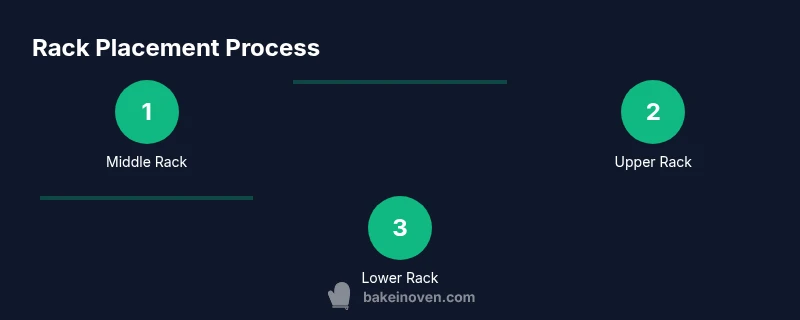
Using the right rack height can dramatically improve bake results. For most cakes, cookies, and pastries, start with the middle rack. The upper rack boosts browning when top crust is needed, while the lower rack helps bottom crusts and dense breads. Elevate or lower as needed and rotate pans for even heat exposure. This approach balances airflow and heat for reliable outcomes.
Why Rack Position Matters in Baking
The oven rack you choose influences how heat circulates around your batter or dough. If you’re asking which rack is best for baking, the short answer is: it depends on what you’re making and your oven’s quirks. The Bake In Oven team notes that even small changes in rack height can tilt the balance between a pale top and a deeply browned bottom, or between a dry crust and a tender crumb. In most home ovens, the middle rack serves as the reliable default because it places food roughly at the oven’s hot zone, where heat air flows most evenly. For delicate cakes and cookies, this translates into even rise and uniform coloration. For crusty breads, loaf pans, or items that crave extra bottom heat, you might experiment with the lower rack. And for foods that brown too quickly on top, the upper rack can provide a forgiving boost to browning without scorching the base. Think of rack height as a dial you adjust to balance air flow, heat exposure, and your recipe’s timing.
Rack Placement for Common Bake Items
Different baked goods have different heat needs. For cookies, the middle rack distributes heat evenly to prevent edge over-browning. For cakes, the middle rack supports an even rise and uniform crumb; if tops brown too fast, move the rack up or down slightly and rotate halfway. Breads and dense loaves often benefit from a lower position to promote bottom crust development while the top stays tender. Pastries with delicate fillings may benefit from a higher rack to avoid scorching. Pizzas and flatbreads often perform well on the upper rack with a preheated stone or tray to enhance bottom crust.
Understanding Oven Hot Spots and Airflow
Most home ovens have subtle hot spots caused by element placement, door design, and air currents. Knowing where heat concentrates helps you predict where to place your rack for consistent results. If one corner consistently browns faster, try rotating the pan between the middle and a neighboring rack during bake. Airflow is your ally: better circulation means more even color, texture, and doneness across the surface of what you bake. Bake In Oven’s approach is to map your oven’s quirks and adjust rack height before you start, not after over-browning or undercooking.
How to Use the Convection Setting
If your oven has convection, rack placement matters even more. Convection blasts hot air around the cavity, accelerating browning and shortening bake times. With convection, you may need to lower the cooking temperature by about 25°F (14°C) and keep a closer watch on doneness. Start with the middle rack for most items; if you want extra browning on top, move to the upper rack briefly toward the end. For cookies and pastries, convection can deliver a crisp edge and an even finish when used correctly.
Rack Materials and Safety
Most bakeware racks are stainless steel or chrome-plated steel, which resist warping and heat well. Avoid welding or fragile racks that show signs of bending; a sturdy rack supports heavier pans without tipping. If you use nonstick coatings, avoid abrasive cleaners that could wear off the finish. When handling hot racks, protect your hands with oven mitts and use tools with long handles to keep safe distance from heat. Cleaning is easier when you let cool and then wash with warm, soapy water; avoid soaking for extended periods on older chrome racks to prevent rust.
Practical Scenarios: When to Elevate, Lower, or Use the Middle
When in doubt, start with the middle rack for most recipes. If you’re baking two trays of cookies and notice crowding, moving one tray to the upper rack halfway through bake can improve air exposure. For dense breads or cornish pasties that benefit from robust bottom heating, lower rack placement often yields a crisper base. If you’re aiming for a perfectly domed cake, consider a slightly higher rack to reduce bottom heat intensity and encourage a taller rise. The key is to observe, compare, and adjust in small increments across trials.
Common Mistakes and How to Fix Them
Common errors include overcrowding racks, ignoring preheating, and not rotating pans. Overcrowding blocks air flow, causing uneven browning. Neglecting to preheat means your bake starts with a cooler cavity, delaying doneness and increasing the risk of an uneven crust. Rotating pans halfway through bake helps mitigate hot spots. If a recipe calls for top browning, think about briefly using the upper rack at the end rather than leaving it throughout.
Maintenance and Long-Term Rack Care
Keep racks clean to prevent buildup that interferes with heat transfer. After use, wash racks with warm soapy water and dry completely to prevent rust. For stubborn stains, a gentle scrub with a non-abrasive pad works well. Inspect racks occasionally for bent wires; replace damaged racks to avoid accidents. Store extra racks in a dry place to prevent corrosion and keep them ready for the next bake.
Quick Reference Chart: When to Use Which Rack
- Cookies: Middle rack
- Cakes: Middle rack; move up if top browns too slowly
- Breads: Lower rack for bottom crust development
- Pies and tarts: Middle to upper depending on bottom crust needs
- Pizzas: Upper rack with a preheated stone/steel for crisp bottom
- Dense items: Lower rack to encourage bottom heat
- Delicate pastries: Upper rack to avoid scorching
Adapting Rack Strategy for Special Pans and Racks
Some recipes call for unique pans (heavy cast iron, deep pans, or rimmed sheet pans) that change heat exposure. When using heavier cookware, start with the rack that places the pan in a stable, heat-appropriate zone—often the middle or slightly lower. For silicone mats or parchment, the rack choice remains key to heat balance; always monitor closely as mats can slightly insulate bottom heat. In multi-rack scenarios, stagger pans so that no two items block air flow, and rotate to ensure even browning.
Tools & Materials
- Oven-safe wire rack(Sturdy enough to support pans; withstands high oven temps)
- Baking sheets or pans(Used under racks to catch drips and provide even heat transfer)
- Parchment paper or silicone mat(Helpful for nonstick and easy cleanup)
- Oven mitts or heat-resistant gloves(Protect hands when moving hot racks)
- Oven thermometer (optional)(Verifies actual oven temperature vs. dial setting)
- Tongs or spatula with long handle(Efficiently move pans without tipping them)
Steps
Estimated time: 30-60 minutes
- 1
Assess recipe and oven features
Read the recipe thoroughly and note whether it benefits from even heat, bottom heat, or top browning. Check if your oven has convection and whether it supports multiple racks simultaneously.
Tip: If in doubt, start with the middle rack and adjust in future bakes. - 2
Preheat and select initial rack height
Preheat the oven to the recipe temperature with the rack placed at the default middle position. This gives you a consistent baseline for comparison.
Tip: Allow 10-15 minutes for full preheat to ensure even heat distribution. - 3
Prepare pans and load batter/dough
Line pans with parchment or silicone, then space items evenly to promote uniform heat exposure. Place pans on the chosen rack with at least 1 inch of clearance between each item.
Tip: Avoid crowding; air needs space to circulate for even baking. - 4
Bake and monitor doneness
Place pans in the oven and set a timer according to the recipe. Use a toothpick or visual cues to judge doneness rather than relying solely on color.
Tip: Open the door only briefly to check; each opening drops the oven temperature briefly. - 5
Rotate pans mid-bake if needed
If you notice uneven browning, rotate pans 180 degrees and switch rack heights if your oven has hot spots.
Tip: Rotating helps balance air flow and heat exposure. - 6
Adjust for convection (if available)
If using convection, reduce temperature by about 25°F (14°C) and check doneness earlier than standard recipes.
Tip: Convection often speeds up baking; rely on doneness rather than time alone. - 7
Cool and assess results
Let baked goods cool on a rack to finish set and avoid sogginess. Note any browning patterns for future racks adjustments.
Tip: Record which rack height produced the best results for this recipe. - 8
Document your rack strategy
Keep a simple log of rack height, bake time, and doneness for recurring recipes. Use this data to refine future baking sessions.
Tip: Consistency speeds up achieving reliable results over time.
Frequently Asked Questions
Which rack is best for baking cookies?
For cookies, the middle rack is typically best, promoting even browning and consistent texture. If tops brown too quickly, move the rack slightly lower or rotate halfway through baking.
For cookies, start with the middle rack and rotate if needed to even out browning.
Can I bake on two racks at once?
Yes, you can bake on two racks if you space the pans evenly and rotate them halfway. This can save time, but watch for air flow and browning differences between the two levels.
Two racks are doable with even spacing and mid-bake rotation.
How does convection affect rack placement?
Convection speeds heat transfer; reduce temperature by about 25°F (14°C) and monitor doneness earlier. Use the middle or upper rack for better air circulation and browning as needed.
Convection changes bake times; lower temps and watch doneness closely.
Should I rotate pans during baking?
Rotating pans helps equalize heat exposure, especially when baking on a single rack. Rotate 180 degrees halfway through to minimize hot spots.
Yes, rotate halfway for even browning.
What’s the best rack height for bread?
Lower racks can encourage a crisper bottom crust for many breads, while staying in the middle promotes even crust and crumb. Adjust based on your oven’s performance and desired crust.
Lower rack for a crisper bottom; middle for even crust.
Watch Video
Key Takeaways
- Start with the middle rack for most recipes.
- Adjust height for browning or bottom heat as needed.
- Rotate pans to neutralize hot spots.
- Document results to build a personal rack guide.