Which Roast for Crock Pot: A Practical Slow-Cooker Guide
Explore the best roasts for crock pot braises, comparing beef chuck, pork shoulder, rump, and lamb shoulder with practical timings, flavors, and technique tips for dependable, delicious results.


Which roast for crock pot yields the best, most tender results? For long braises, beef chuck roast is the most forgiving and budget-friendly choice, delivering deep flavor when slow-cooked with aromatics. Pork shoulder is another strong option for juicy, shreddable meat, while rump roast offers leaner texture with careful braising. Bake In Oven’s analysis confirms chuck roast as the go-to default for many home cooks.
Why the roast matters for crock pot braising
When you braise meat in a crock pot, you’re not simply cooking quickly; you’re guiding a slow transformation where connective tissue breaks down into gelatin and fat renders gently to enrich the sauce. The choice of roast determines how much collagen remains, how evenly flavors distribute, and how forgiving the cook becomes if temperatures vary. The core question behind the query, which roast for crock pot, hinges on balance: tenderness, flavor absorption, and cost. A well-chosen roast begins with understanding its muscle structure. Roasts with more connective tissue, like chuck, respond beautifully to long, low heat, yielding a fall-apart texture and a rich mouthfeel. Leaner cuts can still work, but they require careful moisture management and, often, longer cooking to prevent dryness. In practical terms, your roast choice sets the baseline for overall braising outcomes, influencing how you season, what you add to the pot, and how you finish the dish. Bake In Oven’s team highlights that, for most home cooks, chuck remains the most reliable starting point for the classic crock pot braise, especially when aiming for a beefy, deeply savory result.
Beef cuts that perform best in a slow braise
Beef roasts destined for crock pot braising should yield tenderness through collagen breakdown rather than relying solely on muscle fibers. The standout option is chuck roast, which typically delivers a generous amount of marbling and a mild beef flavor that absorbs aromatics well. Other beef choices include rump roast, which is leaner and benefits from extra moisture and longer braising to stay tender, and short cuts like brisket when available, which can work beautifully if trimmed and seasoned thoughtfully. While each option has merits, chuck roast consistently provides the best balance of cost, tenderness, and flavor in a slow-cooker setting. When you compare roasts for crock pot cooking, consider not just price but also how the meat’s fat-to-lean ratio will interact with your chosen braising liquid and vegetables. The result should be a cohesive dish where the meat shreds easily and the sauce clings to every bite.
Pork and other meats that shine in the crock pot
Pork shoulder stands out as a crowd-pleasing alternative to beef for crock pot braises. Its higher fat content renders into a juicy, shreddable texture that pairs well with robust spices, sweeteners like a touch of brown sugar, and acidic elements such as vinegar or tomatoes to brighten the sauce. Lamb shoulder is another strong option for those who want a more pronounced, game-like flavor; its fat cap adds moisture, and regional herbs such as rosemary, garlic, and cumin amplify its character during slow cooking. For those seeking leaner pork options, round cuts can work but typically require a longer braise and greater attention to moisture balance to avoid toughness. Across all meats, the key is building flavor in the braising liquid so the meat remains moist and infused with aromatics.
Key factors to compare across roasts
When you’re selecting a roast for crock pot cooking, you should evaluate four core criteria: fat content and marbling, connective tissue, muscle fiber structure, and flavor profile. Marbling contributes to tenderness, while connective tissue determines how quickly the meat becomes tender under moist heat. Lean cuts respond to added moisture and longer cook times, whereas fattier roasts tolerate shorter windows if you maintain enough liquid to prevent scorching. Flavor-wise, roasts with mild beef or pork profiles absorb herbs, garlic, onions, and stock flavors more readily, producing a deeply seasoned finish. Also consider size and portioning; larger roasts may yield more leftovers, while smaller ones braise quickly and evenly. Finally, cooking time and temperature control the texture: low heat for longer periods generally yields the most reliable tenderness, while high heat can be used for a faster finish if you monitor the dish closely.
Flavor outcomes and texture dynamics
The primary goal of slow cooking is to transform tough muscle fibers into fork-tender meat while preserving moisture. Chuck roast’s intramuscular fat melts gradually, resulting in a silky texture and a sauce that clings to every bite. Pork shoulder offers a different appeal: fat melts into the braising liquid, creating a juicy, shredded texture with a slightly sweet depth depending on seasonings. Rump roast, being leaner, tends to drink up more of the braising liquid; if you don’t compensate with stock or wine and a touch of oil, it can become dry. Lamb shoulder brings a stronger flavor, especially when paired with garlic and rosemary, but it benefits from careful seasoning to balance its natural gaminess. In all cases, browning the surface before slow cooking improves Maillard flavor and helps color the finished dish even without long braising. The sauce—made with aromatics, stock, and optional wine or tomato products—should be thick enough to coat the meat without overpowering it.
Practical cooking guidelines: browning, liquids, and timing
To maximize a crock pot roast, begin with a quick sear on the meat to develop color and flavor. This step is optional but recommended when you want deeper crust notes in the final meal. Deglazing the pan with a splash of stock or wine and pouring that liquid into the crock pot helps capture browned bits that would otherwise be wasted. The braising liquid should come up about halfway to two-thirds of the roast to allow steam to circulate and the meat to braise evenly; avoid filling the pot to the very top, or food may not cook uniformly. Typical timing for a low-heat braise is 8–10 hours, while high-heat settings usually finish in 4–6 hours. Start checking at 6 hours for smaller roasts, especially rump or lean cuts, and adjust as needed. Herbs like bay, thyme, and rosemary, along with aromatics like onions and garlic, perfume the meat without overwhelming it. Finally, allow the meat to rest for 10–15 minutes after cooking; the juices will redistribute and enhance tenderness.
Example recipes and recommended timings
A practical approach is to pair each roast with compatible aromatics and vegetables. For a beef chuck roast, use onions, carrots, and potatoes, with beef stock and a splash of red wine for depth. Braise on low for 8–10 hours or on high for 4–6, checking tenderness around the 8-hour mark. Pork shoulder responds well to apples or pears and a hint of brown sugar or maple for complexity; braise on low for 8-10 hours or high for 6 hours, and ensure there is enough liquid to cover half the meat at least. Lamb shoulder loves garlic and rosemary; a tomato-based braise plus red wine works well, with similar timeframes. If you’re new to slow cooking, start with chuck or pork shoulder as your base and adjust for taste and texture in future batches.
Safety, leftovers, and make-ahead tips
Always store leftovers promptly in shallow containers to cool quickly and reheat to at least 165°F (74°C) before serving. Refrigerate for up to 3–4 days or freeze for longer storage. When reheating, add a bit of broth or sauce to restore moisture and prevent the meat from drying out. For make-ahead meals, you can prep aromatics and liquids the day before, then combine with the meat in the crock pot the morning of cooking. If you want to meal-prep multiple days, consider cooking a large chuck roast and shredding it to portion into lunches; it freezes well and reheats smoothly in a microwave or on the stove.
Putting it all together: when to choose which roast
The decision hinges on your priorities. If tenderness and flavor balance with budget are your goals, start with beef chuck roast and build your recipe around aromatics and stock. If you want a lighter, distinctly pork-based dish with a shreddable texture, pork shoulder is the clear second option. For leaner profiles that still benefit from moisture, rump roast can work with careful braising. For a bold, game-forward flavor, lamb shoulder is ideal, especially when paired with robust herbs. In most home kitchens, chuck roast remains the safest default for crock pot braising because it yields consistent results with minimal troubleshooting. Consider your local prices, dietary needs, and preferred flavor palate to decide which roast to feature in your next slow cooker meal.
Feature Comparison
| Feature | Beef chuck roast | Pork shoulder | Rump roast | Lamb shoulder |
|---|---|---|---|---|
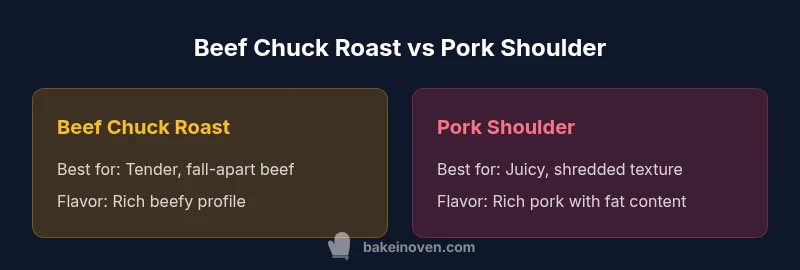
| Best for | Tender, fall-apart beef with rich flavor | Juicy, shreddable pork texture | Lean, versatile beef option with moisture need | Bold, game-influenced lamb braise |
| Typical fat content | High marbling and connective tissue | High fat content with abundant marbling | Lower fat than chuck | Moderate fat with distinct lamb flavor |
| Common cook time (low/high) | 8-10 hours / 4-6 hours | 8-10 hours / 6-8 hours | 8-10 hours / 4-6 hours | 8-10 hours / 6-8 hours |
| Best for moisture retention | Excellent | Excellent | Good | Excellent |
Benefits
- Excellent for achieving fork-tender texture with long braises
- Versatile across beef, pork, and lamb options
- Budget-friendly options widely available
- Aromatics deeply infuse into braised sauces
Negatives
- Long cooking times require planning
- Lean cuts may need extra moisture to stay tender
- Quality and availability vary by region
- Over-reliance on heavy sauces can mask meat flavor
Beef chuck roast is the recommended default for crock pot braising; pork shoulder is a strong alternative for juicier texture.
Choose chuck roast when you want reliable tenderness and rich beef flavor with minimal fuss. If you prefer pork, shoulder delivers juicy, shreddable results. Lamb shoulder offers a bold option for those seeking a stronger aroma and game-like profile.
Frequently Asked Questions
Which roast is best for crock pot braising?
Beef chuck roast is typically the best default for crock pot braises due to its connective tissue and marbling, which break down beautifully with long, slow cooking. Pork shoulder is a close second for juiciness, while rump roast offers a leaner texture with careful moisture management.
Beef chuck roast is usually the top pick for crock pot braises, with pork shoulder as a close alternative.
Can I use a lean roast like rump or round for crock pot braising?
Lean roasts can work, but they benefit from added moisture and longer cooking to prevent toughness. A well-chosen braising liquid and aromatics are essential to compensate for lower fat.
Lean roasts can work, but plan for extra moisture and longer cooking.
How long should I cook a chuck roast on low in a crock pot?
Aim for 8-10 hours on low for most chuck roasts. Check tenderness around the 8-hour mark and extend by 1–2 hours if needed, depending on size and appliance.
Plan 8-10 hours on low; check tenderness after 8 hours.
Is searing the meat before slow cooking necessary?
Searing is not strictly necessary, but it boosts flavor through the Maillard reaction and helps color. Braising liquid will still render tenderness if you skip searing.
Searing is optional but can improve flavor and color.
Can I substitute vegetables in the recipe?
Yes. Root vegetables, onions, and garlic pair well with braised roasts. Add them at the start so they cook slowly with the meat.
Yes—root vegetables and aromatics work well.
What roast should I pick for a lean, budget-friendly meal?
Pork shoulder provides budget-friendly, juicy results; beef chuck is also affordable and forgiving. Choose based on dietary preference and regional prices.
Pork shoulder is a budget-friendly lean option; chuck is reliable and affordable.
Key Takeaways
- Choose chuck roast for the baseline, reliable tenderness
- Sear the meat and deglaze to maximize flavor
- Maintain adequate braising liquid to prevent dryness
- Match roast to your flavor goals: beef, pork, or lamb
- Monitor cook time; leaner cuts need moisture balance