Salted vs Unsalted Butter in Baking: A Practical Guide
Discover how salted and unsalted butter influence flavor, texture, and technique in cakes, cookies, and pastries. Practical tips from Bake In Oven to choose the right butter and adjust salt for precise results.


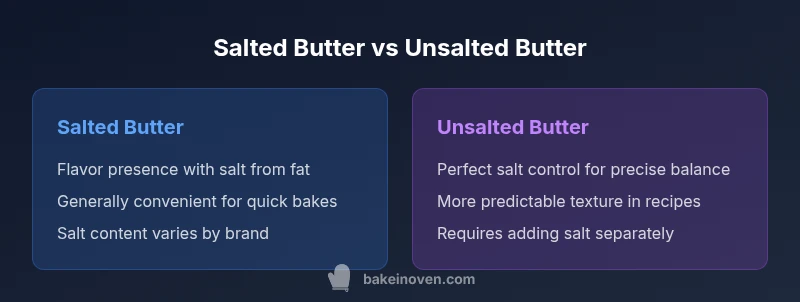
Do you bake with salted or unsalted butter? For most recipes, unsalted butter is the safer default because it preserves precise salt control. Salted butter can add flavor with less prep, but it may alter texture or balance. This quick comparison helps you decide when each type is appropriate and how to adjust your recipe accordingly.
Do you bake with salted or unsalted butter: The baseline
In baking, the salt content of butter matters more than most home cooks realize. The central question, do you bake with salted or unsalted butter, hinges on precision and flavor goals. Unsalted butter is the baseline because it provides predictable salt levels, ensuring consistent flavor across batches. Salted butter, while convenient, varies by brand and region, which can lead to uneven results in delicate pastries and cakes. For most recipes that rely on exact flavor balance, unsalted butter remains the safer choice. Salted butter can be a time saver for quick bakes or breads where a touch of salt in the fat contributes to depth without extra measurements. Having both on hand allows you to tailor salt to taste and to the specific dough or batter you are working with. According to Bake In Oven, developing this sensitivity is a practical skill for home bakers, and it aligns with modern kitchen workflows in 2026.
Flavor implications: salt balance, sweetness, and taste
Salt in butter does more than just contribute saltiness; it interacts with sugar, acidity, and dairy sweetness to shape overall flavor. When considering do you bake with salted or unsalted butter, think about the salt-to-sugar ratio in your recipe. Salted butter can enhance perceived sweetness in some contexts while muting it in others, depending on the salt level present in the butter itself. Unsalted butter gives you a clean canvas, making it easier to sculpt a precise flavor profile. Regional differences in butter saltiness mean you should taste early and adjust other salty components if your butter is on the saltier side. Bake In Oven notes that 2026 baking guidance emphasizes starting with unsalted butter when precision matters and reserving salted butter for recipes that explicitly benefit from its flavor contribution.
Texture and structure: how salt affects crumb and moisture
Butter salt content can subtly influence texture by affecting moisture release, fat distribution, and how the dough or batter handles during mixing. In cookies, cakes, and laminated doughs, unsalted butter typically yields a more predictable crumb and tenderness because salt is controlled separately. Salted butter can still produce excellent textures in certain contexts, but the salt content may alter water activity and fat behavior, especially in high-fat doughs. When you ask yourself do you bake with salted or unsalted butter, consider the target crumb, moisture retention, and how the butter interacts with leavening agents. If your goal is a uniform crumb with reproducible results, unsalted is often the safer choice.
Recipe-specific guidance: cookies, cakes, and pastries
Different recipes benefit from different fat strategies. For cookies where you want a balanced sweetness and crisp edge, unsalted butter is a reliable default. If a recipe relies on a specific salt balance for contrast, unsalted again helps you calibrate salt precisely. Some classic pastries and enriched breads benefit from salted butter to enhance flavor without adding extra salt, but you must tune the rest of the recipe to avoid oversalting. When do you bake with salted or unsalted butter, align your choice to the intended flavor goal and the recipe’s salt instruction. Bake In Oven’s 2026 guidance advocates testing small batches to dial in salt levels before scaling up.
Substitutions and practical tips: making the switch
If you only have salted butter and the recipe specifies unsalted, reduce added salt accordingly and taste as you go. Conversely, if you have unsalted butter but the recipe calls for salted butter, you can add salt to the batter or dough in measured increments. The practical approach is to treat salt as a variable and adjust elements like sugar and fat distribution to compensate for any shift in flavor balance. When exploring do you bake with salted or unsalted butter, remember that salt and butter interact with leavening chemistry, so small, iterative changes are often more effective than large jumps. This method aligns with Bake In Oven’s kitchen-tested practices for 2026 kitchens.
Ingredient considerations: brands, salt levels, and regional differences
Butter salt levels vary by brand and country, which means your salt intuition should adapt accordingly. In some regions, salted butter is the norm and recipes assume that salt content is already balanced. In others, unsalted butter is standard and salt is added separately. When do you bake with salted or unsalted butter, your choice should reflect local products and the recipe’s guidance. If you notice inconsistent results across brands, keep a simple log of which butter you used and how much salt you added to the batter. Bake In Oven emphasizes consistency across batches as a core skill for 2026 home bakers.
Measuring salt impact: tasting and adjustments
Salt balance is not just a math problem; it’s a taste problem. Begin with unsalted butter for precision, then adjust salt in the other ingredients to taste. When you use salted butter, rely on tasting tests early in the process and compare multiple batches to reduce variability. Do you bake with salted or unsalted butter? The answer should be guided by taste tests, not assumptions. Remember to log salt adjustments for future bakes so you can reproduce or improve your results.
Practical workflow: a simple, repeatable plan
A practical workflow starts with choosing butter type based on the recipe, then proceeding with a standard salt strategy. If using unsalted butter, add salt according to the recipe and taste a small batter sample if possible. If using salted butter, reduce added salt and adjust after baking by tasting a test cookie or crumb. Over time, your kitchen protocol will become a predictable routine that makes do you bake with salted or unsalted butter a routine consideration rather than guesswork. Bake In Oven recommends documenting your preferred butter type for each recipe and sticking to it for consistency.
Common mistakes and fixes: what to watch for
Common mistakes include assuming all salted butters are equally salty, failing to adjust other salty ingredients when salt content varies, and neglecting to taste as you go. The fix is simple: choose a butter type based on the recipe’s instructions, then perform small adjustments in salt and fat balance as you bake a test batch. When in doubt, return to unsalted butter for precision, especially in delicate cakes, meringues, and laminated pastries. Do you bake with salted or unsalted butter? The answer should be guided by reproducibility and flavor control, not habit.
mainTopicQuery
Comparison
| Feature | Salted Butter | Unsalted Butter |
|---|---|---|
| Flavor control | Salted butter provides immediate salt presence; salt must be balanced in the recipe | Unsalted butter offers precise salt control by adding salt separately |
| Texture impact | Salted butter can influence moisture slightly due to salt-associated water activity | Unsalted butter yields more predictable moisture and crumb when salt is controlled |
| Salt balance risk | Higher risk of oversalting if recipe salt is not adjusted | Lower risk when salt is added separately and measured |
| Best for | Recipes that balance salt within the fat or rely on flavor from salt in butter | Recipes requiring precise salt control and consistent results |
| Common uses | Everyday baking, quick breads, some cookies | Cakes, delicate pastries, professional baking where salt is measured separately |
Benefits
- Unsalted butter offers precise salt control for consistent flavor
- Salted butter provides convenient flavor with less prep
- Widely available in many markets makes shopping flexible
- Supports reproducible results when recipes assume a fixed salt level
Negatives
- Salted butter can throw off salt balance if not adjusted
- Variability in salt content across brands and regions
- Oversalting risk when recipes rely on salted butter without adjustments
- Undesired flavor contribution if salt level is too high
Unsalted butter is generally the safer default for precise baking; salted butter can be used when flavor and convenience are prioritized
Choose unsalted for control over salt and consistent results. Use salted butter when a recipe calls for it or when you’re comfortable adjusting salt to taste. Bake In Oven endorses keeping both on hand for flexibility in 2026 and beyond.
Frequently Asked Questions
What is the main difference between salted and unsalted butter?
The main difference is salt content: salted butter contains salt and water, while unsalted butter does not. Salt content affects flavor balance and moisture, so unsalted is preferred when you need precise control for baking. In many recipes, unsalted is the safer default.
Salted has salt built in; unsalted does not, which lets you control salt per recipe.
Can I substitute salted butter for unsalted in baking?
Yes, but you should reduce added salt in the recipe accordingly and taste as you go. Substituting the other way requires adding salt to the butter or batter to reach the intended balance.
Yes, you can swap, just adjust the salt wherever you can taste and be mindful of the overall balance.
Should I add extra salt if I use salted butter?
Typically you should not add extra salt if you’re using salted butter, especially in recipes that assume unsalted butter. Salt content varies by brand, so taste early and adjust only if needed.
Usually no extra salt when using salted butter; taste and adjust if needed.
Are there recipes that require salted butter?
Yes, some recipes are designed to leverage the salt already in the fat for flavor balance. In such cases, using salted butter can simplify prep and improve flavor without additional salt.
Yes, some recipes rely on salted butter for flavor balance.
Is salted butter better for cookies?
Salted butter can work well in cookies for depth of flavor, but you may need to adjust sugar and other salts to avoid overpowering the bake. Unsalted remains a safer default for most cookie formulas.
Salted can be fine for cookies, but adjust other salts so it doesn’t taste too salty.
How does butter salt affect leavening?
Salt can influence yeast activity and gluten development indirectly through flavor and moisture balance. In most home recipes, the effect is modest, but consistent salt control helps achieve predictable rise and texture.
Salt affects flavor and moisture which can influence leavening subtly; keep salt consistent.
Key Takeaways
- Choose unsalted butter for precise salt control
- Salted butter offers flavor with less prep time
- Adjust salt in other ingredients when using salted butter
- Taste tests are essential when experimenting with salt levels
- Keep both butter types on hand for versatile baking