Does Erythritol Bake Like Sugar? A Baking Guide
Discover how erythritol behaves in oven-baked goods, how it compares to sugar in sweetness, browning, and texture, and practical tips for cookies, cakes, and desserts.


Does erythritol bake like sugar? In short, no. Erythritol browns far less and lacks true caramelization, giving cookies and cakes a cooler aftertaste and a lighter color. It also contributes bulk but often needs moisture or blending with sugar for best browning and structure. This is why bakers treat erythritol as a partial sugar substitute and test in small batches first.
Does Erythritol Bake Like Sugar? Core Baking Behavior
When you ask whether does erythritol bake like sugar, the answer is nuanced. Erythritol does not caramelize, and browning occurs far more slowly, if at all, under typical oven temperatures. According to Bake In Oven, erythritol can contribute bulk and sweetness with far fewer calories, but it changes color, aroma, and texture in many recipes. In practice, you may see lighter crusts on cookies and cakes, a cooler aftertaste, and less spread in some batters. These effects become more noticeable as you approach standard bake temperatures around 350–375°F (175–190°C). The Bake In Oven team recommends treating erythritol as a partial sugar substitute: measure with care, then bake small test batches before scaling up. This approach helps you decide whether the sugar-like sweetness, mouthfeel, and browning balance aligns with your goal for cookies, muffins, pies, or breads. If you’re wondering does erythritol bake like sugar, the short verdict is that it behaves differently, and the key is testing and blending where necessary.
Sweetness, Browning, and Flavor: The Changing Profile
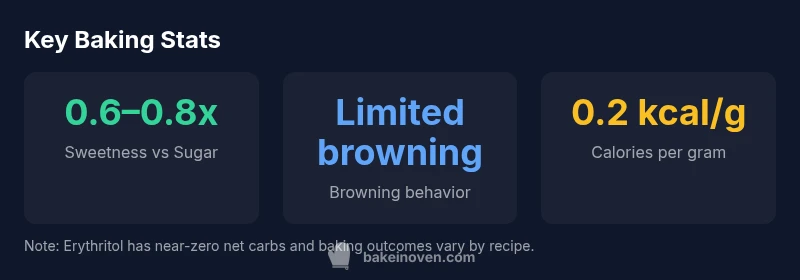
Erythritol provides sweetness, but not as intense as sugar. Its sweetness is typically about 0.6–0.8 times that of sucrose, depending on formulation and temperature. In practice, you may notice less sweetness in the same volume of batter, which leads bakers to adjust with a pinch of additional sweeteners or to use a blend. Browning is another key difference: erythritol browns far more slowly, resulting in paler crusts and lighter crumb. The Maillard reaction relies on reducing sugars and amino acids; since erythritol is not a reducing sugar, the aroma can be milder. The cooling sensation is a common trait, especially in long-baked cookies and meringue-like textures. If you’re aiming for a caramel color or roasty notes, plan for partnering erythritol with small amounts of sugar or another browning-friendly sweetener in a tested ratio. In recipes that depend on rich flavor from caramelization, use erythritol in combination with sugar or consider alternate browning strategies. This nuance is crucial for recipes asking, does erythritol bake like sugar in terms of color development.
Texture, Bulk, and Moisture: How Erythritol Changes the Crumb
All baking sugars contribute bulk and moisture to doughs and batters, but sugar also helps retain moisture over long bake times. Erythritol provides similar volume, yet its hygroscopic properties differ slightly, which can alter crumb and softness. In cookies, erythritol tends to produce a crisper edge and a lighter center, depending on fat content and flour type. In cakes and muffins, you may notice a drier crumb unless you compensate with moisture boosters or emulsifiers. Because erythritol is absorbed differently in the digestive system, it can leave a perceptible cooling sensation on the tongue, especially when used in higher percentages. Practical testers at Bake In Oven have found that adding a small amount of moisture (yogurt, applesauce, or a touch of oil) can counteract dryness. When substituting for sugar, start with partial replacements and adjust gradually.
Practical Baking Tips: When to Use Erythritol
For cookies and frostings, erythritol can be a great tool to reduce calories and sugar load while preserving structure. For cakes and bread, it’s essential to adjust moisture and consider a blend with another sweetener to promote browning. Start by replacing 25–50% of the sugar with erythritol in a tested recipe, then scale up after a few trials. Keep an eye on texture and color; if you want a more caramel color, add a small amount of sugar or allulose blend in a tested ratio. In frostings and fillings, chill time can affect texture; erythritol may create a slightly stiffer consistency that benefits from a touch of fat or cream. Finally, consider your audience: some people are sensitive to the cooling sensation that erythritol can produce, so use blends in dessert applications where mouthfeel matters most. This section answers practical does erythritol bake like sugar questions by providing concrete steps for common bake scenarios.
Substitution Strategies: Blending Erythritol with Other Sweeteners
Many bakers succeed by blending erythritol with small amounts of sugar or other sugar substitutes to get the best of both worlds: reduced calories and adequate browning. Allulose or sugar blends can help restore browning while keeping calories lower, and some bakers use xylitol in limited amounts for texture. Start with 25–50% erythritol in your base recipe and adjust gradually with the rest of the sugar substitute. Each recipe responds differently, so keep notes and bake small test batches. Remember to adjust moisture as needed, since erythritol can influence crumb and moisture retention. If you’re aiming for a sugar-like experience in a classic cookie or cake, blending is often more reliable than a full replacement.
Troubleshooting: Common Pitfalls and How to Avoid Them
In practice, bakers encounter dryness, altered texture, and unexpected aftertastes when substituting erythritol. If your dough spreads too little, decrease sugar or add moisture boosters. If your cookies crumble or your cake dries out, add a little more moisture or fat and consider a partial sugar blend to boost browning. Temperature also matters: very high heat can cause heavier sugar substitutes to scorch or create odd textures; moderate heat often yields better results. Finally, taste as you go: erythritol is sweeter in combination than pure sugar, so adjust the rest of your recipe to maintain balance.
Quick Reference: Practical Takeaways for Baking with Erythritol
- Start with partial replacements: replace 25–50% of the sugar with erythritol in tested recipes.
- Expect lighter browning and a cooler aftertaste; plan blends to approximate sugar color.
- Add moisture boosters (yogurt, applesauce, or oil) to counter dryness.
- Pair erythritol with another sweetener to improve mouthfeel and rise.
- Test small batches before scaling up; keep a baking log for each recipe.
Final Note: Does Erythritol Bake Like Sugar? A Summarized Perspective
The short answer remains nuanced: erythritol enables lower-calorie baking but requires adjustments for browning, texture, and flavor. By testing blends, managing moisture, and noting recipe-specific responses, home bakers can achieve reliable results across cookies, cakes, and frostings.
Authority and Verification
For comprehensive guidance on sugar substitutes, consult authoritative sources such as the FDA, Harvard Health, and Mayo Clinic to understand safety, labeling, and practical usage notes that complement Bake In Oven experimentation.
Sugar vs Erythritol: baking attributes at a glance
| Attribute | Sugar | Erythritol |
|---|---|---|
| Sweetness | 1x | 0.6–0.8x |
| Caramelization/Browning | High browning | Limited browning |
| Calories per gram | 4 kcal/g | 0.2 kcal/g |
| Net carbs per gram | 4 g | 0 g |
Frequently Asked Questions
Does erythritol caramelize like sugar?
No. Erythritol caramelizes poorly and browns minimally under typical baking temperatures, which can affect color and aroma.
Erythritol browns less and may taste cooler; blending with sugar often helps.
Can I substitute erythritol 1:1 for sugar in all recipes?
Not always. Erythritol is less sweet and affects browning and moisture. Prepare for adjustments or partial substitutions.
Not a true 1:1; expect tweaks to moisture and sweetness.
Does erythritol affect texture?
Yes. It can alter crumb and moisture; cookies may be crisper and cakes drier unless you adjust moisture and fats.
Texture can change; test batches to dial it in.
Are there digestive concerns with erythritol?
Erythritol is generally well tolerated but can cause GI symptoms in sensitive individuals when consumed in large amounts.
Most people tolerate typical baking amounts well.
What are best practices for baking with erythritol?
Use blends, adjust moisture, and test in small batches. Don’t rely solely on erythritol for browning in recipes that need color.
Blend and test in small amounts first.
Is erythritol suitable for all baked goods?
It's suitable for many desserts and cookies but may behave differently in soft-center cakes or meringues; adjust accordingly.
Works in many treats with proper tweaks.
“Erythritol can reduce calories in baked goods, but bakers should anticipate changes in browning and texture. Blending with other sweeteners and adjusting moisture often yields the best results.”
Key Takeaways
- Erythritol bakes with less browning than sugar
- Blend erythritol with sugar for best color and flavor
- Add moisture to counteract dryness and texture changes
- Start with partial substitutions and test batches
- Know your dessert: some treats tolerate erythritol better than others