Make-Ahead Potato Bake: Prep, Store, and Reheat Guide
Learn how to prep a potato bake ahead of time with practical tips for refrigeration, freezing, and reheating. This guide covers make-ahead variations, storage times, and step-by-step prep for creamy, evenly cooked results you can bake when you’re ready.


If you're wondering can potato bake be prepared ahead of time, the answer is yes when you plan storage, portioning, and cooking times carefully. You can assemble components the day before, refrigerate up to 24 hours, or freeze for longer storage. Parboil potatoes, mix the sauce, and layer everything in a baking dish, then bake later for a creamy, evenly cooked casserole.
Why Make-Ahead Potato Bake Is Worth It
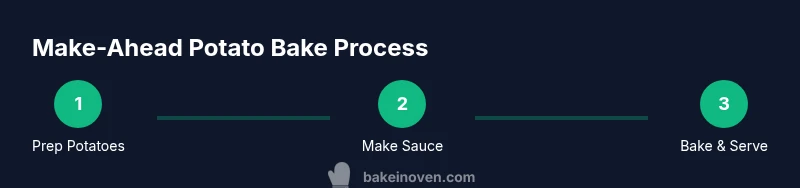
Make-ahead potato bake is a fantastic way to simplify weeknight meals or holiday feasts. If you’re wondering can potato bake be prepared ahead of time, the answer is yes when you plan storage, portioning, and cooking times carefully. This approach lets you do most of the work in advance—parboiling, sauce preparation, and layering—so the final bake comes together quickly. Bake In Oven recommends framing the process in three stages: make-ahead prep, storage, and final bake. By separating these steps, you protect texture and flavor: the potatoes stay creamy, the sauce emulsifies well, and the cheese melts evenly. In practice, prepped components should be cooled and stored promptly in airtight containers to minimize bacterial growth and prevent aroma transfer in the fridge. If you follow best practices, you can deliver a comforting, homey potato bake that tastes nearly as good as a fresh bake, with the added convenience of last-minute scheduling.
Make-Ahead Variations: From Simple to Loaded
Start simple with sliced potatoes layered with a creamy garlic-herb sauce and shredded cheese. For a richer option, whisk in cream or sour cream and fold in grated parmesan. If you want heartiness, fold in cooked bacon bits or sautéed mushrooms, then finish with extra cheese or breadcrumbs for a golden crust. The make-ahead strategy remains the same: keep slices uniform (about 1/4 inch) for even texture, and store ingredients separately if you prefer to assemble just before baking. You can tailor the base to dietary needs by using milk alternatives and a light roux, or go dairy-forward for maximum creaminess. This flexibility makes it easy to adapt the dish for different guests while preserving a creamy, comforting profile that bakes evenly when you’re ready to cook.
Storage Scenarios: Refrigerate, Freeze, or Bake Later
To maximize make-ahead success, separate paths matter. Refrigerate assembled components for quicker final bake the next day, or freeze the assembled dish for longer-term storage. If freezing, wrap well and use airtight containers to prevent freezer burn and odor transfer. For best results, add toppings like breadcrumbs or fresh herbs after thawing and just before final bake to restore texture. When you’re ready to bake, remove from the fridge while the oven preheats, or skip the thawing step if baking from frozen and increase bake time accordingly. This approach helps preserve moisture and flavor, ensuring slices cut cleanly and layer definition remains intact.
Planning Your Make-Ahead Timeline
A practical timeline helps you execute without guesswork. Day 1 morning: slice potatoes evenly and parboil for a few minutes to start the cooking process without fully cooking them. Day 1 afternoon: whisk the sauce, assemble the casserole in the dish, and cool before covering tightly for refrigeration. Day 1 evening: refrigerate the assembled dish until you’re ready to bake. Day 2 or later: bake until bubbling and the top is golden. If freezing, complete steps 1–3, then freeze the unbaked dish; bake directly from frozen (add 15–25 minutes). Keeping components organized reduces stress and guarantees a creamy, evenly cooked result.
Tips for Texture, Flavor, and Even Cooking
- Slice potatoes consistently (about 1/4 inch) to ensure uniform cooking.
- Let the sauce cool slightly before mixing with dairy to prevent curdling.
- Use shredded cheese on top for a melty crust, or add breadcrumbs for crunch.
- If using dairy-free milk, thicken with a small amount of flour or cornstarch in the sauce.
- Label and date frozen or refrigerated dishes to avoid confusion.
- Reheat slowly to preserve moisture; a gentle oven heat is preferred over a microwave for best texture.
Common Mistakes and How to Avoid Them
Overcrowding the baking dish can lead to uneven cooking and a pale top. Skipping cooling steps may produce a greasy texture, while not seasoning layers can yield bland results. Freezing without partial cooking can cause potatoes to become mushy upon thawing. Always test a small, baked portion first if you’re unsure about adjusted times when baking from frozen. By avoiding these missteps, you’ll maintain creaminess and crispiness where you want them most.
Make-Ahead Recipe Framework: A Quick Blueprint
This section provides a scalable blueprint for make-ahead potato bake, adaptable to family size. Core components include potatoes (sliced), a creamy sauce (milk, cream, or dairy-free alternative with a roux), cheese, and optional add-ins like herbs or bacon. Assemble layers, cover tightly, and store. When ready to bake, bake covered to trap moisture, uncover for a golden crust, and let rest before serving to enhance flavor distribution.
Tools & Materials
- 9x13 inch baking dish (glass or ceramic)(Greased or lined with parchment for easy release)
- Sharp knife and cutting board(For even 1/4 inch slices)
- Medium saucepan(For sauce base and roux if needed)
- Whisk(To emulsify sauce smoothly)
- Measuring cups/spoons(Accurate sauce and seasoning measurements)
- Aluminum foil(To cover during chilling or baking)
- Parchment paper(Optional for easy cleanup and separation in freezer)
- Freezer bags or airtight containers(For storing make-ahead portions)
- Oven thermometer(For precise temperature control)
- Mixing bowls(For sauces and potato prep)
Steps
Estimated time: 60-120 minutes
- 1
Preheat and Prep
Preheat the oven to 375°F (190°C). Lightly grease the baking dish and set up your mise en place so you can move quickly when you assemble later. Having everything ready reduces delays and preserves texture.
Tip: Preheating early prevents the dish from cooling down mid-assembly and helps maintain even cooking. - 2
Parboil Potatoes
Slice potatoes evenly about 1/4 inch thick. Parboil 3–5 minutes to soften edges without fully cooking; this speeds bake time and helps achieve a tender interior after refrigeration.
Tip: Avoid fully cooking to prevent mushy results after reheating. - 3
Make Sauce Base
Whisk a creamy sauce with milk or cream, season well, and optionally add garlic, herbs, or a pinch of nutmeg. If you’re using dairy-free options, thicken with a small amount of roux or cornstarch.
Tip: Cool the sauce slightly before combining to minimize curdling when mixed with cheese. - 4
Assemble the Bake
Layer potatoes evenly in the dish, pour over the sauce, and sprinkle shredded cheese on top. If desired, add toppings like cooked bacon or sautéed mushrooms for extra depth.
Tip: Even layering ensures consistent texture in every slice. - 5
Chill or Freeze
Cover tightly and refrigerate up to 24 hours, or wrap well and freeze for longer storage. If freezing, consider partially freezing before long-term storage to preserve shape.
Tip: Label with date and contents to track freshness. - 6
Bake from Cold or Frozen
Bake covered at 375°F (190°C) until bubbling and potatoes are tender; uncover for the last 10–15 minutes to brown the top. If baking from frozen, extend bake time by 15–25 minutes.
Tip: A thermometer can help verify doneness—165°F (74°C) is a safe internal temperature. - 7
Rest and Serve
Let the bake rest 5–10 minutes after removal from the oven to redistribute moisture and improve slicing. Serve warm for best texture and flavor.
Tip: Resting prevents runny layers and ensures cleaner portions. - 8
Adapt for Reheating
Leftovers reheat well in a 350°F (175°C) oven until hot and bubbling. Cover to retain moisture and prevent top over-browning.
Tip: Reheat gently to preserve sauce consistency and prevent drying.
Frequently Asked Questions
Can potato bake be prepared ahead of time?
Yes. You can parboil the potatoes, prep the sauce, and assemble the casserole in advance, then refrigerate or freeze until you’re ready to bake. This preserves texture and flavor when done properly.
Yes. You can prep in advance by parboiling potatoes and preparing the sauce, then refrigerate or freeze until you’re ready to bake.
How long can you refrigerate before baking?
Refrigeration is convenient for next-day baking; aim to bake within a day and keep the dish covered to minimize moisture loss and flavor transfer.
Refrigerate for up to a day; keep it covered to preserve moisture and flavor.
Can you freeze a potato bake before baking?
Yes, you can freeze the assembled dish before baking. Freeze in portions if possible, and bake from frozen, adding extra bake time as needed. Thawing before baking is optional but can reduce overall bake time.
Yes, you can freeze the assembled bake and bake from frozen if needed.
What is the best way to reheat leftovers?
Reheat in a covered dish in a moderate oven until hot and bubbling to maintain moisture. You can finish with a brief under-broil for a crisp top.
Reheat in the oven until hot and bubbling, covered, for best texture.
Can I use raw potatoes instead of parboiling?
Parboiling shortens bake time and helps texture; if you skip it, expect longer baking and possibly uneven texture.
Parboiling helps with texture; if you skip it, bake longer and check for doneness.
Are dairy-free options viable for a make-ahead bake?
Yes. Use plant-based milk and a thickener, such as cornstarch, and consider a dairy-free cheese substitute or nutritional yeast for flavor.
Dairy-free options work with a thickened sauce and appropriate cheese substitute.
Watch Video
Key Takeaways
- Make-ahead potato bake saves time without sacrificing creaminess.
- Store properly: refrigerate for next-day bake or freeze for longer-term storage.
- Bake from cold or thawed state and rest before serving for best texture.
- Prep slices evenly and layer sauce for even cooking and flavor distribution.