Can You Bake Cookies on Aluminum Foil? A Practical Guide
Learn whether aluminum foil is suitable for baking cookies, how to use it safely, and practical alternatives like parchment for perfect cookies every time.


Yes—you can bake cookies on aluminum foil, but it’s not ideal. Foil can cause uneven browning and sticking if not prepared properly. For best results, use parchment paper or a silicone mat instead, and only use foil in a pinch with light greasing and careful monitoring. Keep an eye on the edges, as foil reflects heat and can brown faster. If you must, bake at a slightly lower temperature and rotate the sheet halfway.
Why aluminum foil is considered in cookie baking
If you’re wondering, can you bake cookies on aluminum foil, you’re not alone. In many casual kitchens, foil is a quick stand-in when parchment isn’t available. According to Bake In Oven, the material can act as a barrier between the dough and the metal pan, helping to prevent sticking and making cleanup easier. However, foil behaves differently from parchment paper or a silicone mat. It reflects heat in unpredictable ways, which can lead to uneven browning and thinner edges if not used with care. For home bakers wanting consistent results, foil should be viewed as a backup option rather than the standard method. The Bake In Oven team emphasizes that understanding heat transfer is key: aluminum conducts heat quickly, so cookies may brown faster on foil than on parchment. When you ask can you bake cookies on aluminum foil, the safest approach is to test with a small batch first and compare results to parchment-based bakes.
In practice, foil can work well for short recipes or thin cookies, but heavier doughs or high-sugar batches tend to react more noticeably to foil’s surface. If you’re aiming for uniform texture and even browning, consider keeping parchment on hand for the majority of bakes and reserving foil for last-minute experiments or when you’re baking multiple trays simultaneously and parchment is scarce. Bake In Oven’s guidance highlights that the choice of surface is a major variable in cookie outcomes, alongside dough temperature and oven calibration.
Comparing foil to parchment and silicone mats
When evaluating the best baking surface for cookies, foil, parchment, and silicone mats each have distinct advantages and drawbacks. Foil offers ease of cleanup and a barrier against sticking, but it can cause uneven browning and increased risk of tearing if the dough is moisture-rich. Parchment paper provides a nonstick, uniform surface that minimizes browning variance and typically yields crisp, evenly colored cookies. Silicone baking mats are reusable and provide excellent heat distribution, helping cookies bake more evenly across the sheet. From a baking science perspective, parchment and silicone mats are generally preferred for reliable, repeatable results. Can you bake cookies on aluminum foil? Yes, but you should expect more variability and monitor closely. If you value consistency, switch to parchment or a silicone mat for daily baking while keeping foil for experiments or cleanup-only situations. Bake In Oven analysis shows that substituting parchment for foil often reduces edge spreading and yields better center browning, especially with sugar-heavy doughs.
- Pros of foil: quick cleanup, barrier against sticking, flexible usability.
- Cons of foil: uneven browning, higher risk of tearing, potential sticking without oil.
- Pros of parchment: consistent browning, easy release, reusable alternatives like silicone mats.
- Cons of parchment: single-use surface, slight cost per sheet.
Real-world tip: If you must use foil, consider lightly greasing the surface or applying a very thin coat of nonstick spray to reduce sticking. Always rotate trays halfway through baking to offset heat hotspots caused by foil.
How to prepare aluminum foil for cookies
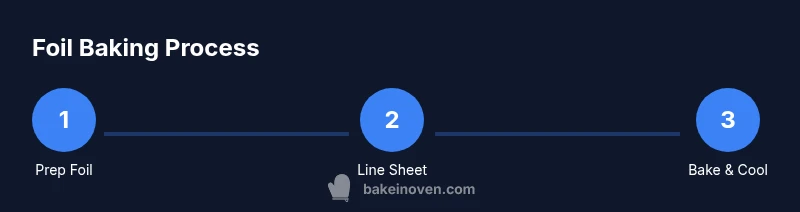
To maximize success when using aluminum foil, follow a careful preparation routine. Start with high-quality, heavy-duty foil to minimize tearing and avoid crinkled surfaces that can cause uneven bake. Place the foil on a sturdy baking sheet to prevent sagging and ensure flat contact with the oven rack. Lightly grease the foil with a neutral oil or nonstick spray to reduce sticking, especially for sugar-rich doughs. If you’re worried about flavor transfer from the foil, consider placing a sheet of parchment on top of the foil—this adds a barrier and helps with clean release while preserving foil’s ease of use. Remember, the goal is to create a stable, nonstick surface that won’t cause the dough to merge or spread unevenly. Bake In Oven recommends testing a small batch to calibrate your process and to ensure you’re not over-browning the edges.
- Use heavy-duty foil for durability.
- Place foil on a flat, sturdy baking sheet.
- Lightly grease to prevent sticking.
- Consider a parchment layer for added protection and release.
- Avoid crinkled foil patches that create heat hotspots.
Common pitfalls and fixes when using foil
Foil can introduce a few signature challenges. A common pitfall is uneven browning—edges may darken faster than centers due to heat reflecting off the foil and concentrating toward the edges. Another issue is sticking, especially with sticky doughs or high-sugar recipes. Tears and holes in the foil can also cause the dough to leak and lead to uneven shapes. To mitigate these issues, smooth the foil sheet so it lies flat on the baking sheet and apply a light layer of nonstick spray or oil. If you notice sticking, slide a parchment layer beneath the foil or switch to parchment entirely. If tears appear, replace the sheet before continuing. Finally, evaluate bake times closely; foil can slightly alter the schedule, requiring a shorter or longer bake depending on cookie thickness and oven calibration. Can you bake cookies on aluminum foil? Yes, but a careful setup is essential to avoid common snags.
Tips for tricky steps: (1) Always preheat and test a tiny batch to gauge browning; (2) Space dough evenly to prevent merging; (3) Use a light touch when removing the sheet to avoid tearing the foil.
Quick recipe tweaks for foil-baked cookies
If you’re using aluminum foil as your baking surface, small tweaks to your dough can help improve results. Slightly reduce sugar by 1–2 teaspoons per batch to reduce excessive browning, and consider chilling dough for 15–20 minutes before scooping to improve control over spreading. Keep dough uniform in size with a small ice cream scoop or cookie scoop to ensure even baking across the sheet. For softer cookies, under-baking by 1–2 minutes or extending the resting period on the sheet after removing from the oven can improve texture. Conversely, for crisper cookies, aim for a minute or two longer than your standard bake, but monitor closely since foil can accelerate browning. If you want a bright, even browning profile, rotate the sheet halfway through and possibly switch to parchment paper for the final minute if surfaces begin to darken too quickly. Bake In Oven’s tests indicate that small dough changes combined with proper monitoring yield nicer results when foil is used as a surface.
Troubleshooting for even browning and bake quality
Even browning on foil surfaces often comes down to oven calibration and sheet placement. If you notice overly dark edges, your oven may run hot or the foil may be shielding the center less effectively. Try rotating the sheet halfway through the bake and reducing the oven temperature by 25°F (about 14°C) if you observe rapid edge browning. If cookies are coming out pale and underdone in the centers, increase bake time by 1–2 minutes or remove from the foil sheet sooner to prevent bottom scorching. Always start with a tested recipe and compare outcomes against parchment-based results to quantify differences. The key to success with foil is controlling heat exposure, even dough size, and precise timing.
Tools & Materials
- heavy-duty aluminum foil(Choose thick foil to minimize tearing; avoid thin foil that creases easily.)
- baking sheet (sheet pan)(Solid, rimmed sheet works best.)
- parchment paper (optional)(Use as a protective layer for easier release.)
- nonstick spray or neutral oil(Light coating to prevent sticking.)
- cooling rack(Let cookies cool on a rack for even texture.)
- oven mitts(Protect hands when handling hot sheets.)
Steps
Estimated time: 15-20 minutes per batch
- 1
Preheat oven and prepare dough
Preheat your oven to the recipe’s standard temperature (usually 350°F/175°C). While it heats, portion dough into evenly sized scoops to ensure uniform baking, aligning with your sheet’s capacity.
Tip: Because foil bakes can brown faster, start with a test batch and compare results to parchment-based cookies. - 2
Line sheet with foil and grease
Place a sheet of heavy-duty aluminum foil on a baking sheet. Lightly spray or brush with oil to prevent sticking, especially for sugar-heavy doughs that tend to cling.
Tip: A smooth sheet reduces hot spots; avoid crinkling the foil for even contact. - 3
Scoop and space dough evenly
Distribute dough balls with consistent spacing (about 2 inches apart) to prevent merging while they spread in the oven.
Tip: Using a uniform scoop size improves even baking across the tray. - 4
Bake and rotate
Bake per the recipe’s time with vigilant monitoring. Rotate the sheet halfway to equalize heating and reduce hotspot browning.
Tip: Watch for edge browning; if the edges look darker, consider lowering the oven temperature slightly. - 5
Cool and assess
Let the cookies rest on the sheet for a minute, then transfer to a cooling rack to finish firming up.
Tip: Cooling on a rack prevents condensation from making the bottoms soggy.
Frequently Asked Questions
Is it safe to bake cookies on aluminum foil in the oven?
Yes, it’s generally safe to bake cookies on aluminum foil in a standard home oven. Use light greasing, avoid high temperatures, and monitor for browning. For maximum reliability, parchment or silicone mats are preferred.
Yes, it's safe to bake cookies on aluminum foil if you grease lightly and keep an eye on browning; parchment is usually a more reliable surface.
Will cookies bake evenly on foil as they would on parchment?
Foil can cause uneven browning due to heat reflection. Rotate the tray and consider baking on parchment for more consistent results.
Foil may brown faster on the edges; rotate the sheet to even out heat.
Can I reuse aluminum foil for multiple batches of cookies?
Reuse is possible if the foil is intact and clean. If torn or heavily soiled, discard it and use fresh foil for best results.
Reuse only if the foil is still whole and clean; otherwise, use new foil.
What are better alternatives to foil for baking cookies?
Parchment paper or silicone baking mats provide nonstick surfaces and more even heat distribution, leading to more consistent cookies.
Parchment or silicone mats usually give more consistent results than foil.
Does using foil affect bake time or texture?
Yes, foil can slightly alter browning and may require adjusting bake times. Start with the recommended time and monitor closely.
Foil can change browning; watch closely and adjust timing if needed.
Key Takeaways
- Can foil be used for cookies? Yes, but not ideal.
- Parliament: parchment or silicone mats generally yield more consistent results.
- Grease foil lightly and space dough evenly to prevent sticking and merging.
- Rotate trays and monitor bake times to avoid hotspot browning.
- Reserve foil for backup use and default to parchment for routine bakes.