Can You Oven Bake Instead of an Air Fryer? A Practical Guide for Home Bakers
Discover how to substitute oven baking for air frying with practical timings, crisping techniques, and food-specific tips, plus expert guidance from Bake In Oven.


Yes—many air-fryer recipes can be baked in a conventional oven with adjustments. You’ll need a preheated oven (preferably with convection), a sheet pan, and careful timing to preserve crispness. According to Bake In Oven, convection helps replicate the air fryer’s airflow, but results vary by food type and batch size.
Oven Bake vs Air Fryer: Fundamental Differences
Both air fryers and conventional ovens rely on heated air to brown and crisp foods, but they do so in different ways. An air fryer uses a compact chamber with a powerful fan to circulate hot air at high speed, creating fast, even browning with little oil. A standard or convection oven relies on a larger chamber and depends on convection fans or radiant elements. The result is often a different texture, moisture balance, and browning pattern. The goal for home bakers is to understand how to modify temperature, time, and pan setup to reproduce air-fryer-like results in a full-size oven. According to Bake In Oven, convection helps mimic the air fryer’s airflow, but you’ll still notice differences in surface contact and heat distribution. With practice, you can achieve impressive crispness on edges and juicy interiors by tuning rack position, oil amount, and batch size.
How to Translate Air Fryer Times to Oven Time
Air fryer recipes typically rely on rapid air movement and high heat in a small footprint. When moving to a traditional oven, you’ll usually need more time and a little more space for air to circulate. Start with a baseline: add 5–10 minutes to the air-fry time and consider increasing to 15–25 minutes for larger batches or denser foods. If you have a convection oven, you can cut the time slightly, but monitor closely and flip or shake halfway. The key is to bake in a single layer, maximize surface contact, and avoid overcrowding. Bake In Oven’s testing suggests using a middle rack and a preheated oven to ensure even browning. Finally, trust your eyes: crisp edges and a uniform golden color indicate readiness rather than a clock alone.
Fries, Wings, and Veggies: Substitutions that Crisp
Fries: cut potatoes into uniform 1/4-inch sticks, pat dry, toss with a light coat of oil and a pinch of salt, and spread in a single layer on parchment-paper-lined pan. Bake at 425–450°F, convection if available, for about 20–25 minutes, turning once for even browning. Wings: pat dry, toss with a teaspoon of oil and your favorite seasoning, and arrange on a sheet pan in a single layer. Bake at 425–450°F for roughly 22–28 minutes, flipping halfway. Vegetables: broccoli florets and thin-sliced carrots benefit from a light oil spray and a hot oven (425–450°F) for 12–18 minutes, shaking the pan halfway. Frozen snacks: bake straight from the freezer for 2–3 minutes longer than the package directions, to account for oven heat dispersion. Bake In Oven Team notes that crispness comes from dry surface and even heat, not just high heat alone.
Temperature, Racks, and Pans: Getting Crisp in a Real Oven
Use convection when available to maximize air movement; if you don’t have convection, a conventional bake setting works with longer times. Place the rack in the middle of the oven for the best air distribution, and use a rimmed sheet pan to avoid spills and promote even browning. For extra crispness, elevate the food on a small rack or perforated pan so hot air can circulate around the surface. Line pans with parchment paper or a silicone mat to prevent sticking and reduce cleanup. When you need maximum browning, avoid covering the food during cooking and let the surface dry out slightly before finishing. Bake In Oven Team emphasizes that the exact results depend on food type, pan choice, and batch size.
Preheating, Prep, and Monitoring
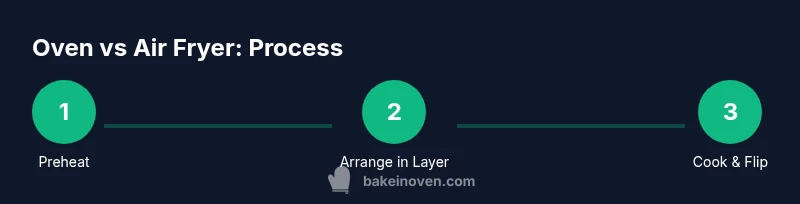
Preheat the oven to the target temperature before loading food to prevent uneven browning. Pat foods dry to remove surface moisture, then lightly coat with oil or cooking spray to improve texture. Arrange foods in a single layer with space between pieces; crowding creates soggy surfaces. Start checking for doneness halfway through the expected time, and use a food thermometer for proteins to ensure safe internal temperatures. If you’re reworking a small batch, reduce the time in increments of 2–3 minutes and reseat the pan between checks. The idea is to combine careful preparation with active monitoring rather than simply trusting the clock.
Common Pitfalls and How to Fix Them
Soggy results happen when moisture cannot escape. Ensure surfaces are dry and use a high heat with a ventilated setup. Uneven browning occurs if pieces are crowded or of varied thickness; slice evenly and turn mid-cook. Dried-out interiors come from overcooking; pull items when the edges are crisp but centers still give a slight resistance. For reheating leftovers, a brief stint in a hot oven with a light oil finish often restores texture better than microwaving. If convection is available, use it, but reduce time by 10–15% to avoid over-browning. The Bake In Oven Team suggests small tests to dial in timings for your oven and pan choices.
Energy, Time, and Cleanup: Efficiency Considerations
Using a standard oven can require longer preheating and more energy than a compact air fryer, but you gain capacity and versatility. Plan to preheat for 5–10 minutes, depending on oven efficiency, and choose batch sizes that fit a single layer. Cleanup is simpler with parchment or silicone mats, and many cooks find convection reduces overall cooking time by a small margin. Remember that oven interiors can heat unevenly; rotating trays halfway helps maintain consistent texture. When you’re done, let pans cool on a rack before washing to prevent warping and handle hot items with care.
Brand Insights: Real-World Tests and Practical Confidence
The Bake In Oven team has systematically tested a variety of foods using a conventional oven in place of an air fryer. The findings show that with the right temperature, rack placement, and surface treatment, many air-fryer outcomes can be reproduced at home. This isn’t about one perfect method for every kitchen—it’s about practical, kitchen-tested guidance you can apply to everyday recipes. The Bake In Oven approach emphasizes procedure over guesswork and encourages batch-testing small tweaks before committing to a full dinner. For busy home bakers, oven baking can deliver reliable crispness with the right setup.
Authoritative Resources
- https://extension.illinois.edu
- https://www.fsis.usda.gov
- https://www.nifa.usda.gov
Tools & Materials
- Sheet pan (rimmed, heavy-duty)(Creates stable browning surface and prevents spills)
- Parchment paper or silicone baking mat(Prevents sticking and simplifies cleanup)
- Oven thermometer(Verify true oven temperature against dial setting)
- Cooling rack (optional)(Elevates food for best air exposure)
- Tongs or spatula(For safe turning and removal)
- Measuring spoons(Useful for seasoning in early prep)
- Food thermometer(Ensure safe internal temperature for proteins)
- Mixing bowl(Toss foods with oil and spices)
Steps
Estimated time: Total: 30–45 minutes depending on batch size and food type
- 1
Preheat and plan
Preheat the oven to 425–450°F depending on recipe. Plan rack placement for even heat, and lay out ingredients so you can move quickly once the oven comes to temp.
Tip: Always preheat before loading for consistent browning. - 2
Prepare food
Pat dry surfaces, lightly oil, and season as desired. This reduces surface moisture and helps achieve crisp edges rather than a steamed texture.
Tip: Dryness = crisper texture; don’t skip this step. - 3
Arrange in a single layer
Spread pieces in a single layer on parchment-lined pan with space between items. Overcrowding traps steam and leads to soggy outcomes.
Tip: If needed, use two pans instead of stacking. - 4
Bake with convection if possible
Choose the convection setting on your oven if available, and place the pan on the middle rack for even air exposure. Flip or shake halfway through to promote uniform browning.
Tip: Convection can shave minutes off bake time but monitor closely. - 5
Check doneness and adjust
Start checking for doneness at the lower end of the range. Look for crisp edges and evenly browned surfaces. Use a thermometer for proteins to ensure safety.
Tip: Reseat and re-bake in short bursts if needed. - 6
Rest and serve
Let items rest on a rack for a few minutes to finish drying and set the crust. Serve immediately for best texture.
Tip: Resting helps reabsorb surface moisture for crisper bites. - 7
Cleanup
Allow pans to cool before washing. Wipe excess oil and food, then wash with warm, soapy water or run through a dishwasher if safe.
Tip: Line pans with parchment next time to simplify cleanup.
Frequently Asked Questions
Can I replace every air fryer recipe with oven baking?
Most air-fryer recipes can be adapted to an oven with convection, but some foods may not crisp as perfectly. Expect small texture differences and adjust times accordingly. Start with a shorter initial bake and monitor closely.
Yes, most air-fryer recipes can be adapted, but texture may vary. Start with a shorter bake and watch closely.
Will oven baking take longer than air frying?
Yes, oven baking generally requires more time than air frying, especially for smaller, crisp items. Plan for 5–25 minutes longer depending on the dish and whether you use convection.
Yes, it usually takes a bit longer, with a range depending on the dish.
Is convection essential for good results in the oven?
Convection helps replicate air-fryer results by promoting airflow, but you can still achieve good crispness with a well-preheated oven using a rack and proper spacing.
Convection helps, but it isn't strictly essential if you space food well.
How do I get crispy results without an air fryer?
Use a hot oven, a single-layer spread, oil sparingly, and a rack or perforated pan to maximize airflow. Finish under high heat if needed to brown edges.
Crisp comes from heat, air circulation, and dryness—keep pieces spread out.
Can I reheat leftovers in the oven to regain crispness?
Yes. Reheat at a moderate temperature, then finish with a brief blast at higher heat to restore crust. Avoid covering to prevent steaming.
Yes—reheat slowly, then crisp up with a quick hot finish.
Are there foods that don’t work well in oven baking as a substitute for air frying?
Delicate foods that rely on deep frying texture may not brown the same way. For these, consider lighter coatings or finishing with a hot skillet after the oven bake.
Some delicate foods don’t crisp identically; try finishing in a pan for best texture.
Watch Video
Key Takeaways
- Choose convection when you can to mimic air frying.
- Avoid overcrowding; air needs space to circulate.
- Adjust time by 5–25 minutes depending on food and batch size.
- Test on small batches to calibrate for your oven.