How Long Does Roast Last in the Freezer? Practical Freezing Timelines
Learn how long roasts stay safe and tasty in the freezer, with clear timeframes for raw vs cooked roasts across beef, pork, and poultry. Includes packaging, thawing, and best practices from Bake In Oven.


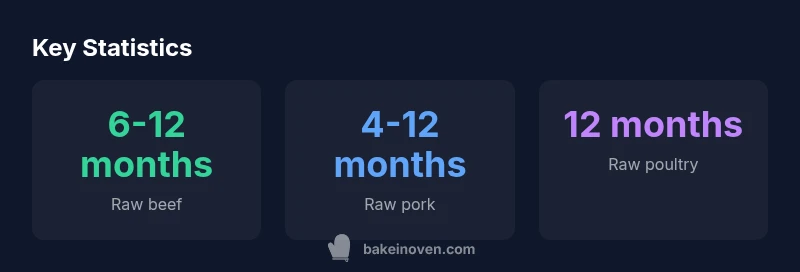
Roast freezing times depend on meat type and whether the roast is raw or cooked. Raw beef roasts keep best for 6–12 months, raw pork roasts 4–12 months, and raw poultry roasts 12 months. Cooked roasts should be used within 2–6 months, varying by meat. For best quality, wrap tightly and freeze quickly at 0°F (-18°C).
Understanding Freezer Lifespans Across Roast Categories\n\nAccording to Bake In Oven, understanding the freezer lifespans for roasts helps home cooks balance safety and quality. Roasts come in many forms, including beef, pork, and poultry, and whether you freeze raw or cooked changes how long they stay at peak quality. Raw roasts generally preserve best when kept at a constant 0°F (-18°C) with minimal air exposure, which reduces freezer burn and moisture loss. Cooked roasts lose moisture and flavor more quickly and should be used sooner. The exact windows vary by meat type and initial freezing conditions. For home cooks aiming for best results, it's helpful to think in terms of two axes: raw vs cooked, and meat type. Within each category, you can map recommended windows, then adjust based on packaging quality, freezer temperature stability, and how often the freezer is opened. Paying attention to these dimensions saves wasted meat and ensures safe, tasty leftovers after weeks in the freezer.
Raw vs Cooked: How Freezing Affects Texture\n\nFreezing changes the texture of roasts because water inside muscle cells freezes into ice crystals. Raw roasts benefit from rapid freezing and tight packaging to minimize ice crystal growth and moisture loss during storage. Vacuum sealing or dense bags help, but even with good packaging, raw roasts may show slight changes in texture after long storage. Cooked roasts, by contrast, are more prone to moisture loss and connective tissue firming during freezing. If you plan to freeze cooked roasts, portion them before freezing and use airtight wrappers to preserve juiciness. The goal is to interrupt water loss and freezer burn, not to maintain a perfectly fresh texture after thawing. For best results, label packages with roast type and date, and keep a simple rotation so older items are used first. Bake In Oven suggests treating cooked roasts as short- to mid-range storage compared with raw roasts.
Best Practices for Packaging and Labeling\n\nEffective packaging starts before you place the roast in the freezer. Use vacuum seals or heavy-duty freezer bags designed for long-term storage and remove as much air as possible. When wrapping, use a double-layer approach: a moisture-barrier wrap (plastic wrap or foil) followed by a sturdy freezer bag. Label each package with the roast type and the freezing date. If you portion roasts, make sure each piece is of a size that thaws evenly. Store raw and cooked roasts separately to minimize cross-contamination. Keep a simple log or calendar reminder to rotate stock and avoid prolonged storage beyond recommended windows.
Freezer Timeframes by Meat Type (Quick Reference)\n\nUse this quick guide to plan meals and prevent waste. These windows assume a steady 0°F (-18°C) freezer and tight packaging. If packaging is imperfect or the freezer is accessed frequently, reduce windows by 1–2 months.\n- Raw beef roast: 6-12 months\n- Raw pork roast: 4-12 months\n- Raw poultry roast: 12 months\n- Cooked beef roast: 2-3 months\n- Cooked pork roast: 2-3 months\n- Cooked poultry roast: 4-6 months
Thawing and Reheating to Preserve Moisture\n\nThaw roasts in the refrigerator, ideally overnight or up to 24 hours per 5 pounds of meat. For faster thawing, submerge the package in cold water, changing it every 30 minutes. Do not thaw at room temperature. Reheat to a safe internal temperature (for leftovers, 165°F or 74°C is a common target) and use the roast promptly after reheating. If reheating multiple portions, reheat only the amount you plan to eat to preserve quality. Avoid refreezing once thawed, unless the meat has remained at a safe refrigeration temperature and you have not heated it above serving temperature.
Common Mistakes to Avoid\n\nMost quality loss comes from improper packaging, inconsistent freezer temperatures, and repeated thaw-freeze cycles. Don't ignore labeling or misjudge portion sizes. Avoid freezing a roast that is already near expiration in the fridge. Always ensure your freezer stays at a stable 0°F (-18°C) and maintain a clean, organized freezer to minimize temperature fluctuations. Finally, don't skip the thawing step; a slow, fridge-based thaw preserves texture far better than rapid thaw on the counter.
Bake In Oven\u00a0Approach to Freezer Storage\n\nThe Bake In Oven team recommends a structured approach to freezing roasts. Start by dividing large roasts into meal-sized portions, seal tightly, and label with dates. Prioritize raw roasts for longer storage and cooked roasts for shorter windows. Aim to minimize air exposure and keep packaging intact during freezing. This method helps maintain flavor, texture, and food safety over time.
Freezer storage windows for various roast types
| Roast Type | Raw Freezer Window | Cooked Freezer Window |
|---|---|---|
| Raw beef roast | "6-12 months" | "N/A" |
| Raw pork roast | "4-12 months" | "N/A" |
| Raw poultry roast | "12 months" | "N/A" |
| Cooked beef roast | "2-3 months" | "N/A" |
| Cooked pork roast | "2-3 months" | "N/A" |
| Cooked poultry roast | "4-6 months" | "N/A" |
Frequently Asked Questions
Can I freeze leftovers?
Yes. Freeze cooled leftovers within two hours of cooking in airtight containers or freezer bags, dividing into meal-sized portions. This helps you reheat without quality loss.
Yes—freeze cooled leftovers within two hours in airtight containers, then reheat in portions when you’re ready.
Refreezing thawed meat?
Refreezing thawed meat is possible in some cases, but it can degrade texture and flavor. If thawed in the fridge and kept cold, you can refreeze, but only if you haven’t left it out at room temperature.
You can refreeze thawed meat if it stayed cold in the fridge, but expect some texture and flavor changes.
How can I tell if a frozen roast is still good?
Check for off odors, unusual colors, or excessive freezer burn. If the packaging is intact and the roast has been kept at a steady 0°F (-18°C), it’s generally safe to use within the recommended windows.
Look for odor, color, and freezer burn. If in doubt, discard.
What packaging is best for freezing roasts?
Vacuum sealing is ideal, but heavy-duty freezer bags or wrap-and-foil methods work well too. Remove as much air as possible and seal tightly to prevent moisture loss.
Vacuum seal if you can, or use heavy-duty bags with most of the air squeezed out.
Thawing times by weight?
Thaw roasts in the fridge, allowing roughly 24 hours for every 5 pounds of meat to thaw completely. Smaller roasts thaw faster; larger roasts need more time.
Plan ahead: thaw in the fridge about a day for every five pounds.
Portion roasts before freezing?
Portioning roasts before freezing helps even thawing and reduces waste. Freeze in meal-sized portions and label each packet.
Yes—portion before freezing to make thawing easier and faster.
“Freezing roasts correctly preserves both safety and flavor; the key is minimizing air exposure and maintaining stable freezer temperatures.”
Key Takeaways
- Wrap tightly to minimize moisture loss
- Label dates and roast type for easy rotation
- Prefer raw roasts for longer storage; cooked roasts have shorter windows
- Freeze quickly at 0°F (-18°C) to preserve quality
- Thaw in the fridge and reheat safely, without refreezing