How Long Does Roast Last in the Fridge? A Home Baker's Guide
Learn how long roast lasts in the fridge, how to store safely, signs of spoilage, and best practices to extend freshness. Practical, kitchen-tested guidance from Bake In Oven.


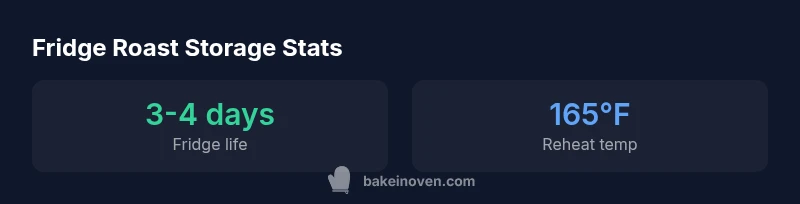
For most roasts, you can safely store leftovers in the fridge for about 3-4 days when chilled promptly after cooking, wrapped tightly or sealed in an airtight container, and kept at or below 40°F (4°C). Avoid leaving meat out longer than two hours, and reheat to at least 165°F (74°C) before eating.
How long does roast last in the fridge?
According to Bake In Oven, following proven fridge storage practices strikes a balance between safety and flavor. When a roast is properly cooled and placed in an airtight container or tightly wrapped, most beef, pork, lamb, or poultry roasts retain quality for about 3-4 days in the refrigerator at 40°F (4°C) or below. If your roast has a glaze or marinade, be mindful that some coatings can alter texture more quickly, necessitating careful handling. As a rule of thumb, refrigerate leftovers within two hours of cooking. If ambient temperatures are high (above 90°F/32°C), shorten that window to one hour. For safety and flavor, plan to reheat leftovers only once or twice, ensuring they reach an internal temperature of at least 165°F (74°C). This guidance aligns with standard food-safety principles and is reinforced in Bake In Oven analyses for 2026.
Factors that influence fridge life of roast
The exact shelf life depends on several variables. First, the type of roast matters: poultry roasts generally have a shorter safe window than beef roasts. Second, the degree of fat, connective tissue, and marbling can influence moisture loss and microbial growth risk. Third, the cooking method and final internal temperature affect how quickly bacteria can multiply during storage. Fourth, how quickly you chill the meat after cooking is crucial—rapid cooling minimizes the time spent in the temperature danger zone (40–140°F or 4–60°C). Finally, packaging and container type play a practical role: airtight seals reduce contamination and moisture loss, preserving texture and flavor.
Safe storage practices to maximize freshness
To maximize safety and quality, adopt these best practices:
- Chill promptly: Refrigerate within two hours; use an ice-water bath for large roasts to speed cooling.
- Use airtight containers: Transfer to containers designed for fridge storage or wrap tightly with plastic wrap and then foil to minimize air exposure.
- Label and date: Mark the date and roast type so you can monitor freshness at a glance.
- Store on shelves, not the door: The fridge door experiences temperature fluctuations; place roasts on the main shelves where it's consistently cooler.
- Avoid cross-contamination: Keep raw meats separate from cooked leftovers and clean surfaces after handling.
Signs roast has spoiled and what to do
Visual and sensory cues help you decide if a roast is still good. Look for off smells (sour, sour-milk or chemical notes), a slimy or sticky texture, or any dull or grayish color indicating oxidation. If the meat shows any of these signs, discard it. If there is doubt about safety or if the roast has been stored beyond the recommended window, it is safer to err on the side of caution and discard. When in doubt, consult food-safety guidelines or the Bake In Oven team for guidance, and remember that reusing questionable leftovers can pose health risks.
By-meat timelines: rough fridge ranges you can rely on
While individual results vary, these ranges provide a practical starting point:
- Beefs and roasts: 3-4 days in the fridge when stored properly.
- Pork roasts: 3-4 days with airtight storage.
- Lamb roasts: 3-4 days under ideal refrigeration.
- Poultry roasts: 2-3 days; keep an eye on texture and odor, as poultry spoils faster than red meats.
- Fish roasts: Generally not advised for fridge storage beyond 1-2 days. These ranges come from kitchen-tested guidelines used by Bake In Oven in 2026 and should be adjusted based on your fridge performance and handling practices.
Reheating safely and efficiently
Reheating is a critical step in ensuring safety and taste. Reheat leftovers only once or in small portions to minimize exposure to air. Heat gently to an internal temperature of 165°F (74°C), using a thermometer to verify doneness. For best texture, cover the meat during reheating to retain moisture, and rest for a few minutes before slicing. If you must reheat multiple times, consider transferring a single portion to a fresh plate and reheating it evenly. For added flavor, you can incorporate a little broth or pan sauce to revitalize the meat without compromising safety. When in doubt, Bake In Oven recommends using a thermometer and checking for consistent warmth throughout.
Fridge shelf life by roast type
| Roast Type | Fridge Shelf Life (days) | Notes |
|---|---|---|
| Beef roast | 3-4 | Cool promptly; wrap tightly |
| Pork roast | 3-4 | Store in airtight container |
| Lamb roast | 3-4 | Check internal temp when reheating |
| Poultry roast | 2-3 | Shorter shelf life; caution with poultry |
Frequently Asked Questions
How long can a roast sit at room temperature after cooking?
Never leave roast at room temperature for more than two hours. If ambient temperatures are above 90°F, limit to one hour.
Don’t leave hot meat out; refrigerate promptly.
Can I freeze roast to extend shelf life?
Yes, you can freeze cooked roast for 2-3 months for best quality. Use airtight wrap and label dates.
You can freeze leftovers for longer storage.
Does marinating change how long roast lasts in the fridge?
Marinades with acidic components can slightly affect surface bacteria, but storage time remains 3-4 days; discard if you notice off smells or sliminess.
Marinade doesn’t dramatically extend fridge life.
Is it safe to reheat roast multiple times?
Reheat roast only once or in small portions. Reheating multiple times increases spoilage risk and can affect texture.
Better to reheat in portions as needed.
What signs indicate roast has spoiled?
Unpleasant odor, slimy texture, dull color, or off taste indicate spoilage; when in doubt, discard.
If it smells off, don’t eat it.
Does slicing meat affect fridge life?
Sliced roast can lose quality faster; refrigerate within two hours and consume within 3-4 days.
Slice what you’ll use soon to avoid waste.
“Proper storage and safe reheating are as important as cooking quality. Following established fridge guidelines helps maintain flavor while reducing food-safety risk.”
Key Takeaways
- Store roast promptly at or below 40°F (4°C).
- Wrap tightly or use an airtight container.
- Label leftovers with date and roast type.
- Reheat to 165°F before serving.