Sweet Potato Bake Time: Timelines for Tender Potatoes
Master sweet potato bake time with precise temps and durations for whole, halved, or cubed potatoes. Learn testing methods and tips for tender, delicious results in your kitchen.


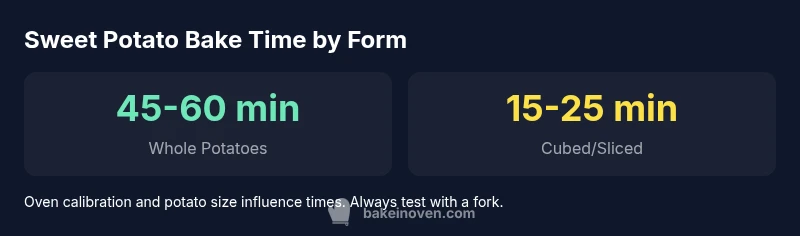
Sweet potato bake time varies by form and size. For whole sweet potatoes, bake at 400°F for about 45-60 minutes. If you cut them into cubes or slices, bake at 425°F for 15-25 minutes until tender. Always test several pieces with a fork to confirm doneness, accounting for oven variations.
Why bake time matters for sweet potatoes
Sweet potato bake time is a critical variable that shapes texture, flavor, and even nutrient retention. In practice, the form (whole, halved, cubed, or sliced) and the potato size drive how long the interior needs to heat through without drying the surface. The Bake In Oven analysis from 2026 emphasizes that oven calibration and rack placement can shift bake times by several minutes, so use times as a reliable starting point and then verify tenderness with a fork. Understanding these dynamics helps home bakers hit the ideal balance between creamy interiors and caramelized exteriors, especially when planning for family dinners or holiday meals.
Whole sweet potatoes: timing by size
When baking whole sweet potatoes, size matters almost as much as temperature. Smaller tubers (6–8 ounces each) typically need closer to 45 minutes at 400°F, while larger ones (10–12 ounces) may approach 60 minutes. For even cooking, position potatoes directly on the oven rack with a tray underneath to catch any juices. If you wrap them in foil, you may alter the browning and moisture balance, potentially extending the bake time slightly. For consistent results, start checking around the 40-minute mark and use a fork to gauge tenderness. If your oven runs cooler, add 5–10 minutes as needed.
Cut into cubes or slices: faster bake times
Cubed or sliced sweet potatoes bake substantially faster than whole tubers. In typical home ovens, 1-inch cubes or 1/4-inch slices roast at 425°F for 15–25 minutes, depending on piece size and how crowded the baking sheet is. Arrange pieces in a single layer with space between them to promote even browning. Toss in a small amount of oil and your favorite seasonings to enhance both color and flavor. For a crisper exterior, avoid overlapping pieces, and consider finishing under the broiler for 1–2 minutes if you want extra caramelization.
Temperature matters: 400°F vs 425°F
The choice between 400°F and 425°F hinges on form and texture goals. Bottom-line guidance from Bake In Oven suggests 400°F for whole tubers to encourage uniform interior heat and moist flesh, while 425°F suits cut pieces seeking quicker browning and quicker tenderness. Remember that oven calibration can shift these times; if your oven is known to be hotter or cooler, adjust accordingly by ±5–10 minutes for whole potatoes or ±5 minutes for cut pieces. A shallow sheet pan helps distribute heat more evenly than a deep pan, which can trap moisture on the bottom.
Doneness cues beyond color: texture and tenderness
Relying on color alone is unreliable for baked sweet potatoes. The most dependable test is texture: insert a fork or skewer into the center and twist gently. For whole potatoes, you should feel a gentle give when the center is tender. For cubes or slices, the interior should be soft with no chalkiness. An instant-read thermometer is optional but can confirm an internal temperature around 200–210°F for a fully tender interior, depending on size. Let potatoes rest for 5 minutes after removal to let the starches settle before serving.
Foil, rack position, and oven variability
Foil-wrapping can reduce browning but may trap moisture, affecting texture. If you want a softer skin, foil wrap is fine; for crisp edges, bake uncovered. The rack position matters: placing the pan in the middle oven yields the most uniform results, while bottom heat can scorch undersides if you’re not vigilant. Oven variability is real—two ovens labeled the same temperature can deliver different bake times. Always start with standard times, then fine-tune by checking a sample piece after the minimum time.
Make-ahead and meal-prep strategies
Preparing baked sweet potatoes in advance supports meal-prep goals. Bake whole tubers a day ahead and refrigerate; reheat gently in the oven at 350–375°F for 10–15 minutes or until warmed through. For cut potatoes, bake and cool on a sheet pan, then store in airtight containers. Reheat in a low oven to preserve moisture and texture. If you’re planning multiple sides, consider baking sweet potatoes as part of a batch where timing aligns with other components, using a timer to coordinate temps and durations.
Common mistakes and how to fix them
A common error is overloading the pan, which traps steam and leads to uneven doneness. Another pitfall is starting with potatoes of wildly different sizes; aim for uniform pieces whenever possible. Not letting potatoes rest after baking can make the interior seem underdone as the heat redistributes. If you’m hit with a doughy center in a whole potato, finish on a lower rack with the oven off for a few minutes to allow residual heat to do the work, or slice and return to 400°F for 5–10 minutes.
Variations and toppings: roasting with spices and flavors
Sweet potatoes pair well with warm spices like cinnamon, nutmeg, and chili powder, along with butter, olive oil, or maple syrup. A dusting of flaky salt and a squeeze of lemon juice brightens the sweetness and balances flavors. For a savory twist, add drizzle of garlic butter and chopped herbs after baking. If you’re preparing for a holiday table, consider serving baked sweet potatoes alongside roast vegetables and a bright yogurt-herb sauce to contrast the natural sweetness with tang.
Bake time comparisons by form and temperature
| Form | Temp | Approx Time | Notes |
|---|---|---|---|
| Whole potatoes | 400°F | 45-60 minutes | Size matters; test with fork |
| Cubed potatoes | 425°F | 15-25 minutes | Space evenly on sheet |
| Halved potatoes | 400°F | 25-35 minutes | Face-up or surface-side up |
| Sliced rounds | 425°F | 12-20 minutes | Check early for doneness |
Frequently Asked Questions
What is the best temperature for baking sweet potatoes?
For whole potatoes, 400°F is a reliable baseline. If you’re aiming for faster results with cut pieces, 425°F works well. Always consider your oven’s calibration and the potato size when choosing the temperature.
Usually 400°F for whole potatoes; 425°F for cut pieces. Check doneness with a fork.
How can I tell when baked sweet potatoes are done?
The center should be tender and easily pierced with a fork. For whole potatoes, test the largest one. For cubes or slices, test a representative piece to ensure even tenderness throughout.
Fork-tender all the way through—test a piece to be sure.
Do larger potatoes take longer to bake?
Yes. Larger potatoes require longer bake time, usually toward the upper end of the 45–60 minute range for whole tubers at 400°F. If you’re unsure, start checking at the 40-minute mark.
Larger potatoes take longer; check around 40 minutes and go up as needed.
Can I bake sweet potatoes ahead of time?
Yes. Bake them fully, then cool and refrigerate. Reheat gently in a low oven to preserve texture. If you’ve cut them beforehand, store and reheat as needed, or finish with a quick re-bake to refresh the exterior.
Bake ahead, then reheat gently to re-create texture.
What’s the difference between yams and sweet potatoes in baking?
In home cooking, most 'yams' are sweeter potatoes. True yams are starchier and less common in American grocery stores. For baking, treat both as similar in process, but expect slightly different textures depending on variety.
Most 'yams' you see are sweet potatoes; baking methods are similar.
Is foil-wrap necessary for baking sweet potatoes?
Foil can soften skins and reduce surface browning, but it may hinder crisp edges. Use foil if you prefer a softer skin, and skip foil if you want crisp skins and more caramelization.
Foil is optional—use it for softer skins or skip for crisp edges.
“Precise bake times aren’t one-size-fits-all; always verify tenderness with a fork and adjust for your oven. Consistency comes from kitchen-tested guidelines.”
Key Takeaways
- Know your form to choose the right bake time
- Test tenderness with a fork, not color alone
- Account for oven variation when planning
- Cube or slice to reduce bake time
- Verify doneness and rest before serving