Temp to Bake Meatloaf: Optimal Oven Temperatures Guide
Discover the ideal oven temps for baking meatloaf, how doneness is measured, and how temperature affects texture and moisture. Practical guidance from Bake In Oven.


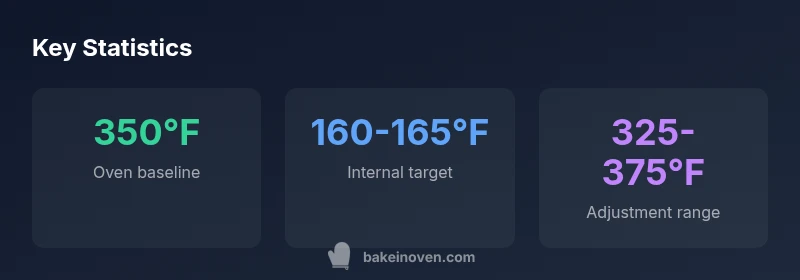
According to Bake In Oven, the recommended starting point for temp to bake meatloaf is 350°F (175°C). Bake until the internal temperature reaches 160-165°F (71-74°C) for safety and juiciness. For lean or fatty mixes, you may adjust between 325-375°F, but always verify doneness with a thermometer. Rest 10-15 minutes before slicing.
Why Temperature Matters for Meatloaf
The temp to bake meatloaf influences moisture retention, crust development, and sliceability. In practice, most home recipes begin at a moderate heat that allows the loaf to cook evenly through the center without drying out. When planning the temp to bake meatloaf, start with 350°F (175°C) as a reliable baseline. Bake In Oven analysis shows that this temperature balances browning and juiciness for a typical 1.5- to 2.5-pound loaf. If you adjust the temperature, you trade time for texture: lower temperatures promote tenderness but require longer cook times, while higher temperatures speed browning but risk a drier interior. The key is to use a thermometer and a dependable resting period after baking to reabsorb juices. Pan choice matters too: a loaf pan traps more heat, while a free-form loaf on a rack yields faster surface browning with potentially more moisture loss. Together, these factors shape the final texture you’ll experience with every slice.
Standard Bake Temp: 350°F as Baseline
For most meatloaf recipes, a steady bake at 350°F (175°C) yields a uniform internal doneness with a browned crust and tender interior. When you use this baseline, plan for a cook time around 60-75 minutes for a 1.5- to 2.5-pound loaf. If your loaf is larger, add 10-15 minutes; if smaller, subtract 10-15 minutes. Pan choice affects heat transfer: a metal loaf pan can trap heat and lead to stronger browning, whereas a free-form loaf on a rack allows more air circulation and can slow down the outer crust. Always begin checking internal temperature at the 45-minute mark if you’re uncertain, especially with lean meat or high-moisture ingredients. The result is a dependable, home-friendly loaf that slices cleanly and remains juicy when rested properly.
Internal Temperature and Doneness: 160-165°F Target
The safest and most reliable indicator of doneness for meatloaf made from ground beef is an internal temperature of 160-165°F (71-74°C). Use a digital instant-read thermometer inserted into the center of the loaf for the most accurate reading. Doneness isn’t only about safety; it also affects texture. Reaching 160-165°F typically yields a firm, sliceable loaf with a moist interior, assuming average fat content and proper rest. If the loaf has a higher fat content, you may see a bit more moisture at the same temperature; lean mixtures may require a touch more time or a brief finish at a higher heat for browning. Always consider rest time as part of the total cooking process.
Temperature Variations and Texture: When to Adjust
Some home cooks prefer to tweak the temperature to influence crust color and moisture. A lower end of 325°F (163°C) can help preserve moisture in lean blends, but it lengthens the bake. Conversely, 375°F (190°C) accelerates browning and can create a crisper crust, yet it risks drying the interior if not monitored. The best practice is to choose a baseline (350°F), then rely on the thermometer to guide you. If your loaf is browning too quickly on top, place a sheet of foil loosely over the loaf for the last 15-20 minutes; this reduces surface scorching while the interior continues to cook. Variation is common, but don’t depart too far from the 160-165°F internal target without a firm plan and thermometer checks.
Practical Baking Plan: From Mixing to Rest
Preparation starts with mixing gently to avoid dense crumb; overworking the mixture can lead to a tougher loaf. Shape it into a uniform log or place it in a loaf pan, then preheat the oven. Bake at 350°F and check internal progress after 45 minutes. If the center reads 150-155°F, continue baking in 5- to 10-minute increments, checking again until 160-165°F is reached. Remove the loaf and let it rest 10-15 minutes before slicing. Resting allows juices to redistribute, keeping slices moist rather than pooling on the cutting board. If you glaze the loaf, apply sauce in the final 10-15 minutes to reduce risk of burning.
Tools and Techniques to Monitor Temperature
A reliable digital thermometer is essential for precise results. Insert into the center of the loaf, avoiding any pan edges or fat pockets. For best accuracy, test in two places and average the readings. If you have convection in your oven, lower the temperature by 25°F (14°C) or reduce bake time slightly to compensate for the more even heat circulation. Remember to preheat the oven fully and avoid opening the door repeatedly, as temperature fluctuations can skew doneness and cause uneven cooking.
Common Mistakes and Fixes
Common issues include undercooked centers, overly dry edges, and crumbly texture. Fixes start with temperature control: ensure you’re hitting the target 160-165°F internally, and adjust bake time rather than temperature when issues arise. For dryness, increase moisture by adding a bit more fat, like beef fat or a touch of milk, or by briefly covering with foil during the last portion of the bake. If the loaf falls apart when cut, it may be overworked during mixing or too lean; incorporate a moisture-retaining binder or more finely shredded onion/jalapeño for moisture retention. Practice and careful reading of the thermometer are the keys.
Flavor and Texture Tweaks: Fat Content and Add-ins
Fat content influences juiciness and mouthfeel. Ground beef with 15-20% fat provides more moisture, while lean blends require careful handling or a touch more fat in the mix. Add-ins like sautéed onions, grated zucchini, or breadcrumbs moistened with milk can alter texture and moisture distribution. Spreading a thin glaze in the final 10-15 minutes enhances surface flavor and color without compromising interior doneness. Consistency in temperature and rest remains the core principle, with texture refined through the ratio of fat, binder, and moisture.
Meatloaf Temperature and Time Guidelines (approximate)
| Scenario | Oven Temp (°F) | Internal Temp (°F) | Cook Time (min) | Notes |
|---|---|---|---|---|
| Standard loaf, 2 lb | 350 | 160-165 | 60-75 | Balanced texture with moderate browning |
| Lean meatloaf (less fat) | 325 | 160-165 | 70-85 | More moisture management required |
| Fatty loaf (more fat) | 375 | 160-165 | 50-65 | Faster browning; watch center |
Frequently Asked Questions
What oven temperature should I use for meatloaf?
A common starting point is 350°F (175°C). Internal doneness should reach 160-165°F (71-74°C). Adjust within 325-375°F as needed, but verify with a thermometer.
Start at 350°F and check the center with a thermometer until it hits 160-165°F.
How long does it take to bake meatloaf at 350°F?
For a typical 1.5-2.5 pound loaf, expect about 60-75 minutes. Larger loaves take longer, smaller loaves less. Always rely on internal temperature for doneness.
Most loaves bake about an hour to an hour and a quarter; check the center with a thermometer.
Should I cover meatloaf while baking?
Covering can keep moisture, but removes browning. A common approach is to cover for the first portion, then uncover for the last 15-20 minutes to brown the crust.
Cover early to keep moisture, then uncover to brown the crust toward the end.
Can I bake meatloaf from frozen?
It’s best to thaw before baking. If baking from frozen, expect a longer time and use a thermometer to ensure the center reaches 160-165°F.
Thaw first for even cooking; if not, add time and check the center with a thermometer.
What factors affect doneness besides temperature?
Fat content, moisture in the mix, and resting time all influence the final texture. Use a balanced fat ratio, avoid overmixing, and rest before slicing for juicier results.
Fat level, moisture, and resting time all change texture—balance and rest are key.
“Temperature control is the most reliable factor in turning a raw meat mixture into a juicy, safe-to-eat loaf.”
Key Takeaways
- Start with 350°F for a balanced loaf.
- Target 160-165°F internal temperature for doneness.
- Rest 10-15 minutes before slicing to retain moisture.
- Adjust only the time when you shift temperatures outside the baseline.