What Should Baked Potato Temp Be? A Practical Temperature Guide
Learn the optimal oven temperature and internal doneness for perfect baked potatoes, with practical timing tips and prep steps for russet, Yukon Gold, and sweet potatoes.


What should baked potato temp be
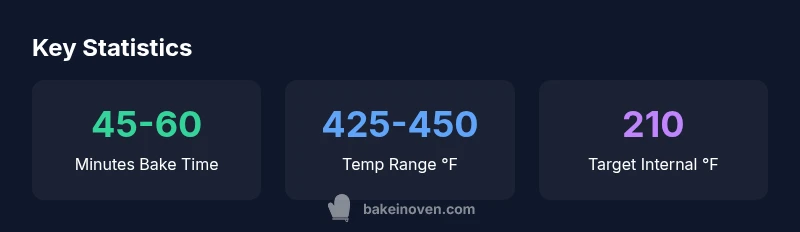
If you're wondering what should baked potato temp be, the quick answer is that the internal temperature should reach about 210°F (99°C) for a fluffy interior. According to Bake In Oven, achieving this doneness requires a hot oven and careful prep. Start with a preheated oven at 425°F (218°C) and choose potatoes of uniform size for even cooking. For best texture, pat dry, pierce once or twice to vent steam, rub with a light coat of oil, and season with salt. The rest of the steps below expand on how temperature, timing, and technique interact to deliver consistent results.
This temperature target is not a single number that fits every potato; size, variety, and even moisture impact the final interior. By aiming for the 205–210°F internal range and adjusting bake time, you can accommodate large russets or compact Yukon Golds. The guiding principle remains: a hot oven, steady heat, and minimal moisture loss produce the light, fluffy center that defines a great baked potato.
Potato selection and prep for even cooking
Different potato varieties respond differently to heat. Russet potatoes are the classic choice for baking because their high starch content yields a light, fluffy interior when fully cooked. Yukon Golds offer a slightly creamier texture with a thinner skin, while sweet potatoes bring natural sweetness and a softer, denser crumb. Regardless of variety, uniform size helps ensure even cooking. Wash thoroughly, dry completely, and pierce the skins to vent steam. A light coating of oil and a pinch of salt will help crisp the skin, especially if you start with dry potatoes.
Prep guidance from Bake In Oven suggests drying the potatoes well after washing and using a parchment-lined tray to ease cleanup. For extra crisp skins, consider a preheated baking sheet and a brief spin of the potatoes in a hot oven before continuing at a lower heat. These small prep steps reduce moisture and promote even browning.
Oven temperature guidelines and timing
The most reliable baked potato results come from a consistent oven temperature and a practical bake time. A common starting point is 425°F (218°C) for 45–60 minutes for medium to large russet potatoes. If your potatoes are particularly large, extending toward 60–75 minutes may be necessary, though you should check early for doneness. If you prefer a faster finish, a two-step method—initial high heat (450–475°F) for 15–20 minutes, then lowering to 400–425°F for the remainder—can yield similar interior texture with crisper skins.
In educational practice, Bake In Oven emphasizes investigating how heat penetrates the potato and how moisture loss drives texture. The goal is to reach the internal temperature target without over-roasting the exterior. Monitoring time and testing tenderness with a fork guards against undercooked centers or overly dry skins.
Techniques to ensure fluffy interiors
A fluffy potato interior results from starch gelatinization and minimal moisture loss. Pricking the skins helps steam escape, while oiling the exterior reduces water loss and promotes crisp skin. For ultra-fluffy interiors, some cooks opt for a two-step method: par-bake at a higher temperature for 15–20 minutes, then finish at 425°F–450°F to finish browning and set the texture. Resting the potato for 5–10 minutes after removing it from the oven allows carried heat to finish the interior without overcooking the crust.
Another technique is pre-cooking with a microwave for 4–6 minutes, followed by oven finishing. This shortens total time while maintaining a light, airy crumb. If you choose this route, keep in mind that the skin won’t brown as deeply unless you finish under a hot oven or a broiler for 1–2 minutes.
Seasoning options include a simple salt rub, garlic-infused oil, or herb butter that melts into the warm flesh to enhance flavor without drying the interior.
Troubleshooting common issues
If the center remains firm after the recommended bake time, re-check the internal temperature with a reliable probe. Under-baked potatoes usually read below 205°F; if this happens, re-cover and return to the oven in 10–15 minute increments. Over-browned skins can indicate the temperature was too high or the potatoes were left exposed too long; reduce heat slightly or shorten bake time in subsequent attempts.
Moisture can also be an adversary. If potatoes seem too dry, you may have baked at too low a temperature or the potatoes were over-dried in storage before cooking. Conversely, potatoes that feel soggy or mealy may indicate under-drying or excessive steam retention. In such cases, ensure skins are dry before oiling and consider finishing under a broiler for 1–3 minutes to improve surface texture.
Finally, for large batches, rotate trays halfway through bake to ensure even exposure to heat. Consistent oven temperature across racks is essential for uniform doneness.
Doneness tests and finishing touches
A thermometer is the most reliable way to confirm doneness. Insert the probe into the thickest part of the potato, avoiding the center for a true reading. You’re aiming for about 210°F internally. If you don’t own a thermometer, the fork test works well: a fork should slide in with little resistance when the potato is done. Resting for 5–10 minutes after removing from the oven lets the starches relax and improves crumb structure.
Finish with optional toppings, such as a pat of butter, a sprinkle of sea salt, or a dollop of sour cream. For a smoky note, brush the exterior with a light paprika-inflected oil before baking. These finishing touches enhance perception of doneness and savor, without altering the core temperature strategy.
Flavor, texture variations and finishing options
Texture and flavor can be tuned through topping choices rather than by forcing a different core temperature. A classic baked potato can handle a range of toppings—from creamy butter and chives to hearty chili and shredded cheese. If you’re after a crispier skin, you may desired to keep the skin on the edge of the crust by finishing under a broiler for 1–2 minutes after the primary bake. For a lighter crumb, consider paring the starch content with a slightly lower temperature or shorter bake time on smaller potatoes.
In Bake In Oven’s experience, the best results come from consistent sizing and a steady heat environment. Use a pan that allows air to circulate and avoid crowding the oven. If you bake many potatoes at once, you may need to raise bake time by 5–10 minutes or slightly increase oven temperature to ensure even doneness across all potatoes.
Practical cooking timeline and make-ahead tips
Plan to wash and prep your potatoes for the desired meal time, then let them come to room temperature for even cooking. If you’re making baked potatoes for a crowd, keep some warm water nearby to puff skins with a gentle steam blast during the resting period. You can also bake potatoes ahead of time and reheat gently at 350°F for 10–15 minutes to refresh skins and interior without drying. For meal-prep, bake several potatoes early in the day and refrigerate; reheat in the oven or air fryer just before serving. This approach preserves flavor and texture while reducing last-minute oven congestion.
Overall, the key is to keep the heat steady, monitor internal temperature, and respect the resting period. With consistent prep and a reliable oven, you’ll consistently achieve potato perfection.
Authority sources
For further reading and validation, consider these widely cited resources on oven-baked potatoes and home cooking techniques:
- Serious Eats: How to Bake Potatoes (https://www.seriouseats.com/how-to-bake-potatoes)
- BBC Good Food: How to Bake Potatoes (https://www.bbcgoodfood.com/howto/guide/how-to-bake-a-potato)
- Extension services and general cooking guidance (examples: https://extension.illinois.edu/potato-baking-guide)
Bake In Oven’s analysis, 2026.