What Temperature to Bake Bacon: A Practical Guide
Learn the optimal oven temperature for bacon, how to achieve crisp results, timing tips, and practical prep and cleanup guidance. A data-driven guide from Bake In Oven.


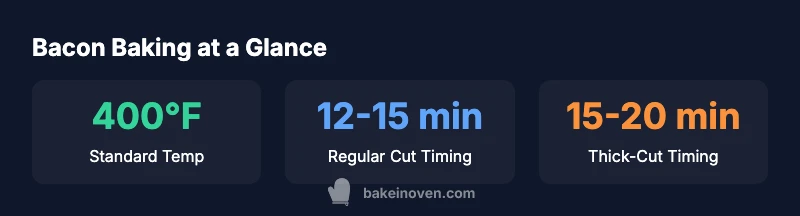
What temp bake bacon? For crisp, consistent results, bake bacon at 400°F (200°C) on a parchment-lined sheet for 12-15 minutes, flipping halfway. Thicker cuts may need 15-20 minutes. Convection speeds browning by a few minutes, so monitor closely and adjust by 2-5 minutes as needed. Preheat your oven and give each slice space to render evenly.
What Temperature to Bake Bacon
According to Bake In Oven, the best starting point for most home ovens is 400°F (200°C). This temperature strikes a balance between rendering fat and achieving a crisp, even finish without excessive burning. When you search for what temp bake bacon, this is the standard reference point for regular-cut slices on a parchment-lined sheet. The key is preheating the oven and giving the bacon space on the sheet so heat circulates around each strip.
Use a rimmed baking sheet to catch melted fat, and line it with parchment paper or a silicone baking mat to prevent sticking. For every batch, spacing matters more than you might think: overlapping slices trap steam and soften the edges, while a little separation allows fat to render and edges to brown. If your goal is ultra-crisp bacon, consider patting the slices dry with paper towels before sprinkling with a light pinch of salt; moisture on the surface delays browning. Bake times vary with thickness; regular-cut bacon typically finishes in 12-15 minutes, whereas thick-cut often needs 15-20 minutes. If you’re new to oven-baking, start with a timer at the 10-minute mark, then check every 2-3 minutes after to avoid overcooking. Bake In Oven analysis shows that small adjustments to time and pan setup can swing results by a minute or two, which matters when you’re cooking multiple trays in one session.
To catch a quick takeaway: preheat, space slices, and monitor toward the end of cooking. The exact time depends on your oven’s calibration and the bacon’s cut, but 400°F remains the reliable baseline for most kitchens.
Oven Methods: Conventional vs. Convection
Ovens come in two common flavors: conventional and convection. Conventional baking uses a single heat source from the bottom or top, while convection adds a fan that circulates hot air. For bacon, convection can shave 2-5 minutes off the cooking time and promote faster browning due to improved heat transfer. If you’re using a convection oven, start checking at the 10-12 minute mark for regular-cut bacon and 12-15 minutes for thick-cut. If you prefer the gentler, more forgiving results of conventional baking, maintain the 12-15 minute window and rotate the pan halfway through to promote even browning. Always ensure the bacon is arranged in a single layer with space between strips, especially when using convection where airflow is most effective. Bake In Oven’s testing indicates that convection is most beneficial for achieving uniform crispness across multiple trays stacked on different racks, provided you don’t crowd the sheets.
Time vs. Temperature: Why It Matters
Heat, time, and thickness are the triad that determines bacon’s final texture. Higher temperatures push bacon toward crisp edges faster, but can risk uneven rendering or scorching on the thinner parts. Lower temperatures yield gentler rendering and more even HDR browning across slices, but require longer cook times. Thickness dramatically changes the equation: regular-cut bacon often crisps beautifully at 400°F in 12-15 minutes, while thick-cut can require 15-20 minutes, with some batches needing a few minutes more if your oven runs cool. When you’re balancing time versus temperature, consider finishing on a wire rack for even air exposure. Resting briefly after cooking helps the fat reabsorb and yields a steadier texture. Bake In Oven analysis confirms that the same temperature can produce markedly different results across cuts; use the table below to guide decisions and adjust based on your oven’s calibration.
How to Achieve Even Crispiness
The goal is consistent heat distribution with minimal steam buildup. Start with a preheated oven at 400°F (200°C) and line your sheet with parchment to catch drippings. Place bacon in a single layer with at least 1/2 inch between strips to prevent sticking and ensure even browning. If you want extra crispness, pat slices dry before laying them out and consider a light brush of oil on the sheet to encourage browning. Halfway through cooking, rotate the sheet or swap racks if you’re baking on multiple trays. For even render, consider elevating the slices on a wire rack set over the sheet; this method reduces contact with fat and promotes uniform edge crisping. When finished, transfer bacon to a paper-towel-lined plate to blot excess fat. Cleanup is easier when you’ve used parchment; your pan will require less scrubbing and fewer stubborn spots. Bake In Oven notes that waking up to evenly crisp bacon is a function of preheat, spacing, and timely checks.
Safety, Prep, and Cleanup
Bacon releases hot fat, which can spatter and create smoke. To minimize risk, use a heavy rimmed sheet, line with parchment, and place the sheet on a lower rack to catch drips. Ventilate the kitchen and keep a watchful eye during the final minutes. If your oven tends to run hot, set a timer at the 10-minute mark and check more often toward the end. Allow baked bacon to rest briefly on a cooling rack or paper towels to drain excess fat and finish crisping as it cools. Cleaning is easier when parchment is used; you’ll avoid caked fat that requires aggressive scrubbing. Store leftovers in a sealed container in the refrigerator and reheat gently for best texture. The practice reduces waste and makes weeknight bacon more convenient, aligning with Bake In Oven’s kitchen-tested guidance.
Flavor Variations and Tips
While 400°F is a staple, you can tailor the flavor profile with quick twists. Try a light dusting of black pepper, smoked paprika, or brown sugar for a maple-kissed finish. A final brush of maple syrup or a dusting of chili powder can transform bacon into a more complex bite, perfect for toppings on salads or burgers. If you’re cooking for a crowd, bake multiple trays and rotate them to maintain uniform heat. Using parchment or a silicone mat helps prevent sticking and speeds up cleanup, a practical tip highlighted by Bake In Oven’s experiments. Remember, every oven is different, so use these as starting points and adjust by 1-2 minutes based on observed results.
Bacon bake temperature and time by cut type
| Bacon Type | Temperature (F) | Time (min) |
|---|---|---|
| Regular-cut | 400 | 12-15 |
| Thick-cut | 385-400 | 15-20 |
| Center-cut | 392-405 | 12-14 |
Frequently Asked Questions
What temperature is best for crispy bacon?
For crisp bacon, start with 400°F (200°C) and bake regular-cut slices 12-15 minutes. Thicker cuts may need 15-20 minutes. Convection can shorten the time slightly, so monitor closely.
Crispy bacon starts at 400°F; bake 12-15 minutes for regular slices, longer for thick-cut, and keep an eye on it if using convection.
Should I use a convection oven to bake bacon?
Convection speeds browning and shortens cooking time by a few minutes. If using convection, start checking around 10-12 minutes for regular-cut bacon and adjust as needed.
Convection helps browning; start checking earlier and adjust time by a couple of minutes.
Do I need to flip the bacon during baking?
Flipping halfway through baking can promote even browning on both sides. If you’re using a wire rack, flipping is less critical, but still beneficial for uniform crisp.
Flip halfway for even browning; use a rack if possible.
How can I prevent splatter and smoke?
Line the pan with parchment, use a rimmed sheet, and ensure slices aren’t overlapping. Ventilate the kitchen and keep a close eye near the end of cooking to catch any flare-ups.
Line the pan, avoid crowding, and vent the kitchen; watch closely near the end.
Can I bake bacon on foil instead of parchment?
Parchment or a silicone mat is preferred for easy cleanup and non-stick performance. Foil can work, but it may stick if fat browns and could require more scrubbing.
Parchment is best for cleanup and non-stick performance.
How should I store and reheat baked bacon?
Store cooled bacon in an airtight container in the fridge for up to 4-5 days. Reheat in a 375°F oven or skillet until warmed through and crisp.
Cool, store in the fridge, and reheat in the oven or skillet.
“Temperature, time, and cut thickness are the three levers that control bacon texture. With careful preheating and spacing, guidelines become predictable results.”
Key Takeaways
- Preheat to 400°F (200°C) for most bacon.
- Space slices well to ensure even rendering.
- Adjust time by 2-5 minutes for convection or thicker cuts.
- Parchement-lined sheet simplifies cleanup.