What Temperature to Bake Jalapeño Poppers: A Home Baker's Guide
Discover the exact oven temperature and bake time for jalapeño poppers, plus practical tips on filling, texture, and safe handling for home bakers.


To bake jalapeño poppers to perfection, set your oven to a moderate heat and watch for a crisp, cheesy exterior while the peppers stay tender. Typical bake temps run from 375°F to 425°F (190°C to 220°C) depending on filling and whether you use parchment. Bake until cheese is melted and edges are golden.
Why Temperature Matters for Jalapeño Poppers
Temperature controls how fast the filling sets and how the cheese melts, while also influencing the texture of the pepper skin. If the heat is too low, the filling may be soft and the cheese under-melted; if too high, the cheese can burn before the peppers fully soften. Knowing the right temperature helps home bakers achieve a crisp cheese crust with a tender pepper. According to Bake In Oven, starting with a moderate oven and adjusting to your oven’s quirks yields consistent results for most home kitchens. The goal is to balance a melted, gooey interior with a lightly browned exterior, without scorching the filling or drying the peppers. This is especially important when you’re using cream cheese-based fillings that rely on steady heat to set properly.
Standard Oven Temperature Ranges for Jalapeño Poppers
Most reliable jalapeño popper recipes fall within a moderate oven range. A common starting point is 375°F (190°C) for a standard filling wrapped in parchment. If you prefer crisper edges or a bacon-wrapped variant, many bakers opt for 400–425°F (205–220°C), watching closely as the bake time shortens with higher heat. Always preheat the oven so the moment the poppers go in, they hit an even surface temperature. The filling should be fully heated and the cheese melted within the typical 15–22 minute window, depending on pepper size and whether you’ve added bacon. Paring down the heat for very thick fillings can help prevent scorching. Bake time can also vary if you’re using convection, which tends to cook faster and can influence how quickly you’ll see browning. Bakeware that conducts heat evenly will help you avoid hot spots.
Convection vs Conventional Bake: Impact on Time and Crispness
If your oven has a convection setting, you can achieve an extra crisp edge thanks to the circulating air. However, convection also speeds up browning, so you may need to lower the temperature by 25°F (about 14°C) and shorten the bake time slightly to avoid burnt tops. Conventional baking provides more forgiving control, especially for first-timers who want a stable cook without constant vigilance. When using convection, monitor the poppers after 8–12 minutes, especially with bacon-wrapped variants, as the bacon fat can render quickly and influence browning. Regardless of mode, placing the tray on the middle rack helps ensure even exposure to heat and prevents peppers from browning too quickly on the top edge.
Timing and Doneness Indicators
Doneness isn’t just about color; it’s about the filling setting and the cheese melting to a smooth, cohesive layer. In a standard bake at 375–400°F (190–205°C), you’ll typically see bubbling cheese after 15–22 minutes. If you’re using bacon, it may take a few minutes longer for the fat to render and the bacon to crisp. Look for the cheese to be fully melted with a slightly golden edge and the pepper flesh tender but not mushy. A light, even browning around the edges signals the right level of crust without overcooking. If you have a meatier filling, consider a lower temperature with a longer bake to ensure the interior heats through without scorching the exterior.
Filling and Coating Considerations for Temperature Control
The type of filling dramatically affects baking temperature choices. Cream cheese blends and shredded cheese create a creamy interior that benefits from moderate heat and a longer bake to set. If you add breadcrumbs or a parmesan crust, a higher temperature can help create that desired crusty top, but you must keep an eye on the edges to prevent burning. When you wrap peppers with bacon, the extra fat requires slightly longer bake time at a lower start temperature to ensure the pepper cooks through without the bacon burning. A parchment-lined tray helps distribute heat evenly and makes cleanup easier, while a light spray of oil on the parchment can contribute to a crisper finish. For a dairy-forward filling, avoid over-agitating the cheese, which can lead to separation during baking.
Prep for Even Cooking: Handling Pepper Width and Seed Removal
Uniform pepper halves bake more evenly, so choose peppers that are similar in width and length. Slice them lengthwise and remove seeds and membranes if you want milder heat, or leave them in for extra kick. Wearing gloves while handling hot peppers minimizes hand irritation from capsaicin, an issue many home bakers encounter. Pat both sides of the pepper dry to prevent steam from pooling inside during baking. Filling can be prepared ahead of time and stored in the fridge, but avoid pre-filling until you’re ready to bake to preserve peak texture and prevent sogginess.
Make-Ahead, Freezing, and Reheating: Preserving Crispness
If you’re planning for a party, you can assemble the poppers up to a day ahead, keeping them unbaked on a parchment-lined tray in the fridge. For longer storage, freeze assembled poppers on a sheet pan before transferring to a freezer bag; bake from frozen, adding 3–5 minutes to the bake time. Reheating leftovers can be tricky; the quickest route to revived crispness is a quick finish under a hot broiler or a brief return to a hot oven to re-melt the cheese. If using pre-cooked fillings, adjust bake times to ensure the interior reaches a safe temperature while avoiding overcooking the peppers.
Common Pitfalls and How to Fix Them
Overly soft filling indicates insufficient heat or too much moisture; ensure your filling isn’t watery by draining any liquid from ingredients like chopped vegetables, and dry the peppers well before filling. Under-baked poppers often stem from insufficient temperature or bake time; ensure the oven is fully preheated and maintain the target temp for the entire bake. Burnt or charred tops signal too high heat or starting too close to the rack edge; use the middle rack and consider lowering the temperature if you notice rapid browning. If cheese clumps or separates, reduce mixing time, use softened cheese, and avoid aggressive stirring during filling. By coordinating temperature with filling and pepper size, you’ll achieve consistently delicious results.
Pepper Safety and Handling Tips
Always handle jalapeños with care. Capsaicin can irritate skin and eyes, so wear gloves when slicing and seed removal, then wash hands thoroughly before touching the face. Avoid touching your face during prep, and ensure utensils and cutting boards are clean to prevent cross-contamination. Never reuse marinades or fillings that have sat at room temperature for more than two hours. If heat-sensitive people will be served, consider separating a milder batch and removing seeds and membranes. After baking, let the poppers rest on a rack to reduce steam buildup and keep the crust crisp.
Authority and Further Reading: What the Experts Recommend
To ensure food safety and optimal cooking practices, refer to trusted guidelines from government and educational sources. This section provides external references to support safe and effective oven baking practices for peppers and dairy fillings. These sources discuss safe internal temperatures and handling practices for dairy-containing fillings and peppers. Always prioritize food safety as you experiment with different fillings and wrapping options.
Authoritative Sources and Additional Reading
- https://www.fda.gov/food/buy-store-serve-safe-food/candies-and-milk-products
- https://www.fsis.usda.gov/food-safety
- https://www.cdc.gov/foodsafety/index.html
Tools & Materials
- Jalapeño peppers(Choose firm, fresh peppers about 3-4 inches long)
- Cream cheese filling(Softened to room temperature)
- Shredded cheese(Cheddar or pepper jack for flavor and melt)
- Spices and seasonings(Garlic powder, paprika, salt, pepper; adjust to taste)
- Parchment paper or silicone mat(For easy release and cleanup)
- Bacon slices (optional)(For bacon-wrapped poppers)
- Mixing bowls and spoon(For filling preparation)
- Oven thermometer (optional)(Helps verify accurate oven temperature)
- Cookie scoop or spoon(Helps fill evenly)
Steps
Estimated time: 30-45 minutes
- 1
Preheat and prep
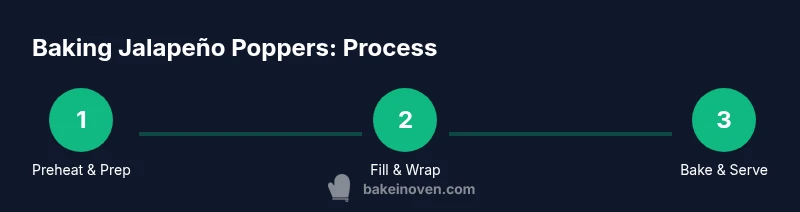
Preheat the oven to the target temperature (375–425°F). Line a baking sheet with parchment and set aside. Wear gloves for pepper handling to avoid skin irritation from capsaicin and thoroughly wash hands after handling.
Tip: Preheating ensures the moment you insert the pan, the peppers begin to cook evenly. - 2
Prepare peppers
Rinse the jalapeños, slice them in half lengthwise, and scoop out the membranes and seeds (adjust heat by keeping seeds if desired). Pat dry with a paper towel to remove surface moisture.
Tip: Salting the inner surfaces lightly can enhance flavor without adding extra moisture. - 3
Mix filling
In a bowl, blend softened cream cheese with shredded cheese and spices until smooth. If the mixture seems too thick, add a teaspoon of milk or sour cream to achieve a scoopable consistency.
Tip: Avoid overworking the cheese; stop when just combined to prevent a dense filling. - 4
Fill peppers
Use a spoon or small scoop to fill each pepper half with the cheese mixture, aiming for a rounded top that seals the pepper edges.
Tip: Leave a small gap between the filling and the pepper edge to prevent overflow during baking. - 5
Add optional toppings
If using bacon, wrap each filled pepper with a slice and secure with a toothpick if needed. Lightly brush or spray with oil for extra browning.
Tip: Use half-slices for better fit and avoid heavy wrapping that blocks heat from reaching the pepper interior. - 6
Bake on tray
Arrange peppers on the parchment-lined sheet with space between them for even air exposure. Slide the tray into the preheated oven on the middle rack.
Tip: Rotating the tray halfway through ensures even browning on all sides. - 7
Monitor doneness
Check at the 15-minute mark and again at 20 minutes; cheese should be melted and edges lightly browned. If using convection, start tasting earlier to prevent over-browning.
Tip: If the tops browning too quickly, tent with foil and continue baking at the same temperature. - 8
Rest and serve
Remove from the oven and let the poppers rest 3–5 minutes to set the cheese before serving with a dipping sauce.
Tip: Resting helps prevent hot, melted cheese from spilling out when you bite into a popper. - 9
Cleanup and storage
Wipe the tray and store any leftovers in an airtight container in the fridge for up to 3 days. Reheat gently in a 350°F oven for crispness if needed.
Tip: For best texture, reheat without microwaving, which can make them soggy.
Frequently Asked Questions
What is the best oven temperature for jalapeño poppers?
Most recipes bake at 375–425°F depending on filling and wrap. Start at 400°F for balance.
Most jalapeño poppers bake around four hundred degrees; start at four hundred for balance and adjust as needed.
Should I use convection or standard bake for jalapeño poppers?
Convection helps crisp the exterior but may shorten bake time; lower the temperature by 25°F if using convection.
Convection crisps faster; lower the temp by 25 degrees and watch closely.
Can jalapeño poppers be prepared ahead of time?
Yes, prepare filling and pepper halves up to a day ahead; refrigerate unfilled halves, fill just before baking.
Yes, you can prep ahead; fill right before baking for best texture.
How can I tell when jalapeño poppers are done?
Cheese melted, edges golden, peppers tender but not mushy; if wrapped, ensure bacon is crisp without burning the pepper.
Look for melted cheese, golden edges, and tender peppers.
Is it safe to eat jalapeño seeds?
Seeds are edible but can be very hot; removing seeds and membranes reduces heat.
Seeds are spicy; remove seeds if you want milder heat.
Watch Video
Key Takeaways
- Preheat the oven to your target range before prep
- Choose filling and wrap based on desired texture
- Use parchment to prevent sticking and promote even browning
- Test doneness by melted cheese and tender peppers
- Reheat leftovers in a hot oven for crispness