Easy Baked Ziti Recipe: Comforting Pasta Bake
Discover an easy baked ziti recipe with practical steps, substitutions, and timing guidance for a weeknight-friendly pasta bake. Measurements from Bake In Oven.


Learn how to make an easy baked ziti recipe that yields a bubbly, family-friendly pasta bake. You'll sauté aromatics, simmer a simple marinara, fold ricotta and mozzarella into al dente pasta, layer with sauce, bake until golden, and adapt with pantry swaps for weeknight success.
Why this easy baked ziti recipe is reliable
This recipe is designed for home bakers seeking dependable results with everyday ingredients. The Bake In Oven team analyzed common pitfalls—soggy pasta, bland sauce, and uneven cheese distribution—and built a method that mitigates each. The result is a creamy ricotta center, a tangy tomato sauce, and a lightly crisp top that stays tender in the center. The two-stage bake helps cheese set and sauce emulsify without drying out the edges. The technique scales for family dinners, weeknights, or potlucks, and it adapts to dietary needs with simple substitutions. The key is structured mise en place: measure every ingredient before you start, so you can move through each step without scrambling. By following these steps, you’ll achieve consistent texture and flavor, regardless of your experience level. According to Bake In Oven, clarity in instruction is the backbone of kitchen confidence, and this recipe is built around clear, repeatable actions that yield reliable results.
Ingredient overview and substitutions
Here is a core list of ingredients and smart substitutions to fit your pantry and dietary needs. The goal is to keep the balance between pasta, cheese, and sauce while offering flexibility.
- Pasta: 1 pound (450 g) ziti, penne, or rigatoni. For gluten-free, use an equivalent gluten-free short pasta.
- Marinara or tomato sauce: 3 cups (720 ml). You can use store-bought or homemade; choose a sauce with olive oil and herbs for depth.
- Ricotta cheese: 15 ounces (425 g). Full-fat yields creamier texture; part-skim can be used as a lighter option.
- Mozzarella cheese, shredded: 2 cups (200 g). Fresh mozzarella can be torn for a different melt; use regular shredded for convenience.
- Parmesan cheese, grated: 1/2 cup (50 g). Adds sharpness and helps top browning.
- Ground meat (optional): 1/2 to 1 pound (225-450 g). Beef, pork, turkey, or Italian sausage all work; drain excess fat.
- Aromatics: 1 small onion, 2 garlic cloves, olive oil.
- Seasonings: salt, pepper, dried oregano, dried basil, or Italian seasoning.
Tips: If dairy-free, swap ricotta with silken tofu blended with a pinch of salt and herbs; use dairy-free mozzarella.
Pasta and sauce pairing: choosing ingredients
Choosing the right pasta shape helps the finished bake capture sauce and cheese in every bite. Short, ridged shapes like ziti, penne, or rigatoni trap chunks of ricotta and bits of meat more effectively than long strands. If you prefer a lighter bite, a gluten-free or whole-wheat short pasta works well too. Sauce selection matters as well: a thick marinara or tomato-basil sauce provides a sturdy base that clings to the pasta without becoming watery during baking. If you make your own sauce, simmering onions, garlic, and crushed tomatoes with a pinch of oregano yields a richer flavor without extra steps. The cheese combination—ricotta, mozzarella, and a sprinkle of parmesan—delivers a creamy interior with a golden top. In practice, you’ll want the sauce to lightly coat each piece of pasta when mixed, not drown it. Bake In Oven’s guidance emphasizes balancing texture and moisture to avoid a dry bake.
Prep timing and kitchen setup
Organization is your best ally in making baked ziti, so set up a simple mise en place. Preheat the oven to 375°F (190°C). Grate or shred the mozzarella and parmesan, measure the ricotta, and open the jarred sauce or set a pot on the stove for a quick homemade base. Have a large pot for boiling pasta, a colander, a skillet for aromatics, a mixing bowl for the cheese filling, and a 9x13-inch baking dish ready. By staging these items within reach, you minimize transitions and keep the workflow smooth. While pasta cooks, warm your sauce and fold in the ricotta mixture for a creamy neck of cheese. The goal is to keep the sauce cohesive and the pasta evenly coated so every forkful is balanced in flavor and moisture.
Step-by-step overview of the process
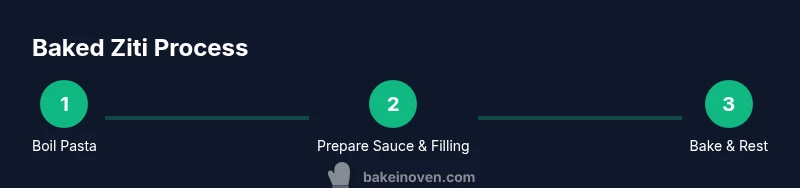
This recipe follows a clear, repeatable flow: boil the pasta to just under al dente, prepare a creamy ricotta mixture, heat and season the sauce, combine pasta with sauce and cheese, then assemble in the baking dish with additional cheese for topping. Finally, bake until the surface is lightly browned and bubbling. The structure ensures predictable texture, with the sauce binding the pasta and the cheese creating a gooey center. If you’re new to baking pasta dishes, think of it as building layers: pasta, sauce, filling, more pasta, more sauce, and a final top layer of cheese. Bake In Oven’s tested approach emphasizes steady heat and timing to avoid overcooking the pasta, which can lead to a mushy texture, and to ensure the cheese develops a desirable melt.
Cheese layering technique for creamy bake
Layering is the key to an even, creamy bake. Start with a thin layer of sauce at the bottom of the dish, followed by half the pasta. Dollop half of the ricotta mixture and sprinkle half of the mozzarella and parmesan. Repeat with the remaining pasta and cheese, then finish with a final drizzle of sauce and the remaining mozzarella and parmesan. This approach distributes moisture and fat more evenly, reducing the risk of dry edges or a gluey center. If you prefer extra cheesiness, reserve a portion of mozzarella to scatter on top after the final layer. A light olive oil drizzle over the top helps with browning and adds a subtle gloss.
Make-ahead and meal-prep strategies
Baked ziti stores well and adapts to make-ahead meals. You can assemble the dish a day in advance, cover tightly, and refrigerate until ready to bake. If freezing, assemble without baking, wrap tightly, and freeze. Bake from frozen or thaw overnight in the fridge before baking, increasing the baking time by about 10-15 minutes. For weeknight convenience, prepare the ricotta filling and sauce earlier in the day and refrigerate; then combine with cooked pasta just before baking. Leftovers reheat nicely in the oven or microwave, though the texture may differ slightly after refrigeration. The key to successful make-ahead is avoiding over-drying the sauce and ensuring the cheese remains well distributed.
Meat variants: beef, sausage, or vegetarian options
Ground beef or Italian sausage adds heartiness, but you can easily adapt for meatless meals. If using meat, brown it in the skillet with onions and garlic, drain excess fat, and then add it to the sauce. For a lighter version, use lean turkey or chicken, or skip meat altogether and ramp up the ricotta and mozzarella to maintain creaminess. You can also mix in cooked mushrooms or spinach for extra flavor and color. If you prefer a dairy-free version, swap ricotta with blended silken tofu or a plant-based ricotta, and use dairy-free mozzarella. The goal is to maintain the creamy texture while balancing the sauce’s acidity with cheese.
Baking guidance: timing, temp, and serving
Bake the assembled ziti at 375°F (190°C) for 20-30 minutes, or until the sauce is bubbling and the top is lightly browned. If you like a crisper cheese top, bake a few minutes longer uncovered. Let the dish rest for 10 minutes before serving; this helps the cheese set slightly and makes portions neater. Serve with a simple green salad and crusty bread to round out the meal. For make-ahead portions, reheat gently to avoid drying out the pasta. If you have leftovers, store them in an airtight container in the refrigerator for up to 3-4 days, or freeze for longer storage.
Troubleshooting common issues
Common problems include soggy pasta, dry edges, and separation of cheese from sauce. If the pasta turns out too soft, reduce the boil time by 1-2 minutes next time and ensure you drain well. If the top browns too quickly, tent with foil for the remaining bake. If the sauce looks watery, reduce the sauce slightly or add a small amount of pasta water to emulsify the sauce as you mix with the pasta. For a creamier interior, increase ricotta slightly or add a splash of cream to the sauce. Finally, ensure cheese is evenly distributed to help with browning and texture.
Flavor boosters and serving ideas
Fresh herbs, such as torn basil or parsley, brighten the dish just before serving. A pinch of red pepper flakes adds a subtle heat if you like a bit of kick. A drizzle of high-quality olive oil at plating enhances flavor and sheen. Serve with a crisp green salad, garlic bread, or roasted vegetables for a complete meal. To elevate leftovers, reheat in a covered dish with a splash of sauce to keep the pasta moist and the cheese smooth. The result is a comforting, scalable dinner that tastes better when it sits for a few minutes, letting the flavors meld.
Authority sources and further reading
For safety and cooking guidance, consult credible resources:
- https://www.fda.gov/food-safety
- https://www.usda.gov/topics/food-safety
- https://www.mayoclinic.org/healthy-living/nutrition-and-healthy-eating
These sources provide general food safety guidelines and cooking best practices that support the methods used in this easy baked ziti recipe. Bake In Oven emphasizes using reliable, well-documented guidance to help home bakers build confidence in the kitchen.
Tools & Materials
- Large pot (6-8 quart) for boiling pasta(Salted water; cook pasta to al dente according to package directions)
- Colander(Drain pasta after boiling)
- Skillet or sauté pan(For onions/garlic and to sauté aromatics)
- Saucepan(Optional if heating sauce separately)
- 9x13-inch baking dish(For layering and baking)
- Mixing bowls (2+)(For ricotta filling and mixing pasta)
- Measuring cups and spoons(Accurate ingredients improve consistency)
- Cheese grater(Fresh mozzarella and parmesan preferred)
- Oven mitts(Hot dish handling)
- Aluminum foil(To tent the dish if edges brown too quickly)
Steps
Estimated time: 60-75 minutes total
- 1
Preheat and gather
Preheat your oven to 375°F (190°C). Lay out all ingredients and tools in a clean, accessible workspace. This step ensures a smooth, uninterrupted cooking flow and minimizes last-minute scrambling.
Tip: Pre-measure ingredients into bowls to streamline assembly. - 2
Boil pasta to al dente
Boil the pasta in salted water until just under al dente (about 1-2 minutes less than package directions). Drain well and toss with a light drizzle of olive oil to prevent sticking.
Tip: Reserve 1 cup of pasta water to adjust sauce consistency later. - 3
Make ricotta filling
In a mixing bowl, combine ricotta with half of the mozzarella and a portion of parmesan. Add a pinch of salt and pepper, and a beaten egg if using to help the filling set.
Tip: For extra creaminess, whisk the ricotta until smooth before folding in cheese. - 4
Warm sauce and season
Warm your marinara with sautéed onions and garlic until aromatics bloom. Stir in oregano and basil, then adjust salt and pepper to taste.
Tip: A splash of olive oil at the end adds sheen and depth. - 5
Combine pasta with sauce and filling
Toss the drained pasta with the warm sauce, then fold in the ricotta-cheese mixture until evenly coated but not swimming in sauce.
Tip: If the mixture feels dry, add a splash of pasta water to loosen it slightly. - 6
Assemble in baking dish
Spread a thin layer of sauce on the bottom of the dish. Layer half the pasta mixture, sprinkle with half the remaining mozzarella and parmesan, then repeat with the remaining pasta and cheese. Finish with a final drizzle of sauce.
Tip: Even distribution prevents pockets of dry cheese. - 7
Bake and rest
Cover with foil and bake for 20-30 minutes, then uncover and bake 5-10 minutes more until cheese is bubbling and lightly browned. Let rest 10 minutes before serving.
Tip: Resting helps set the structure for clean portions.
Frequently Asked Questions
Can I make baked ziti gluten-free?
Yes. Use gluten-free pasta and certified gluten-free sauce. The rest of the ingredients are naturally gluten-free, but check labels to avoid hidden gluten. Cooking times remain similar; aim for al dente pasta to prevent mushiness after baking.
Absolutely. Pick a gluten-free pasta and verify sauce ingredients are gluten-free. Cook pasta to al dente, then bake as directed.
Can I freeze baked ziti after baking?
Yes, cool completely, then wrap tightly and freeze. Bake from frozen at 350°F (175°C) for 45-60 minutes or thaw overnight in the fridge before baking. Frozen portions can be convenient for future meals.
Yes. Let it cool, wrap tightly, and freeze. Reheat from frozen or thaw first for best results.
Is ricotta essential, or can I substitute?
Ricotta adds creaminess, but you can substitute with cottage cheese blended smooth or a soft cream cheese mix. For dairy-free, use a plant-based ricotta substitute and dairy-free mozzarella. The texture will be slightly different, but the bake remains satisfying.
Ricotta is traditional, but cottage cheese or dairy-free substitutes work if needed.
What’s the best cheese ratio for baked ziti?
Aim for a balanced blend: ricotta provides creaminess, mozzarella gives melt and stretch, and parmesan offers sharpness. Use more mozzarella for melty texture and a modest parmesan for topping.
Balance ricotta, mozzarella, and parmesan for creaminess, melt, and sharpness.
Can I use fresh pasta or whole-wheat pasta?
Yes, you can use fresh or whole-wheat pasta. Fresh pasta will cook faster, so adjust boiling time. Whole-wheat pasta has nuttier flavor and firmer texture; plan for slightly longer bake if needed.
Fresh pasta cooks quicker, so adjust boiling times. Whole-wheat adds texture and flavor.
Watch Video
Key Takeaways
- Plan mise en place before you start
- Cook pasta just shy of al dente
- Distribute cheese evenly for a creamy texture
- Use a two-stage bake to optimize moisture and browning
- Make-ahead options save time on busy nights