French Toast Croissant Bake: Step-By-Step Guide
Learn how to make a French toast croissant bake with butter-rich croissants, a silky custard, and expert tips for perfect texture every time. A kitchen-tested Bake In Oven recipe for brunch crowds.


This guide shows you how to make a French toast croissant bake, layering buttery croissants with egg custard until golden and fluffy. You'll learn timing, soaking, and bake temperatures to achieve crisp edges and a creamy center. Follow the steps for even soaking and evenly browned edges. This approach yields an impressive brunch centerpiece with minimal fuss.
What is French Toast Croissant Bake?
The french toast croissant bake is a crowd-pleasing brunch recipe that takes everyday breakfast pastries to the next level. By layering buttery croissants in a casserole and enveloping them with a rich custard of eggs, milk, and vanilla, you create a dish with crisp edges and a custardy center. According to Bake In Oven, this technique works especially well when you use slightly stale croissants that have absorbed more custard and retain their texture after baking. The result is a luscious breakfast idea that can feed a dozen without turning your stove into a chaotic station. This approach aligns with Bake In Oven's commitment to practical, kitchen-tested guidance for home bakers seeking reliable, delicious results.
The Role of Croissants in Texture and Flavor
Croissants bring an unmistakable buttery, flaky texture that contrasts beautifully with a creamy custard. When baked in a casserole, their laminated layers soften toward the center but still deliver pockets of delicate crunch at the edges. The result is a balanced bite: custard-silky inside with a light, crisp crust. Because croissants vary in density, choosing the right ones matters—day-old croissants absorb more custard and reheat with less sogginess, which is ideal for this bake. Bake In Oven's kitchen tests show that the contrast between the croissant layers and the custard is what elevates this dish from a simple French toast to a brunch centerpiece.
Flavor Profiles and Pairings
The custard base—eggs, dairy, vanilla, and a hint of cinnamon—gives a comforting breakfast foundation, while the croissant's butteriness adds aroma and richness. Serve with warm maple syrup, fresh berries, a dusting of powdered sugar, or a dollop of vanilla yogurt for a bright contrast. If you want a more indulgent finish, a light drizzle of caramel sauce or a spoonful of pastry cream can elevate the dish without overpowering the bread's flavor.
Ingredient Lineup and Substitutions
Core components include croissants, eggs, milk or cream, sugar, vanilla, and a pinch of salt. Optional add-ins like cinnamon or almond extract can boost warmth. For substitutions, plant-based milks (almond, oat) work with slightly more thickening agents; dairy-free options may require an extra tablespoon of cornstarch or arrowroot to help set the custard. If you’re short on croissants, torn challah or brioche can be a delicious stand-in, though the texture will shift slightly. Bake In Oven recommends using parchment-paper-lined dishes for easier cleanup and immediate oven transfer.
Preparing the Custard and Soak Ratios
A well-balanced custard relies on a harmonious ratio of eggs to dairy and a whisper of sweetness. Whisk eggs with milk or cream, a splash of vanilla, and sugar until fully integrated. The croissants should soak long enough to absorb the custard but not so long that they disintegrate. If using a overnight soak, cover and refrigerate to let flavors meld while staying structurally intact. The result should be a rich, pourable custard that infuses every crumb.
Assembly and Layering Techniques
Start with a greased baking dish, then layer torn croissant pieces in an even, slightly overlapping pattern. Pour custard slowly, giving it a moment to seep through every layer. A gentle press with a spatula helps composite the layers for uniform absorption. If you’re using extra fillings (fruit, chocolate chips), sprinkle them evenly between layers to avoid clustering in one spot. For best results, cover and let the bread soak for at least 15 minutes, up to 1 hour.
Bake Time, Temperature, and Doneness
Bake at a moderate temperature until the edges are golden and the center is set but still soft. The top should be lightly browned with a fragrant aroma of vanilla and butter. If the surface browns too quickly, tent with foil and continue baking until the center meets your desired doneness. Rest the dish for 5-10 minutes after removal to allow the custard to finish setting and make slicing easier. This resting period also helps retain the structure when serving.
Flavor Enhancements: Toppings and Variations
Consider serving with seasonal fruit compotes, a dusting of cinnamon, or a drizzle of maple caramel for an extra dimension. For a savory twist, incorporate a sage-butter drizzle or a light cheese from-market pairing, though this shifts the dish away from a classic sweet brunch. You can also mix in chopped almonds or walnuts for crunch and richness.
Tools & Materials
- Croissants (8-12 pieces, day-old preferred)(Torn or cut into large chunks for layering)
- Eggs(Large eggs)
- Milk or cream(Whole milk or heavy cream for richness)
- Sugar(Granulated or brown sugar)
- Vanilla extract(Or vanilla bean paste)
- Ground cinnamon (optional)(Adds warmth)
- Salt(A pinch to balance sweetness)
- Butter (unsalted)(For greasing and finishing)
- Parchment paper (optional)(For easy cleanup)
- 9x13 inch baking dish(Deep enough to hold croissant layers)
Steps
Estimated time: Total time: 1 hour 20 minutes active; 6-8 hours soak (optional overnight).
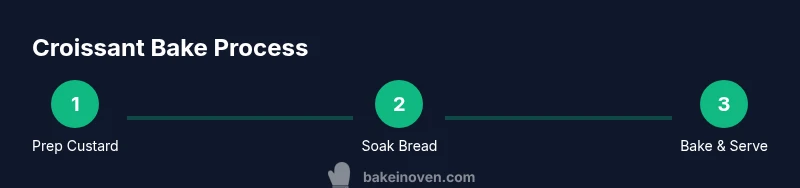
- 1
Prepare custard base
Whisk eggs with milk, vanilla, sugar, and salt until well combined. This forms a smooth custard that coats the croissants evenly, ensuring a creamy interior.
Tip: Whisk vigorously for 20-30 seconds to emulsify. - 2
Tear or cut croissants
Break the croissants into bite-sized pieces, keeping larger chunks for texture. This increases surface area for custard absorption.
Tip: Avoid overly small pieces that disintegrate. - 3
Layer into dish
evenly distribute croissant pieces in the baking dish to form an even bed. Layering helps each bite be uniform.
Tip: For a neater bake, arrange in a tight, overlapping pattern. - 4
Pour custard over croissants
Slowly pour the custard over the croissant layer, allowing it to seep into every nook. A little press with a spatula helps saturate the bread.
Tip: Pause midway to press down and promote absorption. - 5
Soak and rest
Let the dish sit for 15-60 minutes to absorb; overnight soaking is optional for deeper flavor, kept refrigerated.
Tip: Cover and refrigerate if soaking overnight. - 6
Preheat and bake
Preheat oven and bake until the top is golden and the center is mostly set. A gentle bounce indicates doneness.
Tip: If browning too fast, loosely tent with foil. - 7
Check and rest
Check center with a toothpick; it should come out with slight custard. Rest 5-10 minutes before slicing to retain structure.
Tip: Resting helps slices hold together. - 8
Serve and enjoy
Slice and serve with toppings like berries, syrup, or whipped cream. Balance sweetness with tart fruit for contrast.
Tip: Offer warm toppings for best texture.
Frequently Asked Questions
What kind of croissants should I use for this bake?
Use day-old croissants for best custard absorption and a flaky texture. Fresh croissants work but may be softer.
Day-old croissants absorb the custard best, giving a nice mix of flaky layers and creamy centers.
Can I make this ahead?
Yes, assemble and soak in the fridge overnight, then bake the next morning. You may need to add a few extra minutes to bake time.
Yes—you can prepare it the night before and bake in the morning.
Are dairy-free substitutions okay?
Dairy-free options exist using plant milks and a thickener; custard may vary in texture. Avoid omitting eggs entirely, as they help set the custard.
Dairy-free substitutions can work but may change texture; test and adjust.
How do I know when it’s done?
The center should be set but still slightly soft; edges should be golden brown. A gentle jiggle indicates it’s close to done.
Center set, edges golden, rest briefly before serving.
How should leftovers be stored?
Cool, refrigerate in an airtight container for up to 3 days. Reheat in the oven or toaster oven until warmed through.
Store in the fridge for up to a few days and reheat gently.
Can I freeze before baking?
Yes, you can freeze assembled, unbaked layers. Thaw in the fridge before baking and adjust timing as needed.
You can freeze it unbaked and bake from frozen with extra time.
Watch Video
Key Takeaways
- Use croissants for extra layering and flavor.
- Soak evenly to ensure a custard-rich center.
- Bake until edges are golden and center is set.
- Prepare ahead for effortless brunch hosting.
- Rest briefly before slicing for clean servings.