How Long to Bake Lasagna: Practical Timing Guide
Master lasagna timing with clear bake times, temperatures, and doneness checks. Learn covered vs. uncovered methods, noodle variations, and rest for perfect slices.


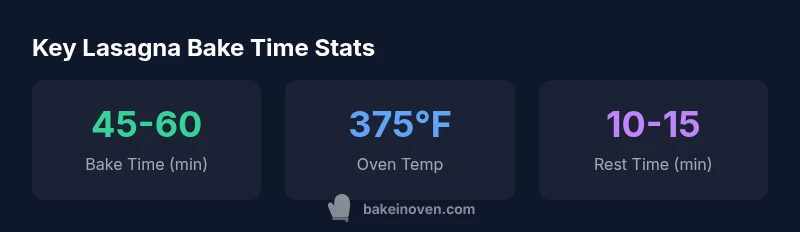
Typically, bake lasagna for 45 to 60 minutes at 375°F (190°C), covered, then 10 to 15 minutes uncovered to finish browning. For no-boil noodles, expect a slightly longer covered time. Check center temperature to ensure doneness, aiming for 165°F (74°C). If using a deeper dish, adjust time accordingly. Rest 10-15 minutes before slicing for clean servings.
How long bake lasagna: core variables
According to Bake In Oven, several variables determine how long to bake lasagna, including noodle type (regular vs no-boil), pan depth, sauce density, and cheese layering. The following sections unpack these factors and provide practical ranges you can trust. When you plan a lasagna night, you’re balancing heat and moisture with time and texture. The aim is a bubbling sauce, melted cheese, and gently set lasagna slices that hold their shape when you cut them. For readers asking how long bake lasagna, the most common scenario is a standard 9x13-inch dish with regular store-bought dried pasta and meat sauce. In that setup, a covered bake helps retain moisture and ensures even heating. Bake times reported in home kitchens usually fall within 45 to 60 minutes at a steady 375°F (190°C). The exact moment to switch to uncovered is when the surface has browned and the edges are visibly set, usually 10 to 15 minutes into the final phase. Rest time matters: allow 10 to 15 minutes after removing from the oven so the cheese and filling can firm up enough to slice cleanly. This resting period also improves flavor integration, letting the sauce thicken slightly and the layers meld.
Note the influence of noodles; no-boil noodles absorb more moisture and can extend the bake slightly if the sauce isn’t very thick. The thickness of the sauce matters, too: a very wet sauce requires longer to reach the same center temperature as a thicker, meatier sauce. When you’re unsure, a quick internal temperature check with a kitchen thermometer can confirm doneness: aim for the center to reach about 165°F (74°C). The combination of temperature, time, and resting is what yields lasagna that’s creamy in the center and perfectly set at the edges. So, if you’re wondering how long bake lasagna, start with 45-60 minutes at 375°F, then gauge from there based on pan depth, noodle type, and sauce consistency.
Temperature and equipment basics
Temperature and equipment choices have a meaningful impact on bake time and the final texture of lasagna. Standard home ovens typically bake best at 375°F (190°C) for most recipes, but some cooks prefer 350°F (175°C) for a gentler, more evenly heated outcome. If you use a convection oven, you can shave 5–15 minutes off the total bake time, but you should also reduce the oven temperature by about 25°F to prevent over-browning and drying. Pan material matters: glass pans conduct heat differently than metal, which can shorten or lengthen bake time by several minutes. A dark nonstick pan tends to brown the edges faster, while a light-colored pan may heat more slowly and require a longer covered phase. Covering the dish with foil early in the bake traps moisture and helps the interior heat through evenly; remove the foil toward the end to encourage browning and a slightly crisp cheese topping. Always let the lasagna rest after baking, regardless of the pan, to allow the layers to set and slice cleanly. This resting period is an essential part of the cooking process and a key factor in achieving consistent results across different ovens and pans. Finally, check that your oven is properly calibrated—an inaccurate oven can throw off bake times by several minutes, which is especially noticeable with layered casseroles like lasagna.
Step-by-step method for a reliable bake
To ensure a reliable bake each time, follow a consistent method. Start by preheating your oven to 375°F (190°C) and preparing a standard 9x13-inch (23x33 cm) pan. Assemble your lasagna with evenly distributed sauce, cheese, and noodles, ensuring the center is well-saturated but not soupy. Cover tightly with foil, sealing the edges to trap moisture. Bake for 45 minutes, then remove the foil and bake for an additional 10–15 minutes, until the top is bubbling and the cheese is golden. If you’re using no-boil noodles, remember they absorb more liquid and may need the full 60 minutes of covered time plus the final browning phase. During the final 5 minutes of uncovered heat, you can sprinkle extra cheese for a richer crust. After removing from the oven, let the dish rest for 10–15 minutes before slicing. This pause allows the sauce to thicken and the layers to set, which makes it easier to serve cleanly. If you notice the edges browning too quickly, loosely tent the dish with foil to prevent scorching while the center finishes cooking. Keeping a consistent bake schedule helps you reproduce the same results, whether you’re cooking for family dinners or a casual gathering.
Variations and their impact on bake time
Lasagna comes in many variations, and those changes affect bake time. Meat-based sauces tend to be denser and may require longer cooking to reach a safe center; extra vegetables or ricotta layers add moisture and can lengthen the covered phase slightly. Whole-milk cheeses melt beautifully but create a heavier top layer that may brown slower; a thin layer of shredded cheese on top can help with browning while protecting the sauce beneath. If you’re using a very thick sauce (for example, a robust meat ragù) against a crowded noodle stack, plan for the 60-minute mark as a conservative target. Conversely, a lean cheese-and-vegetable version may finish closer to 45 minutes if the sauce is not overly wet. For deeper dishes beyond 2 inches (5 cm) in depth, the center may take longer to heat through; in those cases, start with 60 minutes covered, then check for doneness and finish with an uncovered browning phase. Always monitor the internal temperature, aiming for 165°F (74°C) in the center for food safety, and adjust times based on your oven’s behavior and your pan’s depth.
Testing doneness and safety
Doneness testing is about more than time. The center of your lasagna should reach at least 165°F (74°C) to ensure any meat is safely cooked and dairy is fully heated. If you don’t have a thermometer, look for visible bubbling in the sauce, a uniformly melted cheese topping, and a firm, cohesive slice when cut. If the top browns too quickly before the center heats through, lightly tent with foil and continue baking until the center is hot. Remember that the lasagna will continue to cook slightly as it rests, so plan your final bake to hit the target temperature just before you intend to serve, then allow the rest period. A reliable test is to insert a thermometer into the center from the side of the dish; avoid touching the pan’s bottom, which can give you a falsely high reading. For those baking in large or crowded pans, consider measuring the internal temperature at the deepest point to ensure even doneness throughout.
Practical kitchen tips for consistency
Consistency comes from a repeatable routine. Always preheat fully, assemble with a uniform layer thickness, and cover during the majority of the bake to prevent drying. If you’re switching from regular noodles to no-boil varieties, compensate with slightly more sauce or a longer covered phase to ensure thorough cooking. Resting after baking is as important as the bake itself; it helps the filling settle and prevents runny slices. When testing for doneness, rely on a combination of center temperature, bubbling sauce, and the visual cue of a lightly browned cheese topping. For meal-prep, you can assemble lasagna a day ahead and refrigerate; bake times will be similar, but you may need an extra 5–10 minutes if starting cold. If freezing, cover tightly, freeze uncooked, and bake from frozen with an additional 20–30 minutes, then test doneness. By sticking to a routine and noting how your oven behaves, you’ll achieve reliably delicious lasagna every time.
Advanced planning: make-ahead and freezing
Lasagna shines as a make-ahead dish. Assemble completely, then refrigerate for up to 24 hours before baking, adding a few extra minutes to compensate for the chill. For freezing, prepare the lasagna unbaked and cover tightly with plastic wrap and foil; freeze for up to two months. When ready to cook from frozen, thaw overnight in the fridge if possible, then bake covered for 60–75 minutes at 375°F (190°C), followed by 10–15 minutes uncovered to brown the top. If you bake from thawed, keep the covered phase around 45–60 minutes and finish with 10–15 minutes uncovered. Always ensure the center reaches 165°F (74°C) before serving, and allow a rest period to ensure neat slicing. With a little planning, lasagna can be prepared in advance for busy weeks or special occasions while maintaining the same great flavor and texture.
Final tip: customizing texture and flavor
Would you like a creamier center or a crisper edge? Adjust the balance of sauce to cheese and choose your noodle type accordingly. Lola’s tip: pre-cook your meat sauce enough to reduce excess liquid, then stir in a small amount of cornstarch slurry if your sauce seems watery. For a creamier interior, incorporate ricotta or cottage cheese in slightly higher amounts and ensure an even distribution of sauce and cheese across all layers. If you prefer a crispier top, finish the bake with a brief higher-heat blast or finish under the broiler for a minute or two, watching closely to prevent burning. With these tweaks, you can tailor how long to bake lasagna to your preferences without sacrificing safety or texture.
Bake time guidance for lasagna
| Aspect | Time range | Notes |
|---|---|---|
| Bake time (covered) | 45-60 minutes | Typical method for moist, even cooking |
| Finish time (uncovered) | 10-15 minutes | Brown top and set edges |
| No-boil noodles | 50-75 minutes | Longer covered time may be needed |
| Internal temperature | 165°F | Food-safety target |
Frequently Asked Questions
Can I bake lasagna at a lower temperature?
Yes, you can bake at a lower temperature, but expect longer total time. Plan roughly 5-10 extra minutes for every 15°F decrease and monitor center doneness with a thermometer to ensure 165°F.
Yes, you can bake at a lower temperature, but it takes longer. Increase total time accordingly and check the center with a thermometer to 165°F.
Does freezing affect bake time?
Frozen assembled lasagna will require additional bake time—typically longer by 20–30 minutes—whether baked from frozen or fully thawed. Cover to prevent surface drying and test center doneness before serving.
Yes. Frozen lasagna needs extra bake time, usually 20–30 minutes more; keep it covered until the center heats through.
Should I bake without covering the dish?
Uncovered baking speeds browning but can dry the edges if the center isn’t done. Start covered for most of the bake, then uncover in the final stage to brown the top.
Uncover toward the end to brown the top; cover early to stay moist.
Convection oven: does it affect bake time?
Yes. Convection can reduce bake time by about 5–15 minutes and often requires lowering the temperature by 25°F to avoid overbrowning. Monitor doneness with a thermometer.
Convection can shave a few minutes off, and you should lower the temperature a bit and watch closely.
How can I tell if lasagna is done without a thermometer?
Look for bubbling sauce, a fully melted cheese layer, and a firm, clean slice when cut. The center should be hot and set, not cold or soupy.
Look for bubbling sauce and melted cheese, with a firm slice when you cut into it.
Can I make lasagna ahead and bake later?
Yes. Assemble and refrigerate up to 24 hours before baking; you may need 5–10 extra minutes. For freezing, bake from frozen with extra time and test doneness carefully.
Yes, you can prep ahead; refrigerate 24 hours or freeze for longer storage, and bake when ready.
“Precision in bake times comes from understanding heat transfer, moisture, and pan depth. Consistency beats guesswork every time.”
Key Takeaways
- Aim for 165°F center temperature for safety
- Cover early to preserve moisture; uncover to brown
- Noodle type and pan size change bake time
- Use a thermometer for reliable doneness
- Rest 10-15 minutes before slicing