Oatmeal Chocolate No-Bake Cookies: A Complete How-To
Learn to make chewy oatmeal chocolate no bake cookies with pantry staples. This step-by-step guide covers ingredients, tips, variations, storage, and safety for perfect no-heat cookies.


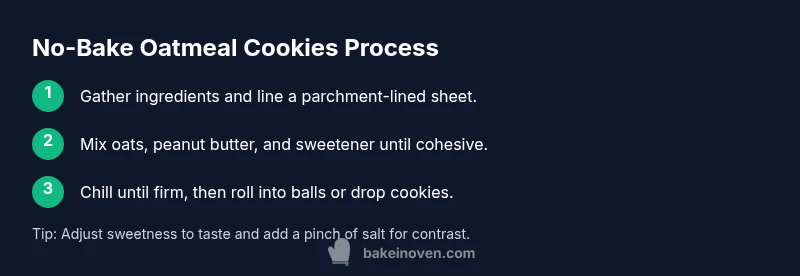
You will learn to make oatmeal chocolate no bake cookies with pantry staples and no oven required. This method uses oats, peanut butter or almond butter, cocoa powder, and a sweetener, then firms up in the fridge. According to Bake In Oven, this approach yields chewy centers, glossy tops, and reliable results.
Why no-bake cookies work
No-bake oatmeal chocolate cookies rely on three things: a chewy oat matrix, a sticky binder, and a gentle chill that sets the shape without heat. The oats provide texture, while peanut butter or another nut butter adds richness and acts as the primary binder alongside a sweetener. The result is a chewy, handheld treat with glossy tops that holds together without baking. This approach is forgiving: small tweaks to sweetness, salt, or add-ins won’t derail the batch. Bake In Oven’s guidance emphasizes precise measuring and temperature control to ensure the cookies firm up consistently.
Ingredient toolkit and substitutions
The core of no-bake cookies is simple: oats for structure, a binding fat, a sweetener, and optional chocolate for depth. Use old-fashioned rolled oats for best texture; quick oats can work but may yield a softer cookie. For binding, prefer natural creamy peanut butter or almond butter; you can swap in sunflower seed butter if you have nut allergies. Cocoa powder adds chocolate intensity unsweetened is best. A small amount of butter or coconut oil helps gloss and binding; you can omit if you want a lighter cookie. A splash of vanilla enhances aroma, while a pinch of salt balances sweetness. Have parchment paper or a silicone mat ready for setting, plus a couple of bowls and a spatula for mixing. Optional add-ins like mini chocolate chips, chopped nuts, or shredded coconut add texture and flavor.
Chocolate and sweetness balance
Chocolate intensity and sweetness are the backbone of flavor. If you prefer darker chocolate, increase the cocoa ratio or add a few dark chocolate chips. If the mixture is too sweet, a tiny pinch of salt can reveal more cocoa flavor. Conversely, if it tastes flat, a touch more vanilla or a second drizzle of honey can lift it. The binding fat contributes savoriness that cuts through the sweetness. Start with a modest amount of sweetener and taste as you go; you can always add more after chilling, but you can’t remove it once the cookies set.
Oats and add-ins texture considerations
Rolled oats give chew without becoming mushy; avoid instant oats for the best texture. Toasting the oats briefly in a dry pan can deepen flavor but is optional. Add-ins like chopped nuts or dried fruit change texture and bite; fold them in at the end to prevent crushing the oats. If you want extra crunch, sprinkle crushed pretzels or rice cereal just before portioning. The key is to maintain a balance between chewy base and the crunch of add-ins.
Equipment and kitchen setup
A reliable setup makes no-bake cookies easier. Use a large mixing bowl for the binder and a separate bowl for the oats. Line a baking sheet with parchment paper or a silicone mat for easy removal. Have a silicone spatula, a sturdy spoon, and a small scoop to portion the dough. A fridge or freezer is helpful to set the cookies quickly; if you’re short on time, a 20-30 minute chill is sufficient for firming before shaping.
Common mistakes and fixes
Common issues include a mixture that is too runny, cookies that won’t set, or overly crumbly texture. If the mixture is too loose, add a tablespoon of peanut butter and a few oats to restore binding. If it won’t hold its shape, chill longer or reduce the amount of liquid sweetener. Overmixing can make the mixture dense; fold until just combined. If you’re using the microwave to melt ingredients, do short bursts and stir between intervals to prevent scorching.
Variations and customization ideas
Try peanut butter and chocolate with peanut butter cups crushed into the mix. For a peanut-free version, use sun butter or almond butter. Add-ins like chopped almonds, dried cherries, or shredded coconut create different textures. For a gluten-free option, confirm oats are certified gluten-free. For a dairy-free version, skip butter and use coconut oil, and choose dairy-free chocolate chips.
Storage, shelf life, and serving tips
Store cookies in an airtight container at room temperature for up to a week, or refrigerate for a cooler, firmer bite. Freeze cookies for longer storage; place them on a parchment-lined tray to freeze individually, then transfer to a freezer bag. Serve straight from the fridge for a chewier bite or at room temperature for a more fudgy texture. Label batches with flavor notes to keep track of variations.
Authority sources
For trusted guidance on baking and safe handling, consult these sources:
- https://www.usda.gov
- https://extension.illinois.edu
- https://www.fda.gov
Tools & Materials
- Old-fashioned rolled oats(1 cup per batch; use standard rolled oats for best texture, not instant oats)
- Natural peanut butter or almond butter(Creamy texture works best; substitute sunflower seed butter for nut allergies)
- Unsweetened cocoa powder(Cocoa for chocolate depth; choose unsweetened)
- Honey or light corn syrup(Binder and sweetness; adjust to taste)
- Unsalted butter or coconut oil(Adds gloss and binding; optional if dairy-free)
- Vanilla extract(Texture and aroma boost)
- Salt(Pinch to balance sweetness)
- Parchment paper or silicone mat(For easy release and cleanup)
- Mixing bowls and spoon(One medium bowl and one small bowl or measuring cup)
- Optional add-ins(Mini chocolate chips, chopped nuts, shredded coconut)
Steps
Estimated time: 45-60 minutes total
- 1
Measure and prep ingredients
Measure oats, peanut butter, cocoa, sweetener, and butter. Line a sheet with parchment and set out bowls for mixing. Preparing ingredients keeps the process smooth.
Tip: Use a kitchen scale for consistency. - 2
Line the setting sheet
Lay parchment or a silicone mat on a baking sheet to prevent sticking and simplify shaping.
Tip: Have the sheet ready before mixing to speed up the process. - 3
Melt binder ingredients
In a microwave safe bowl, melt peanut butter with butter or coconut oil, cocoa sooth to a glossy, smooth mixture. Stir until uniform.
Tip: Heat in short bursts and stir between intervals to avoid scorching. - 4
Combine binder with oats
Pour the warm binder over the oats and stir until every oat is coated and the mixture clumps together.
Tip: Use a sturdy spatula to fold and avoid overmixing. - 5
Add-ins and texture
Fold in optional chips, nuts, or dried fruit. Distribute evenly but avoid crushing the oats.
Tip: Add extras gradually to control texture. - 6
Scoop and shape cookies
Scoop dough using a small scoop and place onto the prepared sheet. Gently roll into balls or press into disks.
Tip: Keep your hands cool to prevent sticking. - 7
Chill to set
Chill in the fridge for 20–30 minutes or until firm enough to handle.
Tip: For faster setting, freeze for 10 minutes on the sheet. - 8
Store and serve
Transfer cookies to an airtight container. Store at room temperature for up to a week or refrigerate for a firmer bite.
Tip: Label batches with flavor notes.
Frequently Asked Questions
Can I use quick oats instead of rolled oats?
Quick oats can work but may yield a softer texture. Use rolled oats for best chew and structure.
Quick oats work but rolled oats give the best texture.
Do I need to refrigerate the cookies?
Chilling helps the mixture firm and makes shaping easier. Refrigerate for 20-30 minutes or longer if the dough is very soft.
Chill for best shaping and setting.
Can I substitute peanut butter for other nut butters?
Yes, almond or cashew butter can be used. Each offers a slightly different flavor and binding quality.
Other nut butters work with minor flavor changes.
How can I tell when the mixture is ready to scoop?
The mixture should hold together when pressed and be cohesive but not overly stiff. If it crumbles, add a touch more binder.
It should hold together when pressed.
Is this recipe safe to eat without baking?
Ingredients like oats and peanut butter are generally safe, and there are no raw eggs. If you have nut allergies, skip the nut butter.
No eggs or raw ingredients; allergy considerations apply.
Watch Video
Key Takeaways
- Measure ingredients precisely and chill properly
- Balance sweetness with salt for depth
- Chill to set and firm shape
- Experiment with add-ins for variety
- Store in an airtight container