Low Sugar Banana Bread: A Practical Guide for Home Bakers
Learn to bake a moist, flavorful low sugar banana bread using ripe bananas and a simple flour blend. Practical tips, substitutions, and step-by-step guidance for a healthier loaf that still tastes great.


Bake a moist, flavorful low sugar banana bread using ripe bananas and a light flour blend. This quick answer prepares you with practical, step-by-step actions and ingredient choices to minimize added sugar while preserving texture and sweetness. You’ll learn sweetener alternatives, bake times, and how to avoid a dense loaf.
Understanding the goal of low sugar banana bread
In baking, reducing added sugar doesn't mean sacrificing flavor or texture. For low sugar banana bread, the aim is to harness the natural sweetness of ripe bananas while preserving moist crumb and a gentle crust. According to Bake In Oven, ripe bananas provide both moisture and sweetness that allow you to cut back on added sugar without producing a bland loaf. The recipe relies on a balanced ratio of flour, eggs, a little dairy or dairy-free moisture, and a touch of fat to carry flavor. You will learn how to select bananas at peak sweetness, how to adjust the flour blend to maintain structure, and how small adjustments in leavening and moisture can make a noticeable difference in crumb and rise.
Ingredient strategy: bananas, flours, and binders
Choosing the right ingredients matters when you want to keep sugar low while still delivering a satisfying texture. Use overripe bananas for maximum sweetness and moisture. A balanced flour blend—such as whole-wheat with a portion of all-purpose or almond flour—helps create structure without relying on sugar for lift. Eggs act as binders and assist with crumb. A touch of yogurt or applesauce can add moisture and tenderness, while baking soda and a pinch of salt support rise and flavor development. Optional spices like cinnamon or nutmeg can enhance perception of sweetness without adding sugar.
Sweetener options and moisture management
Natural sweetness from fruit is your primary tool. If you need additional sweetness, opt for small amounts of sugar substitutes like erythritol or monk fruit, keeping in mind that some substitutes bake differently than sugar. Start with a conservative amount and adjust in subsequent batches. Moisture management is key: bananas provide moisture, but you may also add a spoon of yogurt or applesauce to keep the crumb soft. Avoid overmixing to prevent toughness; mix until just combined to preserve a tender crumb.
Texture considerations: crumb, moisture, and crust
A successful low sugar banana bread balances a tender, moist crumb with a gentle crust. Too much flour or overmixing can yield a dry, dense loaf, while too little leavening can create a heavy texture. The fat choice (a small amount of oil or melted butter) helps with moisture and mouthfeel. If you want a lighter crumb, consider a partial substitution with a gluten-free or lightweight flour blend, but monitor moisture as some blends absorb more liquid than regular flour. Resting the batter briefly after mixing can improve crumb distribution.
Substitutions for dietary needs
This loaf adapts to various dietary preferences. For dairy-free bakers, swap yogurt for plant-based yogurt or mashed bananas plus a splash of non-dairy milk. For gluten-sensitive bakers, use a 1:1 gluten-free flour blend with xanthan gum, if needed for structure. If eggs are a concern, consider flax egg or chia egg as a plant-based binder. Always verify that any substitute maintains the batter’s moisture balance and crumb structure.
Step structure: combining wet and dry, folding, and mixing
The classic approach is to whisk dry ingredients (flour, leavening, salt, spices) in one bowl and wet ingredients (mashed bananas, eggs, yogurt or milk, vanilla) in another. Combine wet and dry just until no dry streaks remain; overmixing develops gluten and can make the loaf crumbly or rubbery. Fold-ins like chopped nuts or dark chocolate pieces should be added gently at the end to maintain even distribution without overworking the batter.
Bake timing and testing for doneness
Bake at 350°F (175°C) until a toothpick comes out with a few moist crumbs, typically around 50-60 minutes, depending on loaf size and pan material. If the top browns too quickly, tent with foil and continue baking. Let the loaf cool in the pan for 10-15 minutes before transferring to a rack to finish cooling; this helps set the crumb and prevents cracking on the surface.
Storage, freezing, and reheating tips
Store cooled banana bread in an airtight container at room temperature for 2-3 days, or refrigerate for up to a week. For longer storage, slice and freeze individual portions; wrap tightly and freeze for up to 3 months. To reheat, warm slices gently in the microwave or wrap in foil and reheat in a low oven. Keeping portions portion-controlled helps maintain freshness and reduces temptation to overeat.
Authority sources
For further reading on sugar intake and baking science, see authoritative sources on sugar guidelines and healthy baking practices. These resources provide general principles that support the approaches used in this guide and help you tailor recipes to your dietary needs.
Tools & Materials
- ripe bananas(2-3 large, overripe bananas yield the best sweetness and moisture)
- eggs(2 large eggs)
- flour blend(1 cup whole wheat flour + 1/2 cup all-purpose flour OR 1 1/2 cups gluten-free 1:1 blend)
- unsweetened yogurt or applesauce(1/4 cup to add moisture (yogurt for tang, applesauce for moisture))
- milk or non-dairy milk(1/4 cup optional to adjust batter consistency)
- baking soda(1 teaspoon)
- vanilla extract(1 teaspoon)
- oil or melted butter(1-2 tablespoons optional for extra moisture)
- salt(1/4 teaspoon)
- cinnamon or nutmeg(1/2 teaspoon optional for spice depth)
- parchment paper or oil(Line loaf pan with parchment or grease well)
- loaf pan(9x5 inch/21x12 cm typically)
- sweetener substitute (optional)(erythritol or monk fruit to taste)
- oven thermometer(Ensure accurate 350°F (175°C))
Steps
Estimated time: 60-90 minutes
- 1
Preheat and pan prep
Preheat the oven to 350°F (175°C). Grease a 9x5 inch loaf pan and line with parchment for easy removal. This step sets up a smooth bake and clean loaf edges.
Tip: Prep the pan early to avoid last-minute scrambling; a quick spray with oil followed by parchment ensures clean release. - 2
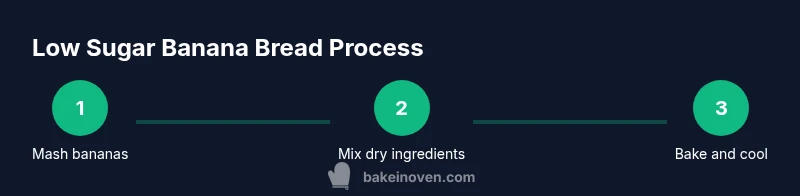
Mash bananas
Mash bananas until mostly smooth with a few tiny lumps remaining for texture. This builds moisture and natural sweetness without added sugar.
Tip: Using a fork or potato masher makes quick work of this; patience yields a smoother batter. - 3
Whisk dry ingredients
Whisk or sift flour, baking soda, salt, and optional spices in a bowl. Even distribution prevents clumps and ensures consistent rise.
Tip: Sifting reduces density and helps avoid flour pockets in the final crumb. - 4
Combine wet ingredients
In a separate bowl, whisk eggs, mashed bananas, yogurt or applesauce, vanilla, and optional oil. Whisk until smooth and unified.
Tip: Let yogurt come to room temperature for easier emulsification. - 5
Fold wet into dry
Pour wet into dry ingredients and mix gently until just combined. Overmixing can develop gluten and make the loaf tougher.
Tip: Stop as soon as you see no large streaks of flour; a few small lumps are fine. - 6
Add-ins and pan
If using nuts or chocolate, fold them in now. Pour batter into the prepared loaf pan and smooth the top.
Tip: To prevent nuts from sinking, give a light toss with a little flour before folding. - 7
Bake and monitor
Bake for 50-60 minutes, then test with a toothpick: a few moist crumbs mean done. If the top browns too fast, tent with foil.
Tip: Check doneness at the 50-minute mark; ovens vary and banana bread can overcook quickly on top. - 8
Cool and slice
Cool the loaf in the pan for 10-15 minutes, then transfer to a rack to cool completely before slicing.
Tip: Cooling fully helps set the structure; refrigeration speeds slicing if you’re in a hurry. - 9
Store or freeze
Store sliced or whole loaf in an airtight container at room temperature 2-3 days, refrigerate up to a week, or freeze for longer.
Tip: Wrap individual portions before freezing for easy thawing.
Frequently Asked Questions
Can I use sugar substitutes in low sugar banana bread?
Yes. Erythritol or monk fruit can replace added sugar in moderate amounts, but baking properties vary. Start with small amounts and adjust to taste. Monitor sweetness and texture in subsequent batches.
Yes. Sugar substitutes can work, but start small and note how the texture and sweetness change in your loaf.
What flour works best for a low sugar loaf?
A balanced blend such as whole wheat with a portion of all-purpose or a gluten-free 1:1 blend provides structure without relying on sugar. Texture will vary with the flour chosen.
A balanced flour blend gives good structure without extra sugar.
Can I freeze banana bread?
Yes. Freeze slices or the whole loaf wrapped tightly. It remains best for up to three months. Thaw at room temperature or warm gently before serving.
Yes, you can freeze it for later; thaw or warm when ready to enjoy.
Why is my loaf dense and heavy?
Dense texture often comes from overmixing, too much flour, or insufficient leavening. Ensure you mix just until combined and measure flour accurately.
Density usually means overmixed batter or too much flour; mix lightly and measure carefully.
How should I store leftovers?
Store at room temperature for 2-3 days, refrigerate up to 7 days, or freeze for longer. Use airtight containers and slice as needed.
Keep leftovers in an airtight container; refrigerate or freeze for longer freshness.
Can I substitute dairy with a non-dairy option?
Yes. Use non-dairy yogurt or plant-based milk with yogurt to maintain moisture. Banana bread adapts well to dairy-free substitutions with minimal impact on texture.
Dairy-free options work; use non-dairy yogurt and milk to maintain moisture.
Watch Video
Key Takeaways
- Use ripe bananas to maximize natural sweetness and moisture.
- Balance flour, eggs, and moisture to achieve a tender crumb.
- Choose sugar substitutes carefully and test in small batches.
- Don’t overmix; gentle handling preserves crumb structure.
- Cool fully before slicing for clean slices.